Keeping You Moving. Beyond Expectations.

Bellevue Ice Storm Response
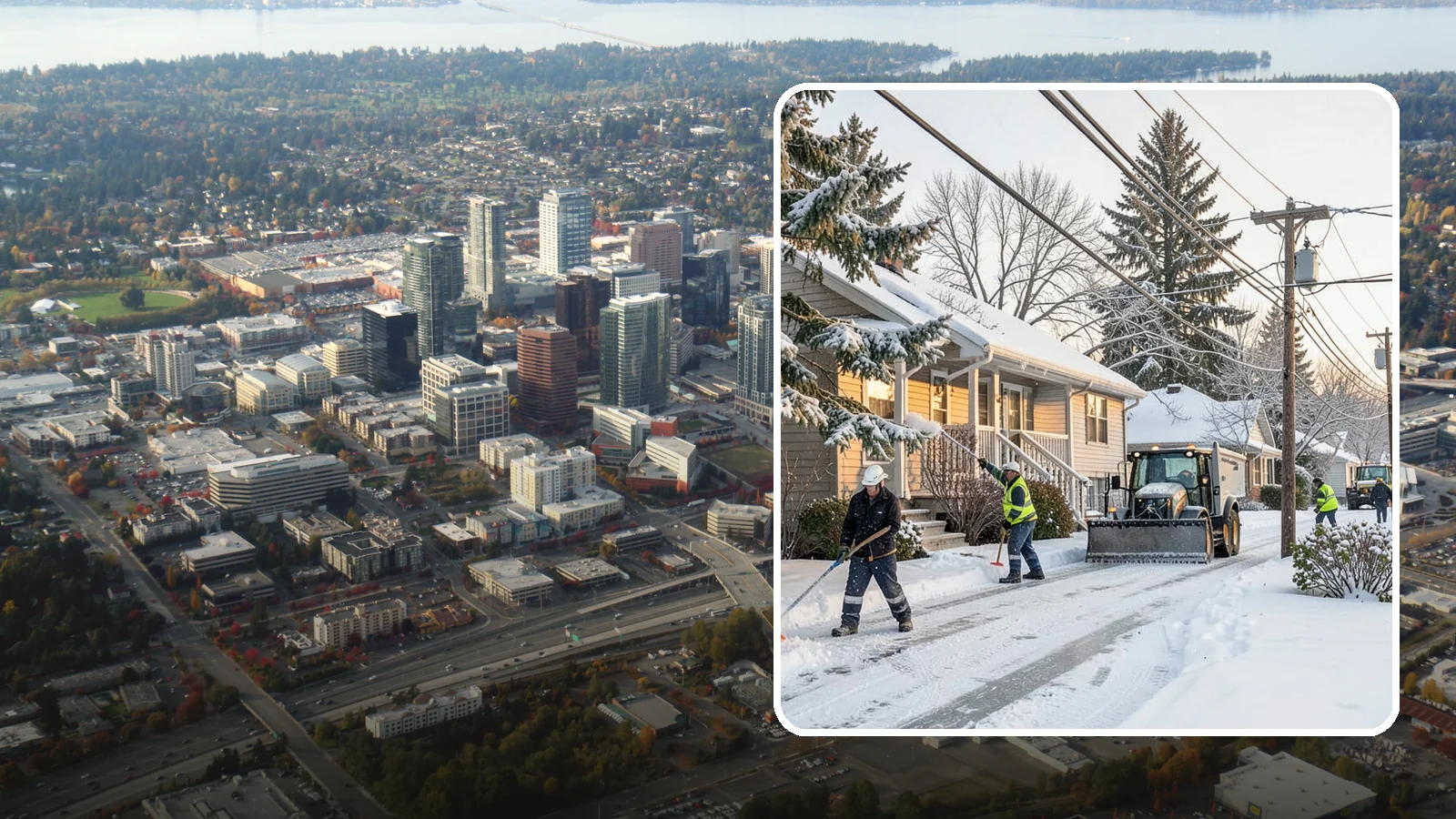
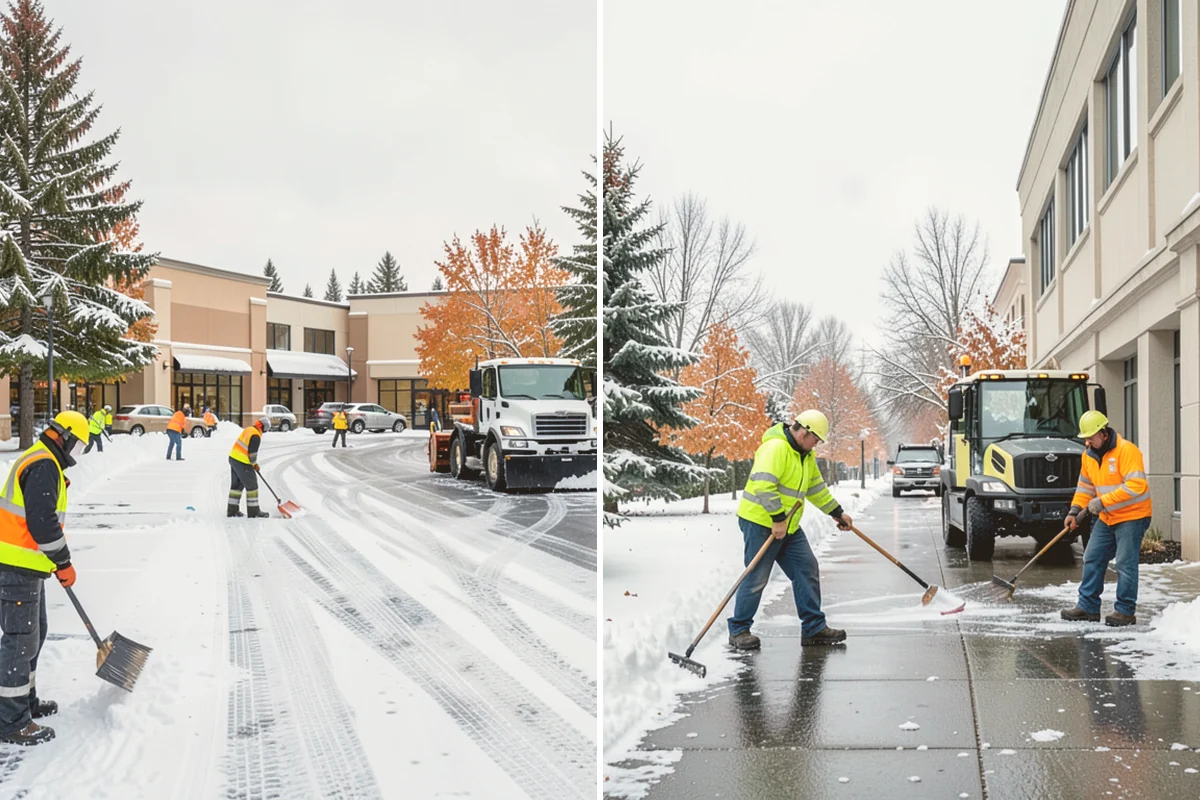
We mobilize fast when a Western Washington ice storm glazes your property in a hard, hazardous shell.
Ice storms in Bellevue do not need deep snow to cause trouble. Freezing nights run about 30 a year from October to April, and a thin glaze on a parking lot, walkway or driveway can shut a property down. Washington Snow Removal responds from our Bothell yard, 31 minutes away.
We are licensed, bonded and insured. Our ice storm response covers plowing, salt and ice melt application, and hand work on steps and sidewalks. Call 206-809-9669 to talk through your property and what it needs.
Storm history for Bellevue
Largest snow totals reported near Bellevue
- Feb 13–14, 2021: Up to 12 in, 6 spotter reports: 1 S Mercer Island 12 in, 1 S Bellevue 11.5 in, Bellevue 11 in, 1 S Bellevue 10.8 in, Bellevue 10.5 in, 1 NW Mercer Island 9 in
- Feb 9, 2019: 11.1 in measured by a spotter at Bellevue
- Feb 4, 2019: 9.5 in measured by a spotter at Sammamish
Sources: NOAA and National Weather Service records for Bellevue, 2005–2026.
What Ice Storm Response Involves in Bellevue
Bellevue gets an average of 7.2 in of snow per season, and only 2.1 days a year bring 1 in or more. Heavy-snow days of 4 in or more average 0.43 a year. So most winter trouble here is ice, slush and refreeze rather than big plowing events. Still, big ones happen. Spotters at Bellevue measured 11.1 in on Feb 9, 2019 and 11 in on Feb 14, 2021.
The area sees about 4.29 Winter Weather Advisories and 1.05 Winter Storm Warnings a year. Those are the days we prepare for. Ice work usually centers on getting traction down and keeping it down through the freeze.
- Plow truck with driver (Ram 3500): $250 / hour
- Plow and spreader truck with driver (Ram 5500): $325 / hour
- Compact track loader with operator (Kubota SCL1000): $175 / hour
- Crew member for shoveling, sidewalks and hand work: $110 / person-hour
- Ice melt, bagged: $45 / 50 lb bag
- Bulk salt, applied: $300 / ton
The trip charge for Bellevue (zone A) is $200 per dispatch. Each dispatch has a 2-hour minimum.
Prices in Bellevue
Billed by the hour for the crew and equipment on site, plus materials.
| Plow truck with driver (Ram 3500) | $250 / hour |
| Plow and spreader truck with driver (Ram 5500) | $325 / hour |
| Compact track loader with operator (Kubota SCL1000) | $175 / hour |
| Crew member (shoveling, sidewalks, hand work) | $110 / person-hour |
| Ice melt, bagged | $45 / 50 lb bag |
| Bulk salt, applied | $300 / ton |
| Trip charge for Bellevue (zone A) | $200 / dispatch |
- 2-hour minimum per dispatch.
- Bellevue is 31 minutes from our Bothell yard.
Prices approved Oct 2026.
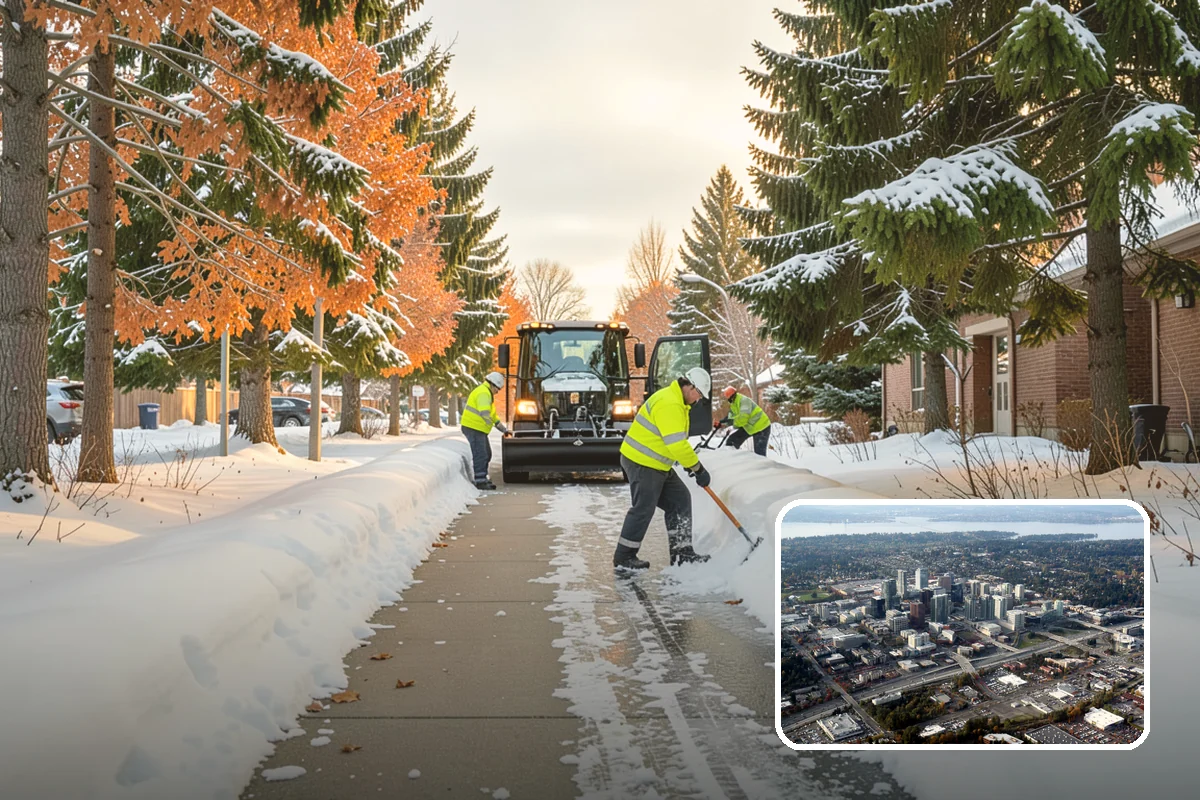
Service Area
Bellevue
Benefits
Fast dispatch during active glazing conditions when traction disappears; Deicer chemistry chosen to break the ice-to-pavement bond instead of scraping over it; Priority treatment of high-traffic entrances to cut fall risk; Coordination with limb and debris clearing common to regional ice events