Keeping You Moving. Beyond Expectations.

Bellevue Loading Dock Deicing
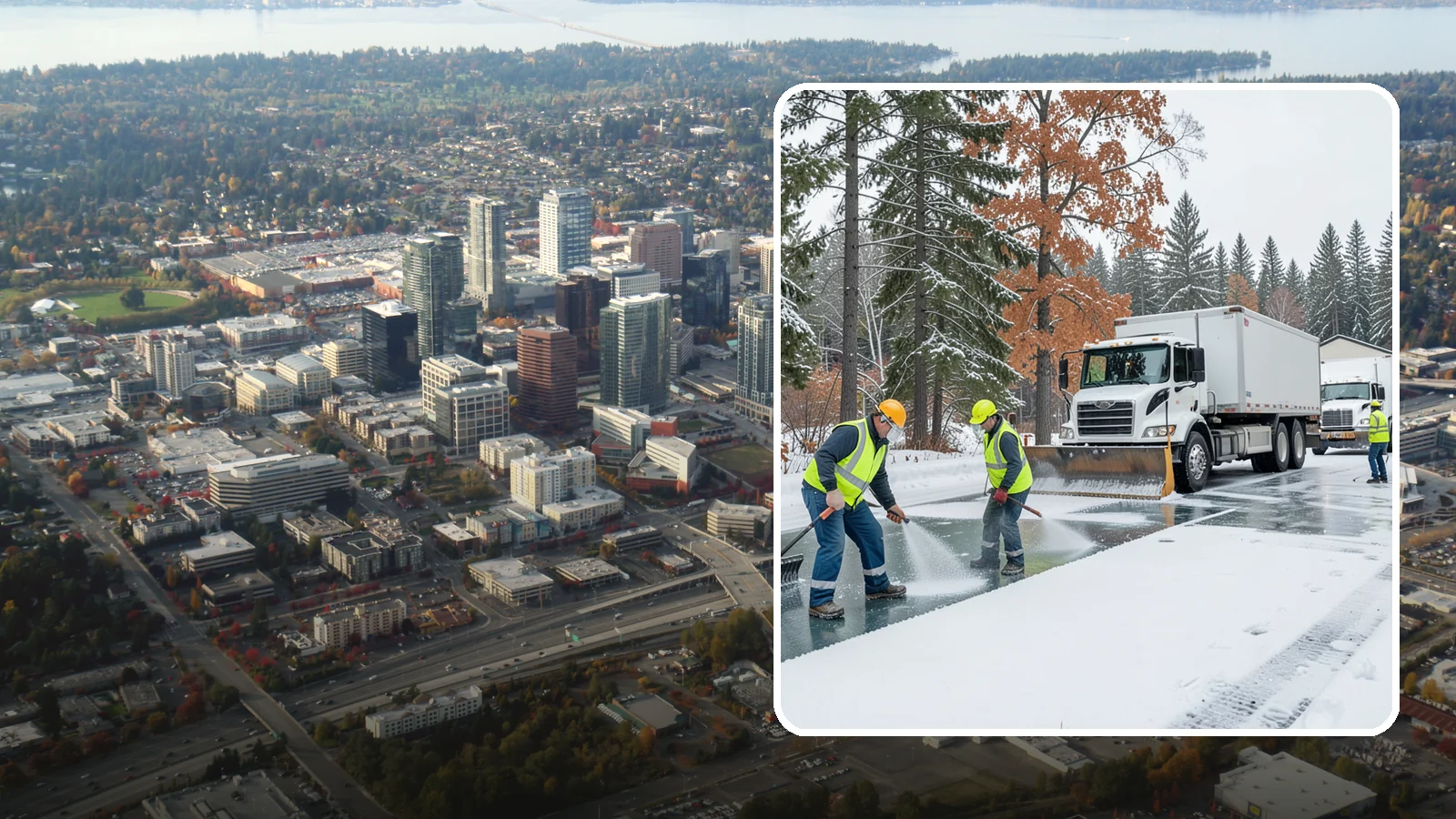
Deicing of loading docks and approaches so freight moves safely when ice forms on the busiest working surface.
Loading docks in Bellevue stay busy through the winter. A thin sheet of ice on a dock apron or ramp can stop trucks, slow unloading and put workers at risk. Washington Snow Removal treats these areas so they stay usable.
We are licensed, bonded and insured, and we work from our Bothell yard, 31 minutes from Bellevue. There are 28 warehouses and distribution centers mapped within the city. Call 206-809-9669 to talk about your dock.
How often Bellevue pavement freezes
Average snowfall by month in Bellevue
Recent winter events logged for the Bellevue area
- Dec 23, 2022: Ice Storm
- Feb 12, 2021: Winter Storm
- Feb 5, 2017: Heavy Snow
- Feb 8, 2014: Heavy Snow
Sources: NOAA and National Weather Service records for Bellevue, 2005–2026.
Loading Dock Deicing in Bellevue: What the Work Involves
A loading dock is a small area with heavy use. Trucks back in, pallets move across the apron, and workers walk the edge of the dock plate. Ice here is a problem even when little snow falls.
Bellevue gets about 7.2 in of snow per season, and only 2.1 days a year bring 1 in or more. The bigger issue is thin ice. The area sees 30 freezing nights from Oct to Apr, and about 3.24 light-snow days a year need deicing. Only 1.2 days a year stay below freezing, so most ice forms overnight and melts by afternoon, then refreezes. Larger events do happen. Recent ones include an ice storm on Dec 23, 2022, a winter storm on Feb 12, 2021, and heavy snow on Feb 5, 2017 and Feb 8, 2014.
Deicing at a dock can include:
- Bulk salt applied to aprons and truck lanes
- Bagged ice melt on ramps, steps and dock doors
- Hand work by crew members around dock plates and walkways
- Plow and spreader truck for larger lots
Pricing: bulk salt applied is $300 / ton, bagged ice melt is $45 per 50 lb bag, and crew members are $110 / person-hour. The Bellevue (zone A) trip charge is $200 / dispatch. Each dispatch has a 2-hour minimum.
Prices in Bellevue
Billed by the hour for the crew and equipment on site, plus materials.
| Plow and spreader truck with driver (Ram 5500) | $325 / hour |
| Ice melt, bagged | $45 / 50 lb bag |
| Bulk salt, applied | $300 / ton |
| Crew member (shoveling, sidewalks, hand work) | $110 / person-hour |
| Trip charge for Bellevue (zone A) | $200 / dispatch |
- 2-hour minimum per dispatch.
- Bellevue is 31 minutes from our Bothell yard.
Prices approved Oct 2026.
Warehouses and distribution centers in Bellevue
There are 28 warehouses and distribution centers mapped within Bellevue.
Source: OpenStreetMap contributors, Oct 2026. Named sites are examples of local facilities, not customers.
Service Area
Bellevue
Benefits
Keeps freight moving safely on a high-traffic surface; Treats the approach grade where trucks lose traction; Protects steel dock plates and hardware from corrosion; Times application around delivery schedules