Keeping You Moving. Beyond Expectations.
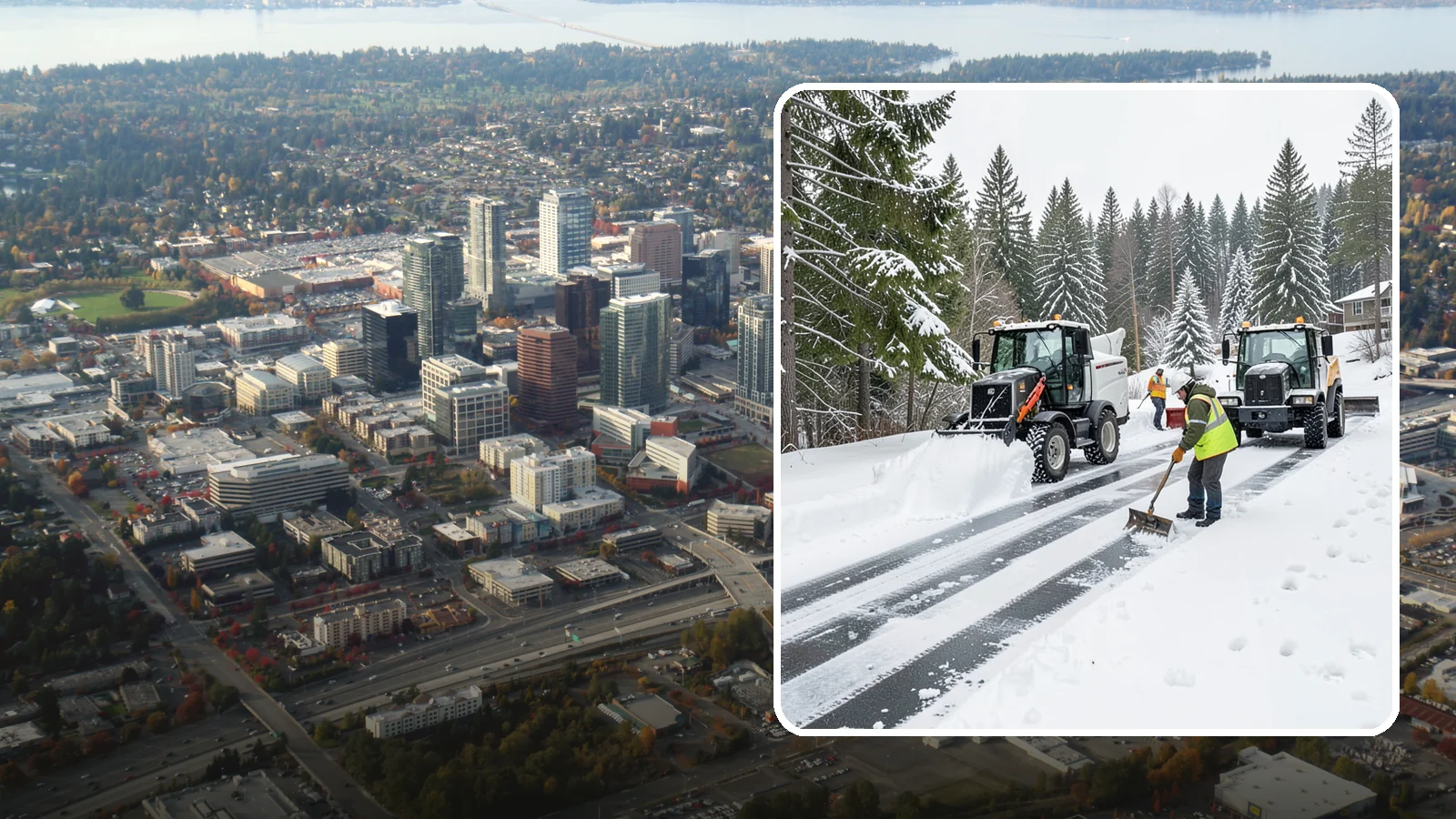
Clearing of parking ramps and vehicle inclines where snow and ice make grade transitions dangerous for drivers.
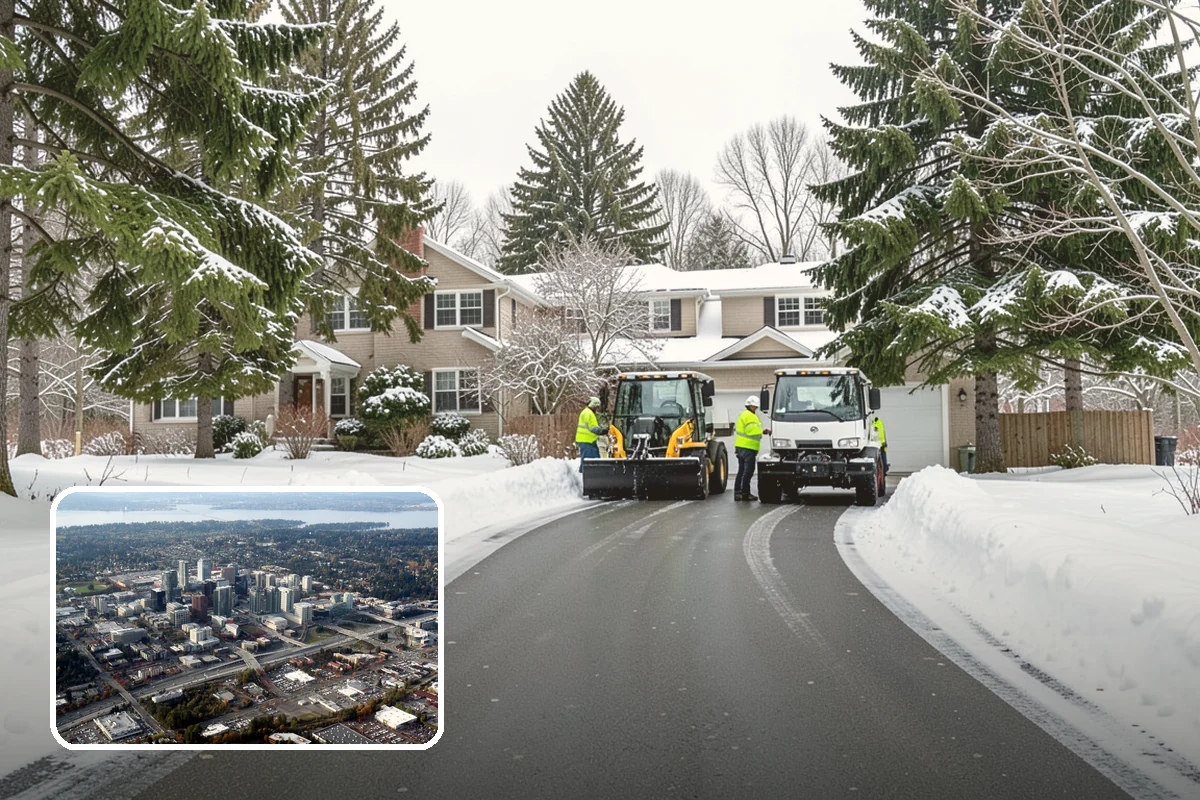
Ramps are where a small snowfall causes the most trouble. In Bellevue, that might be a loading ramp at a commercial building, an accessible ramp at an office, or a parking garage entrance. Washington Snow Removal clears and treats them so people and vehicles can use them safely.
We are based in Bothell, 31 minutes from Bellevue, and we are licensed, bonded and insured. Bellevue averages 7.2 in of snow per season, so jobs are infrequent. When snow or ice does arrive, a ramp needs hand work and de-icing, not just a plow pass. Call 206-809-9669 to set up service.

Sources: NOAA and National Weather Service records for Bellevue, 2005–2026.
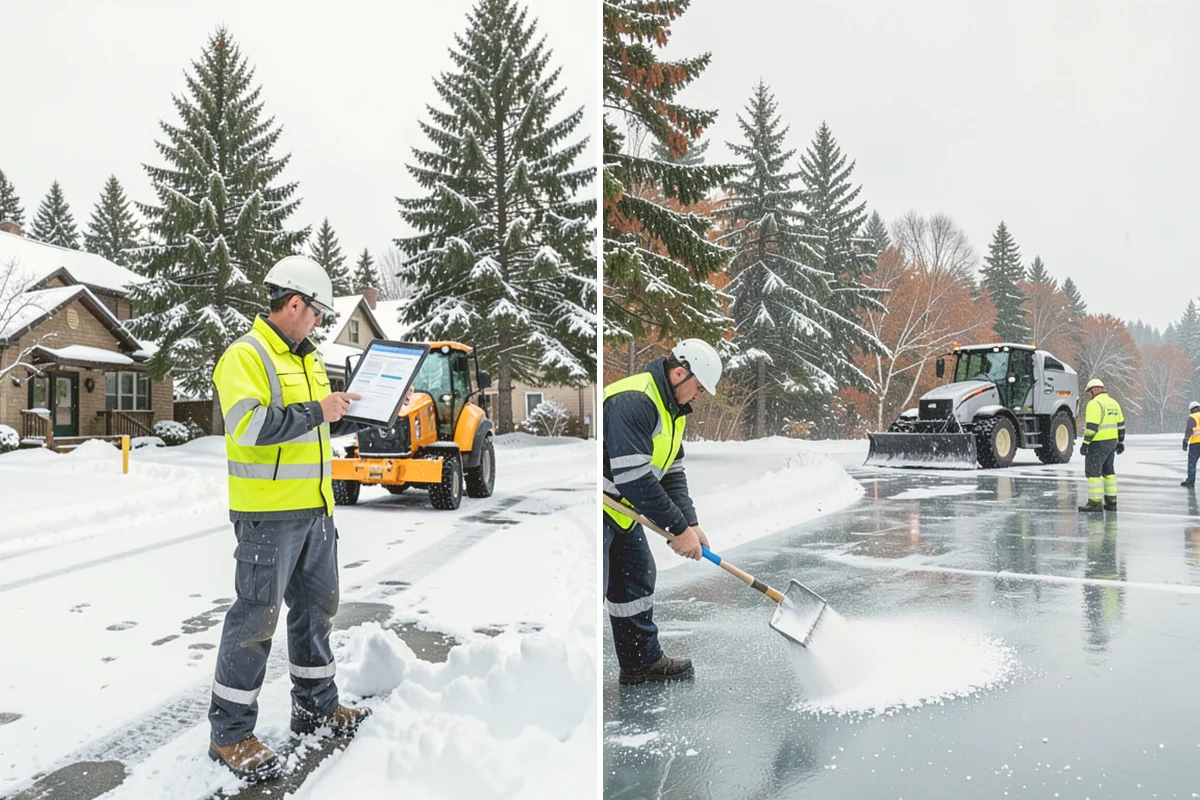
Ramps are steep, narrow and often tight against walls or rails. A plow blade rarely fits them well. Our crews shovel by hand where needed and use a compact track loader with an operator for larger or wider ramps. We then apply ice melt to the surface.
Bellevue's pattern shapes the work. Snow is on the ground only about 4 days a year, and only 2.1 days a year bring 1 in or more. Days that stay below freezing average 1.2. But there are about 30 freezing nights from October to April. Snow that melts during the day can refreeze on a ramp overnight. About 3.24 light-snow days a year need de-icing even when there is little to shovel.
Freezing rain also shows up. It was reported near Sahalee on Jan 17, 2024, and in Sammamish on Dec 23, 2022. Glaze on a sloped surface is a real hazard.
Our rates for Bellevue:
Each dispatch has a 2-hour minimum.
Billed by the hour for the crew and equipment on site, plus materials.
| Crew member (shoveling, sidewalks, hand work) | $110 / person-hour |
| Compact track loader with operator (Kubota SCL1000) | $175 / hour |
| Ice melt, bagged | $45 / 50 lb bag |
| Trip charge for Bellevue (zone A) | $200 / dispatch |
Prices approved Oct 2026.
Restores traction on the steepest, highest-risk surfaces; Treats crest and base transitions where vehicles slip; Prevents slides at the covered-to-open pinch point; Keeps garage and multi-level access flowing