How Sidewalk Tractor Service Works in Bellevue
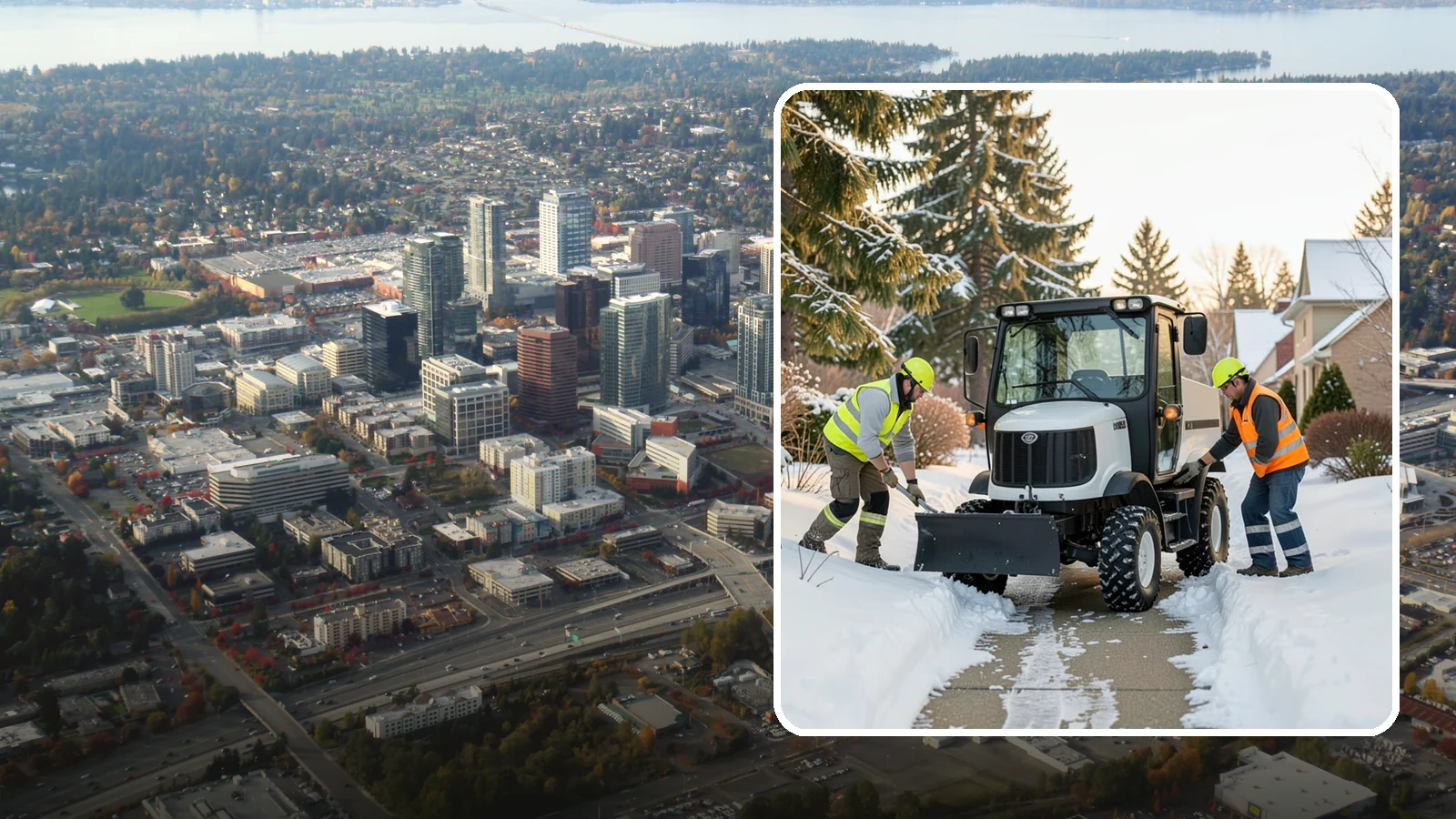
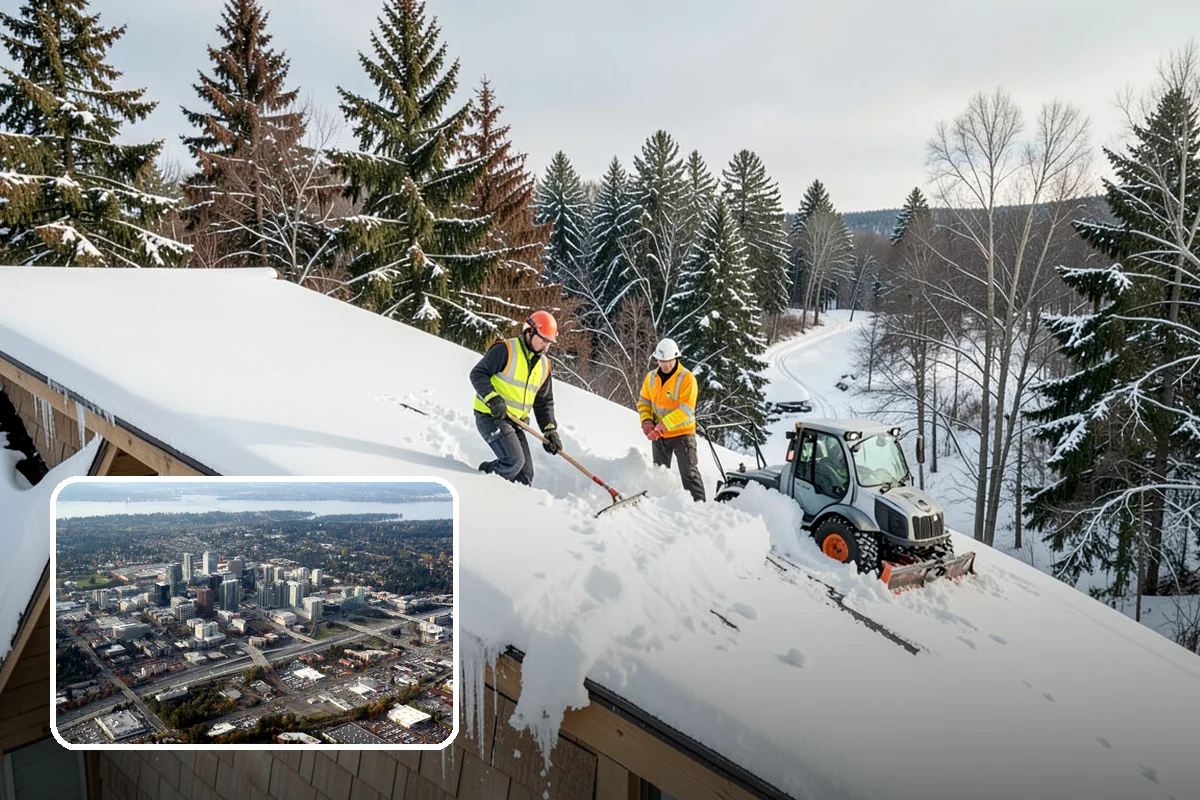
A sidewalk tractor service uses a Kubota SCL1000 compact track loader with an operator. The tracks give grip on packed snow and slush. The machine pushes snow off walks and clears it from entries and curb cuts. A crew member can follow for hand work around doors, steps and tight corners.
Bellevue snow is infrequent. The area sees about 2.1 days a year with 1 inch or more, and snow stays on the ground about 4 days a year. Snow often arrives in short, heavy events, such as Feb 4, 2019 and Feb 11, 2019. Those events can leave a lot to clear in a short window, which is when machine work saves time.
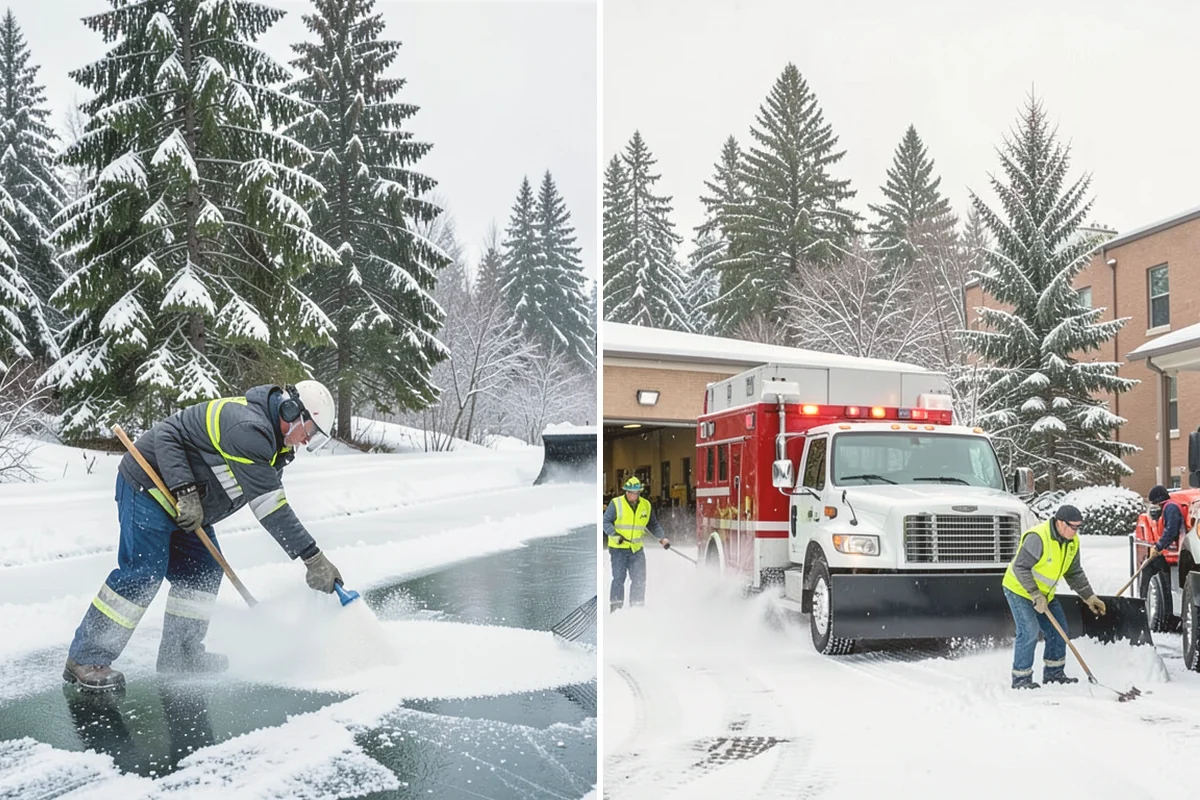
Ice is the other issue. Bellevue has 30 freezing nights from Oct to Apr, so meltwater can refreeze on walks overnight. We can apply bagged ice melt after clearing.
Pricing is listed up front:
- Compact track loader with operator: $175 per hour
- Crew member for shoveling and hand work: $110 per person-hour
- Ice melt, bagged: $45 per 50 lb bag
- Trip charge for Bellevue (zone A): $200 per dispatch
Each dispatch has a 2-hour minimum. Call 206-809-9669 to talk through your property.