Keeping You Moving. Beyond Expectations.
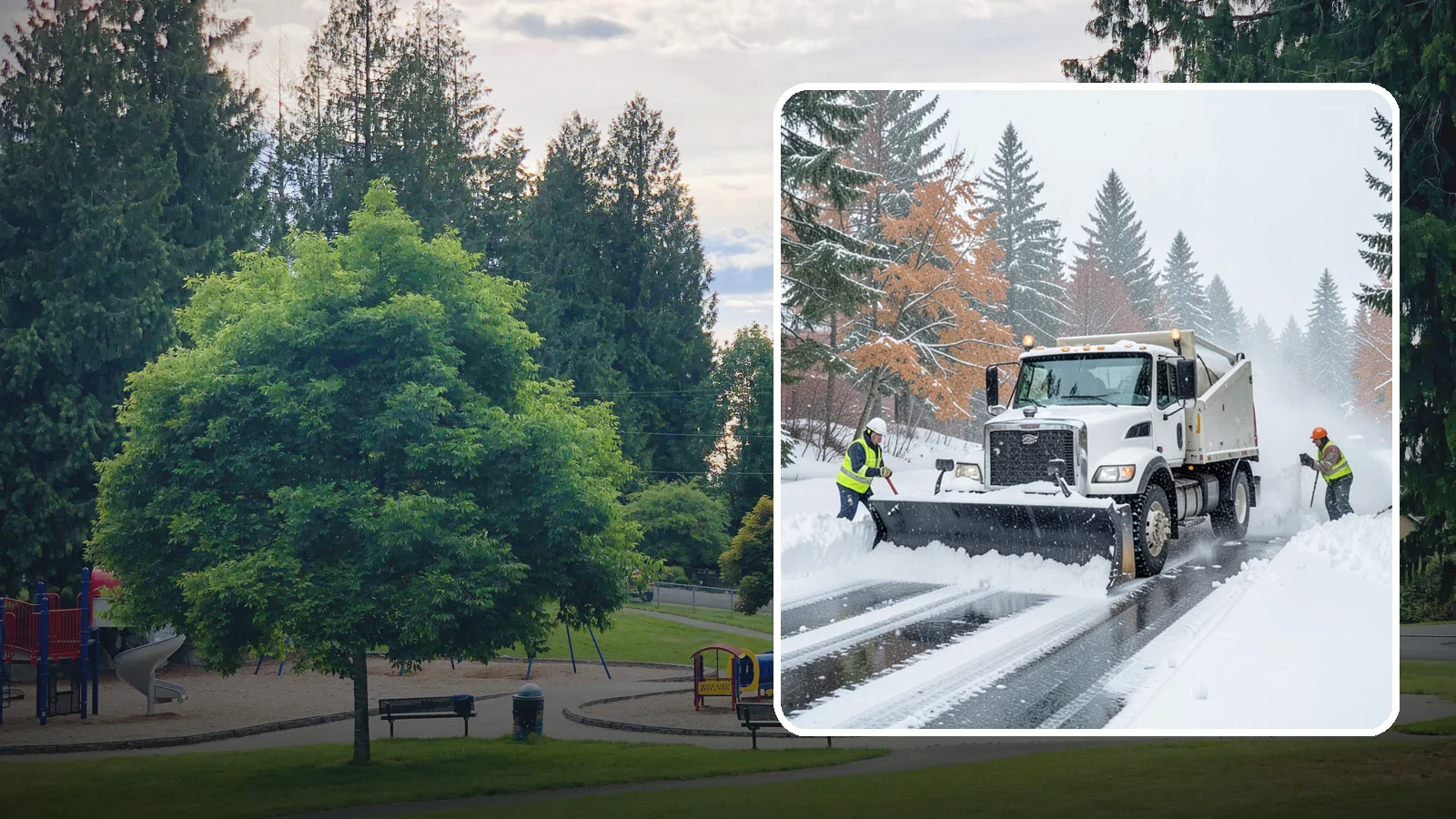
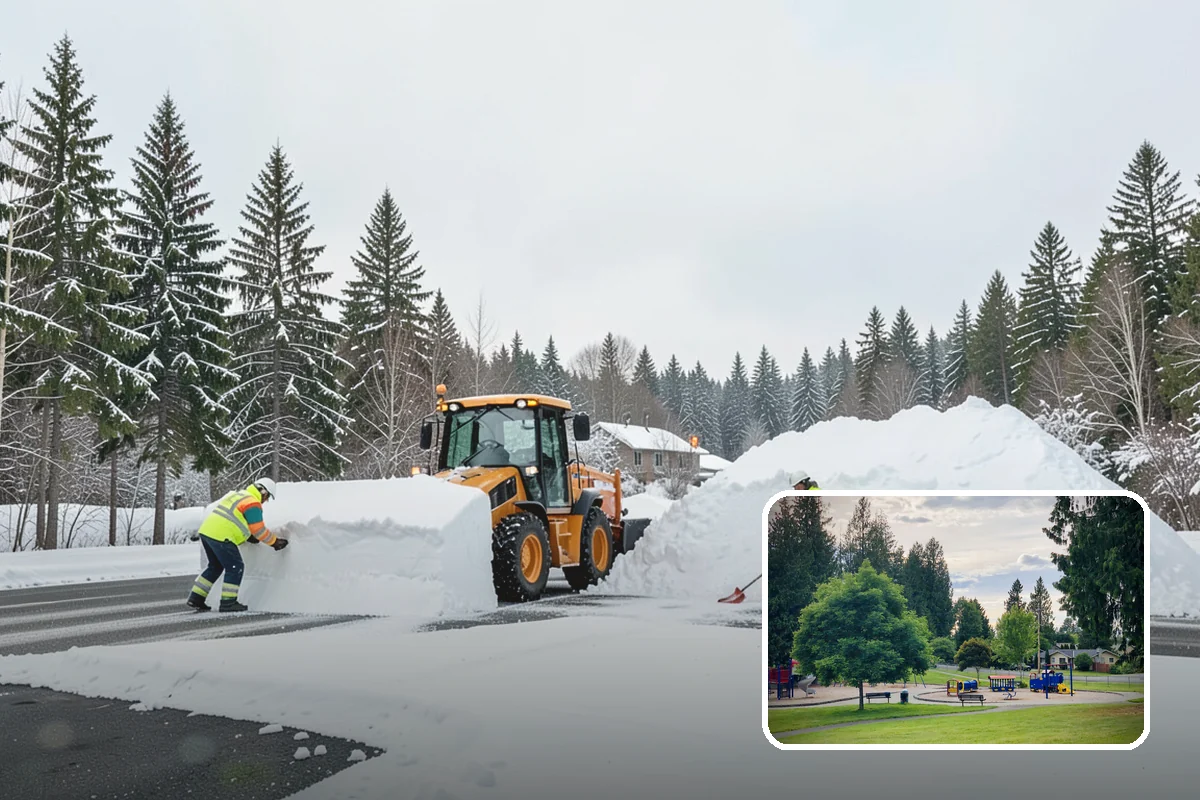
When a heavy, wet Cascade snowfall piles up fast, our equipment handles the load your shovel cannot.
Bonney Lake does not get much snow. The average is 8.6 inches a season, and only 2.4 days a year bring 1 inch or more. But when a heavy storm hits, it can pile up fast. The largest storm since 2005 dropped 12.4 inches, and the Mcmillin Rsvr record is 16.0 inches in a single day, set in 1974.
Washington Snow Removal is licensed, bonded and insured. We plow and clear heavy snowfall at Bonney Lake properties from our Bothell yard, 75 minutes away. Call 206-809-9669 to talk through what your property needs.
Sources: NOAA and National Weather Service records for Bonney Lake, 2005–2026.
Heavy snowfall removal means clearing deep, wet snow that ordinary shoveling or a small blade cannot handle. In Bonney Lake that usually means driveways, parking areas, entrances and walkways after a storm of 4 inches or more. Those days are rare here, about 0.5 a year, so most properties have no equipment on hand when one arrives.
The local pattern shapes the work. Winter Storm Warnings average 1.24 a year, and recent events include Heavy Snow on Dec 24, 2017 and Feb 4, 2019, plus an Ice Storm on Jan 16, 2024. With 34 freezing nights between October and April, cleared snow can refreeze overnight. Ice treatment is often part of the visit.
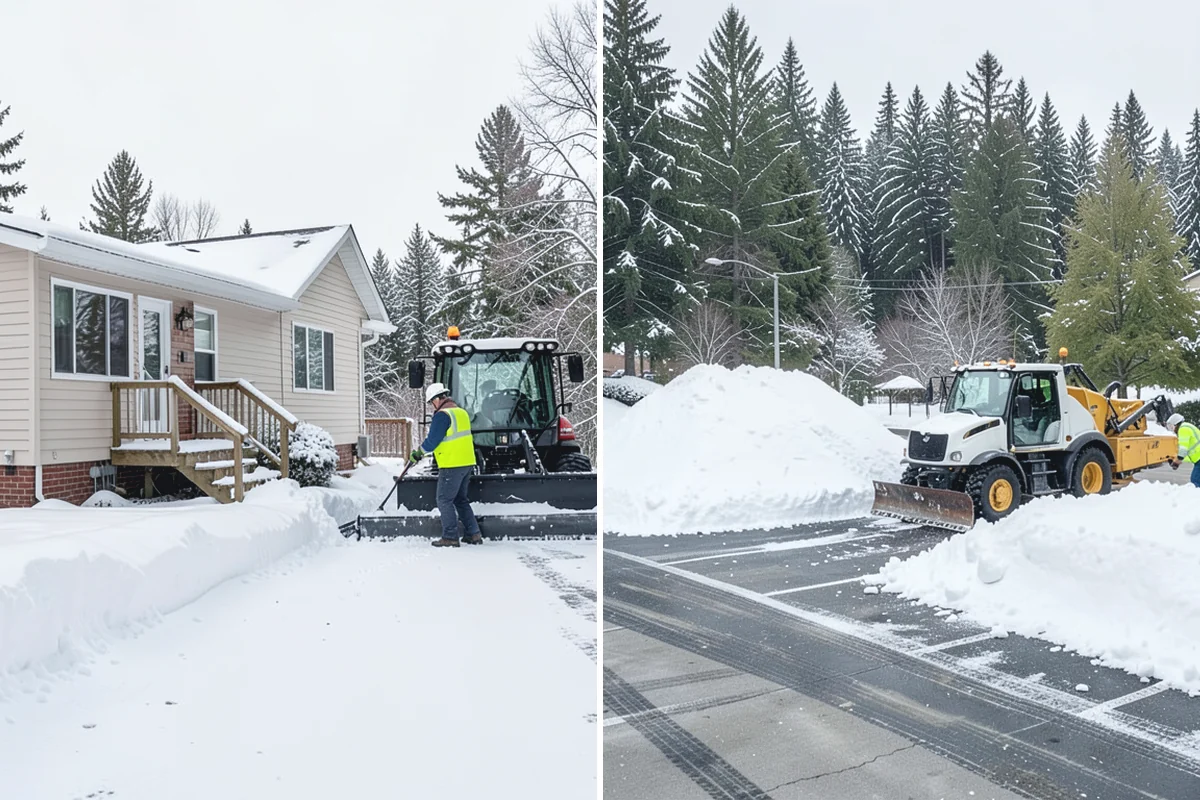
Depending on the site, we send:
Ice melt is $45 per 50 lb bag, or bulk salt applied at $300 per ton. Each dispatch to Bonney Lake (zone C) carries a $350 trip charge and a 2-hour minimum.

Billed by the hour for the crew and equipment on site, plus materials.
| Plow truck with driver (Ram 3500) | $250 / hour |
| Plow and spreader truck with driver (Ram 5500) | $325 / hour |
| Compact track loader with operator (Kubota SCL1000) | $175 / hour |
| Crew member (shoveling, sidewalks, hand work) | $110 / person-hour |
| Ice melt, bagged | $45 / 50 lb bag |
| Bulk salt, applied | $300 / ton |
| Trip charge for Bonney Lake (zone C) | $350 / dispatch |
Prices approved Oct 2026.
Equipment matched to dense, wet regional snow; Fast removal of large accumulation volumes; Prevention of hard-packed, compacted layers; Reduced strain and risk versus manual shoveling; Capacity to handle a foot or more at once