How Black Ice Treatment Works in Burien, WA
Burien does not see much snow. Snow is on the ground about 3 days a year, and only 1.7 days bring 1 in or more. Ice is a different story. The area has about 28 freezing nights between October and April, and about 2.43 light-snow days a year need deicing. Ice storms were recorded near Burien on Dec 23, 2022 and Jan 17, 2024, and freezing rain was reported at Seatac on Dec 23, 2022.
Because the thaw-and-refreeze cycle is short, treatment is mostly about timing and material. A typical visit involves:
- Walking the site to find shaded spots, slopes, drains and entrances where ice forms
- Spreading bulk salt with a plow and spreader truck on lots and driveways
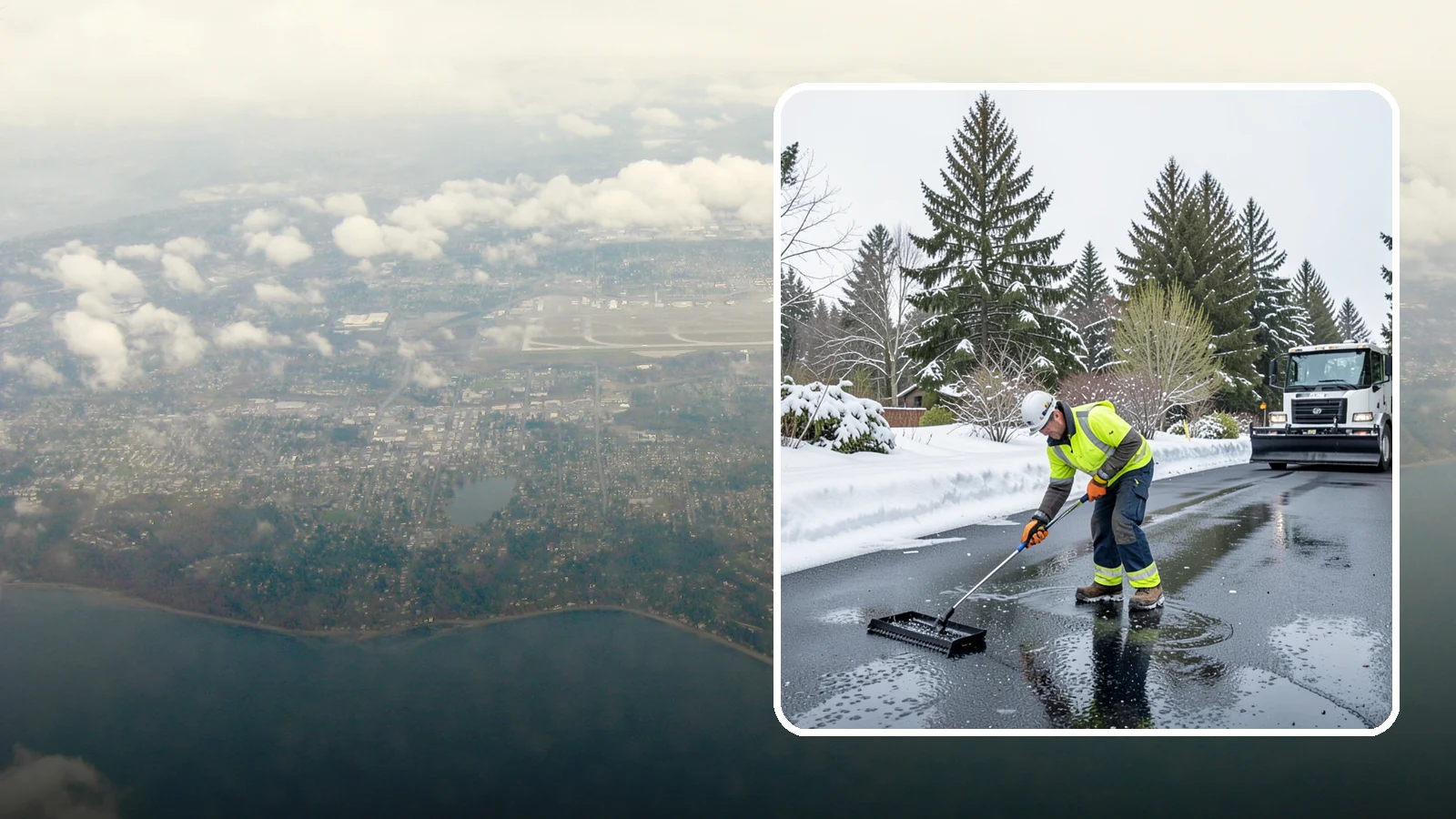
- Hand-applying bagged ice melt on steps, sidewalks and doorways
- Checking the site again if temperatures drop
Pricing is listed up front. A plow and spreader truck with driver (Ram 5500) is $325 per hour. Bulk salt, applied, is $300 per ton. Bagged ice melt is $45 per 50 lb bag. A crew member for hand work is $110 per person-hour. The trip charge for Burien (zone B) is $275 per dispatch, and each dispatch has a 2-hour minimum. Burien is 47 minutes from our Bothell yard.