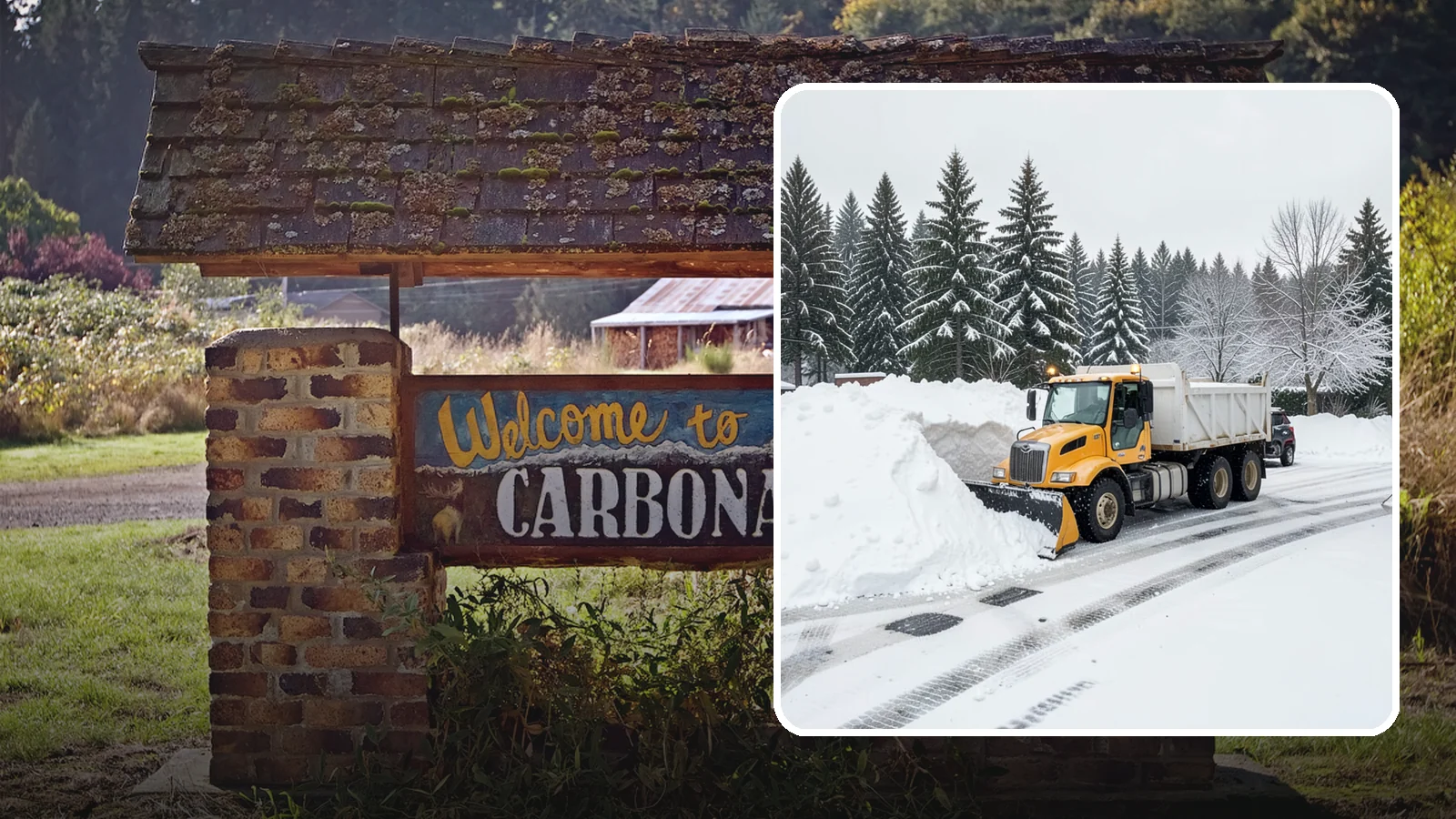
How Snow Hauling Works in Downtown Carbonado
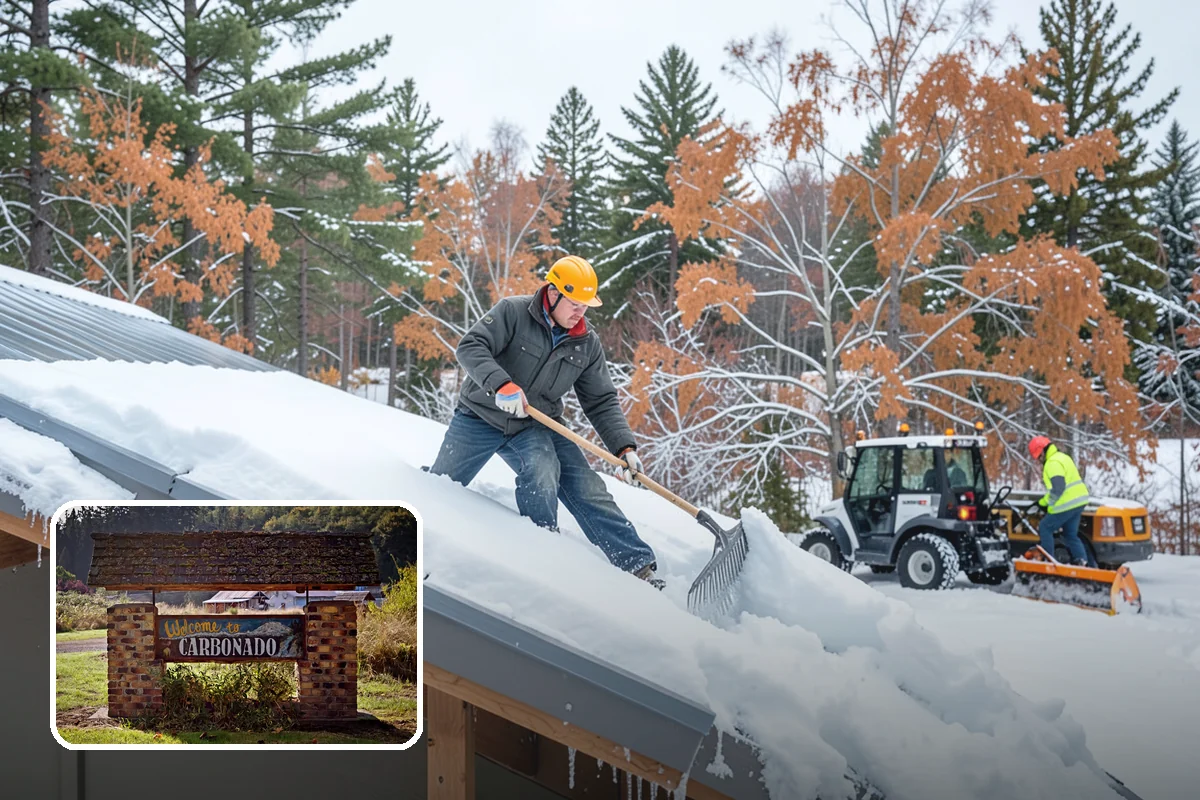
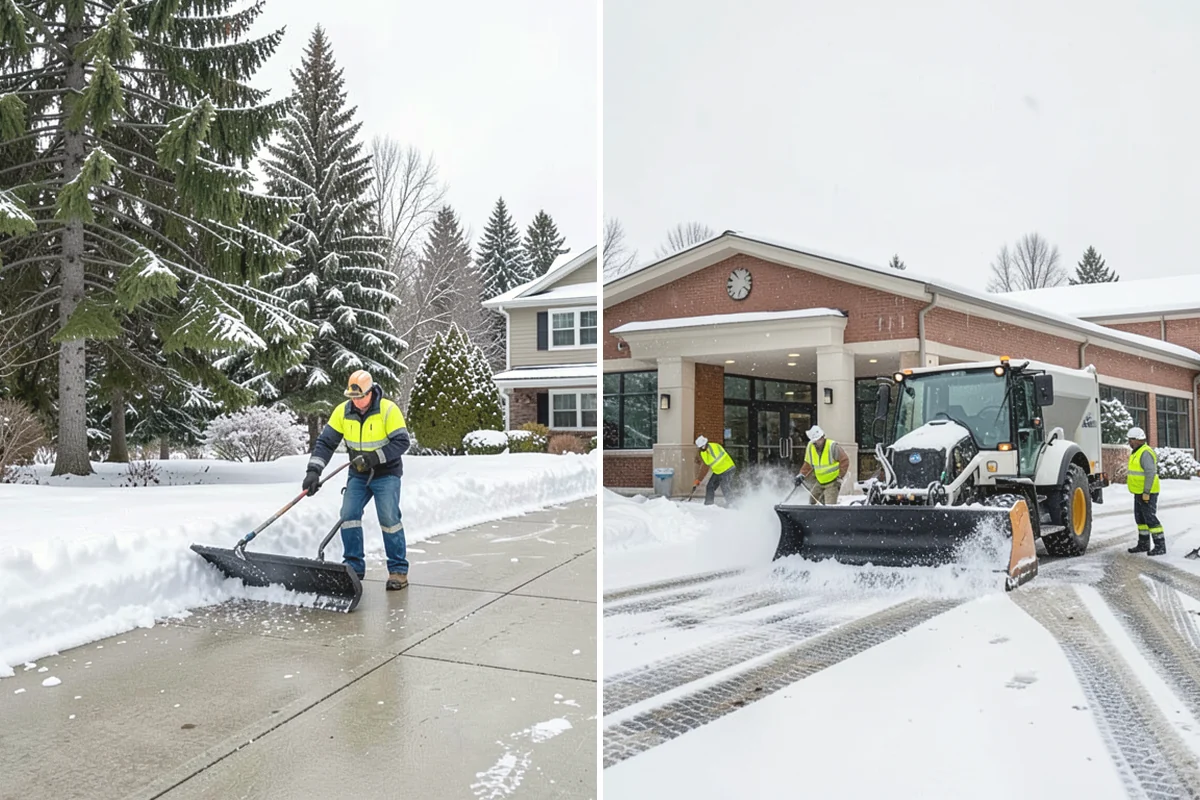
Hauling is a second step. First the snow is plowed or shoveled into banks. Then a compact track loader fills trucks and the snow leaves the site. In a small downtown, this clears parking, doorways and curb lines that plowing alone cannot free up.
Carbonado sees about 2.8 days a year with 1 in or more of snow, and about 2.83 plow events in an average season. Most years, piles stay small. But big events do happen. Since 2005 the biggest day was 14.5 in on Feb 6, 2017. Other large storms include Jan 15–20, 2012 at 13.9 in total and Dec 1–2, 2022 at 12.1 in total. All of these numbers are approximate.
There are also about 46 freezing nights from October to April. Piled snow melts by day and refreezes at night, which leaves ice at crosswalks and storefronts. Hauling the snow away cuts down on that runoff.
Our rates for this work:
- Compact track loader with operator (Kubota SCL1000): $175 / hour
- Plow and spreader truck with driver (Ram 5500): $325 / hour
- Crew member for sidewalks and hand work: $110 / person-hour
- Trip charge for Carbonado (zone D): $525 / dispatch
Each dispatch has a 2-hour minimum. Carbonado is 93 minutes from our Bothell yard.