Keeping You Moving. Beyond Expectations.

Carbonado Emergency Residential Snow Removal
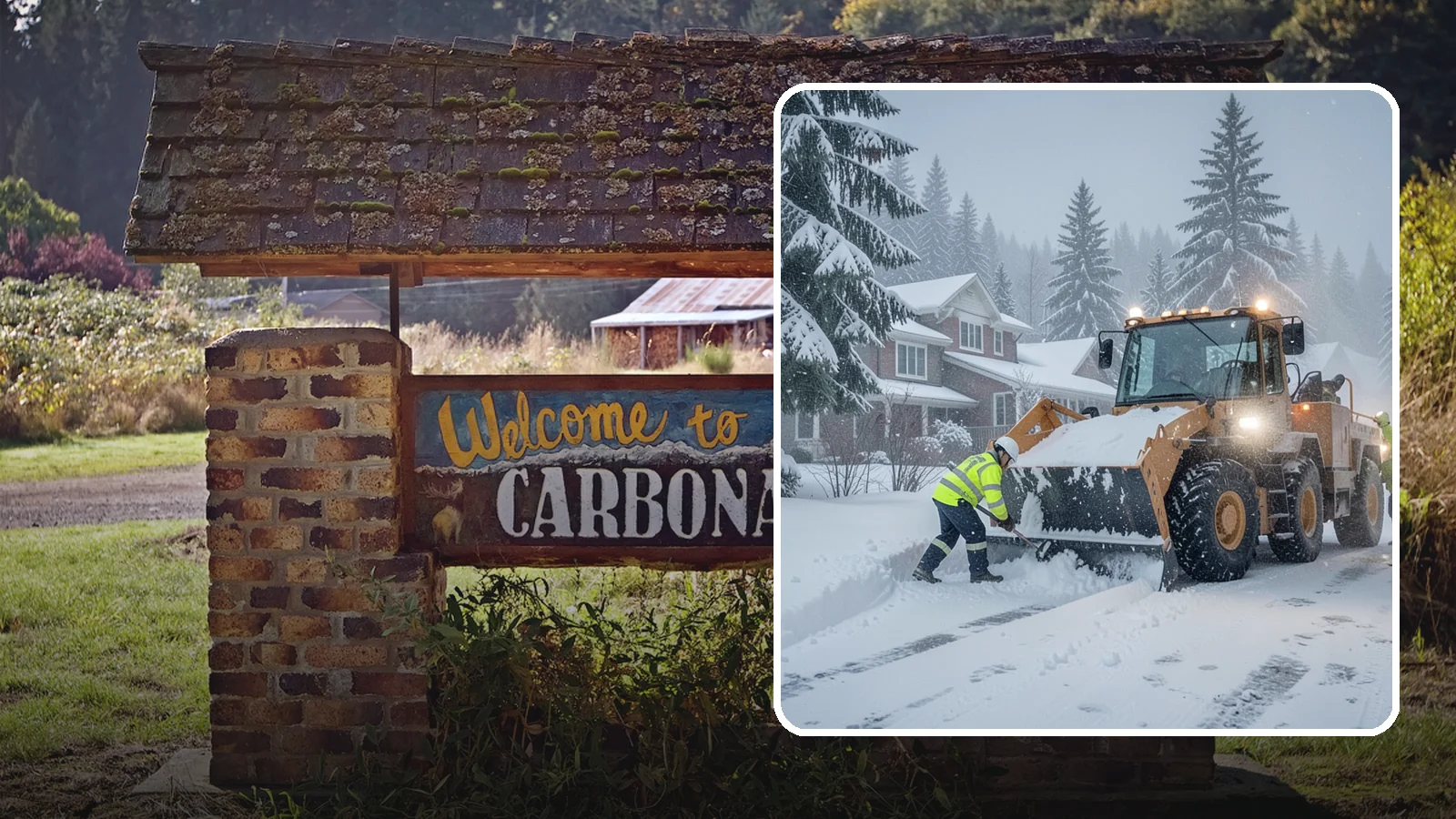
We respond fast to residential snow emergencies when a sudden storm traps your household at home.
Emergency residential snow removal in Carbonado means getting a driveway, walkway or access road open after a storm has already hit. Washington Snow Removal handles these calls for homes in Carbonado, Pierce County. We are licensed, bonded and insured, and we dispatch from our yard in Bothell.
Carbonado averages about 6.9 in of snow a season, so heavy snow is uncommon. When it does come, it can be sudden. The biggest storm since 2005 brought about 14.5 in on Feb 6, 2017. Call 206-809-9669 to request a dispatch. Snow records near Carbonado are limited, so these figures are approximate.
How hard Carbonado storms hit
Biggest storms in Carbonado since 2005
- Feb 6, 2017: 14.5 in total, 14.5 in on the biggest day
- Dec 1–2, 2022: 12.1 in total, 7.2 in on the biggest day
- Feb 11–13, 2019: 12.0 in total, 10.0 in on the biggest day
Sources: NOAA and National Weather Service records for Carbonado, 2005–2026.
How Emergency Snow Removal Works for Carbonado Homes
Carbonado sees about 2.8 days a year with 1 in or more of snow and only 0.17 heavy-snow days (4 in or more). Most winters are quiet. A few storms stand out: about 14.5 in on Feb 6, 2017, about 12.1 in over Dec 1–2, 2022, and about 12.0 in over Feb 11–13, 2019. These numbers are approximate.
The area also has about 46 freezing nights from October to April. Plowed snow can refreeze on a driveway overnight, so ice often matters as much as depth. The area averages 1.24 Winter Storm Warnings and 5.48 Winter Weather Advisories a year.
Carbonado is 93 minutes from our Bothell yard. That travel is why a trip charge applies. Work at a home may include:
- Plowing the driveway with a Ram 3500 at $250 / hour, or a Ram 5500 plow and spreader at $325 / hour
- A Kubota SCL1000 compact track loader at $175 / hour for heavy or piled snow
- Crew members for steps, walkways and hand work at $110 / person-hour
- Bagged ice melt at $45 / 50 lb bag, or bulk salt applied at $300 / ton
The trip charge for Carbonado (zone D) is $525 per dispatch. Each dispatch has a 2-hour minimum.
Prices in Carbonado
Billed by the hour for the crew and equipment on site, plus materials.
| Plow truck with driver (Ram 3500) | $250 / hour |
| Plow and spreader truck with driver (Ram 5500) | $325 / hour |
| Compact track loader with operator (Kubota SCL1000) | $175 / hour |
| Crew member (shoveling, sidewalks, hand work) | $110 / person-hour |
| Ice melt, bagged | $45 / 50 lb bag |
| Bulk salt, applied | $300 / ton |
| Trip charge for Carbonado (zone D) | $525 / dispatch |
- 2-hour minimum per dispatch.
- Carbonado is 93 minutes from our Bothell yard.
Prices approved Oct 2026.
Service Area
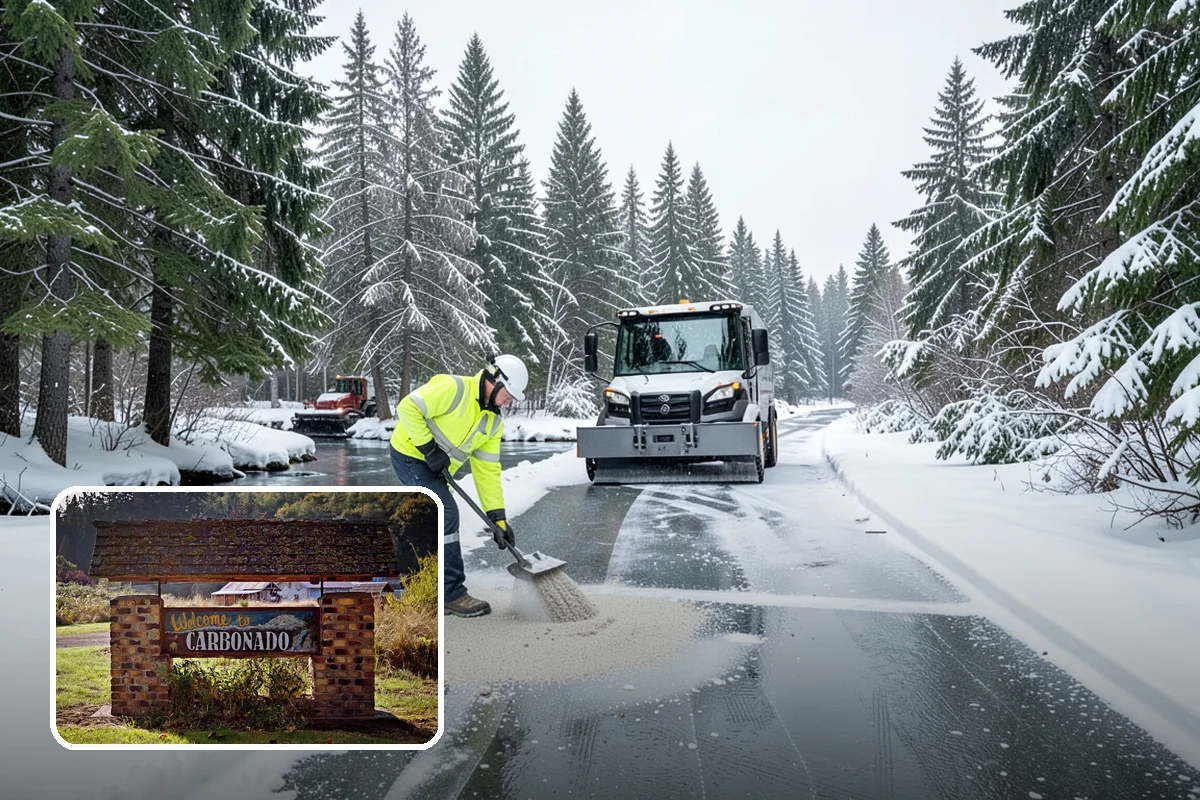
Carbonado
Benefits
Prioritizes urgent household needs during sudden storms; clears the critical drive and entry path first; bridges the gap when plows fall behind; keeps medical and care access open; deploys when a shovel simply cannot keep up