How Roof Snow Removal Works in Carbonado, WA
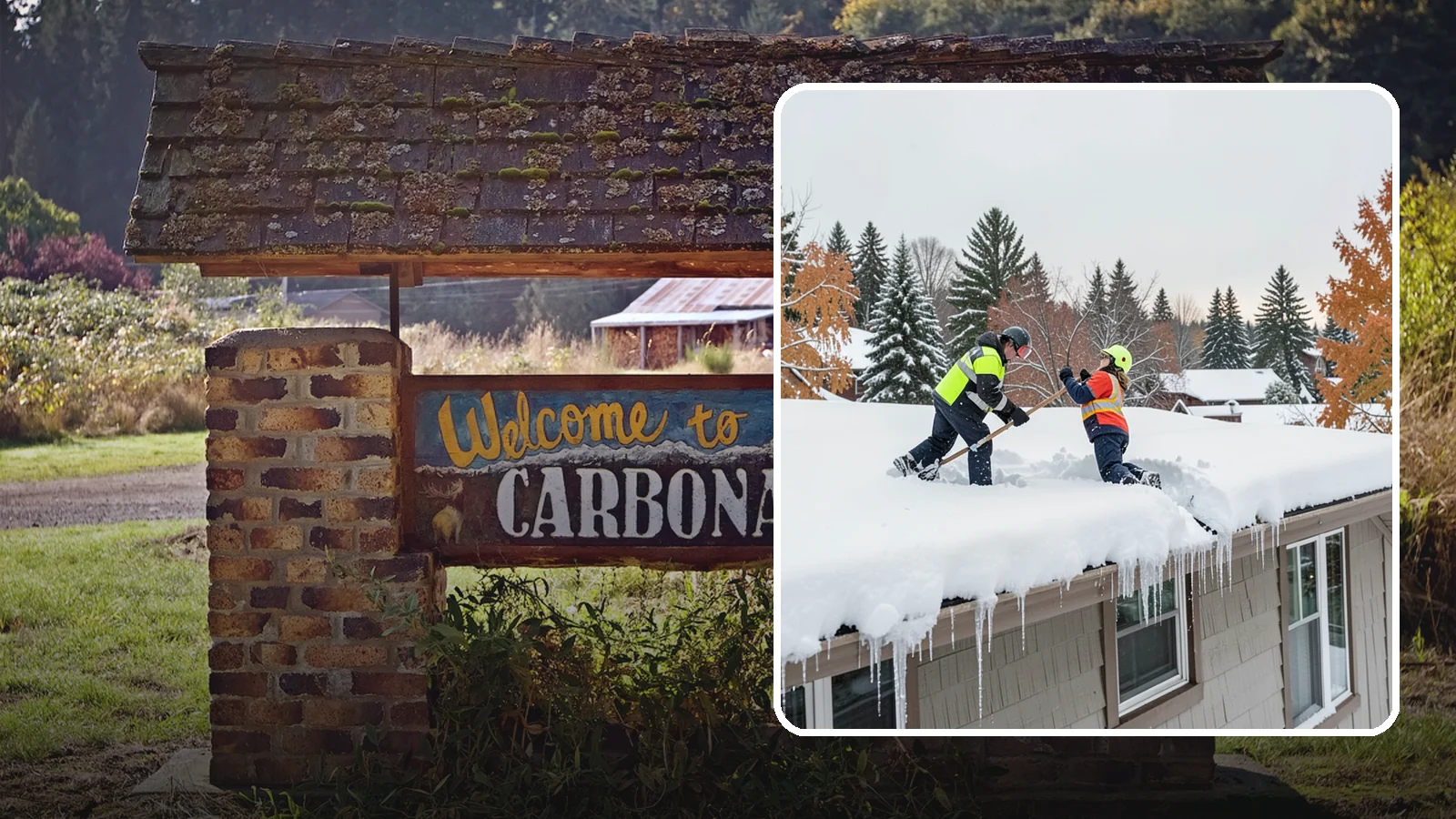
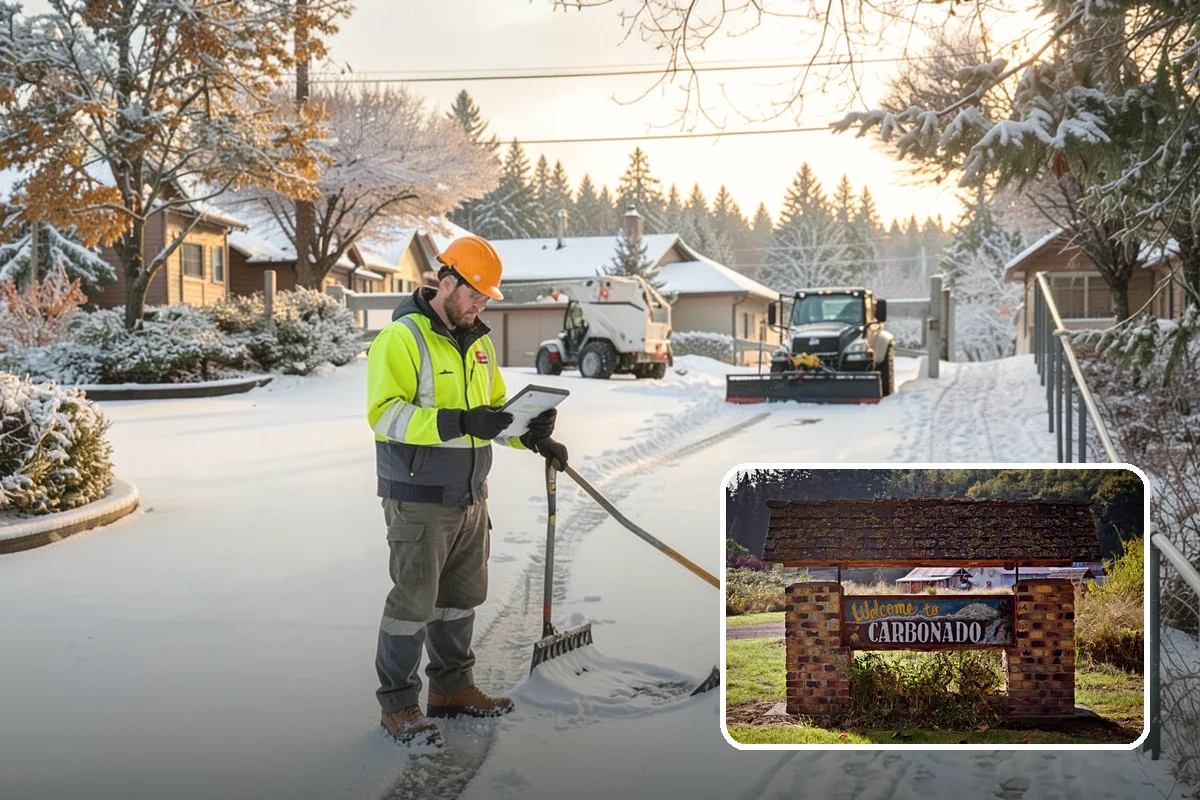
Roof snow removal means clearing snow load from a roof by hand, working from the edges and keeping the roofing surface intact. In Carbonado, that is mostly houses, outbuildings, barns and carports where a heavy, wet load has built up after a storm.
The local pattern shapes the work. Carbonado sees only about 2.8 days a year with 1 in or more of snow, and heavy-snow days of 4 in or more average just 0.17 a year. Most winters are light. But the record shows big events do happen. Approximate totals since 2005 include 14.5 in on Feb 6, 2017, 13.9 in over Jan 15-20, 2012, 12.1 in on Dec 1-2, 2022, and 12.0 in on Nov 21-23, 2010. Snow records near Carbonado are limited, so treat these figures as approximate.
The area also has about 46 freezing nights from October to April. Snow that melts by day can refreeze at the eaves overnight, which adds weight and ice along the roof edge.
Pricing is simple:
- Crew member (shoveling, sidewalks, hand work): $110 per person-hour
- Trip charge for Carbonado (zone D): $525 per dispatch
Because storms here are infrequent, most calls follow a single large event. Call 206-809-9669 to set up a visit.