Roof Valley Clearing in Carbonado: How Local Snow Affects It
Carbonado does not get much snow in a typical year. Records near town are limited, so these figures are approximate. Average snowfall is about 6.9 in per season, and a day with 1 in or more happens about 2.8 times a year. Days with 4 in or more are rare, at about 0.17 a year.
The bigger issue is the swing between storms and freezing nights. There are about 46 freezing nights from October to April. Melt from a roof can refreeze in a valley and form ice that blocks drainage.
Some storms have been large. The biggest since 2005 was Feb 6, 2017, at about 14.5 in. Jan 15-20, 2012 brought about 13.9 in, and Dec 1-2, 2022 brought about 12.1 in. The snowiest season, 2010-11, reached about 24.3 in.
Because big storms are uncommon, many roofs here go years without a heavy valley load. That is why a valley can be overlooked until it matters.
A visit usually involves:
- Checking the valley and nearby roof edges from the ground and the roof where safe
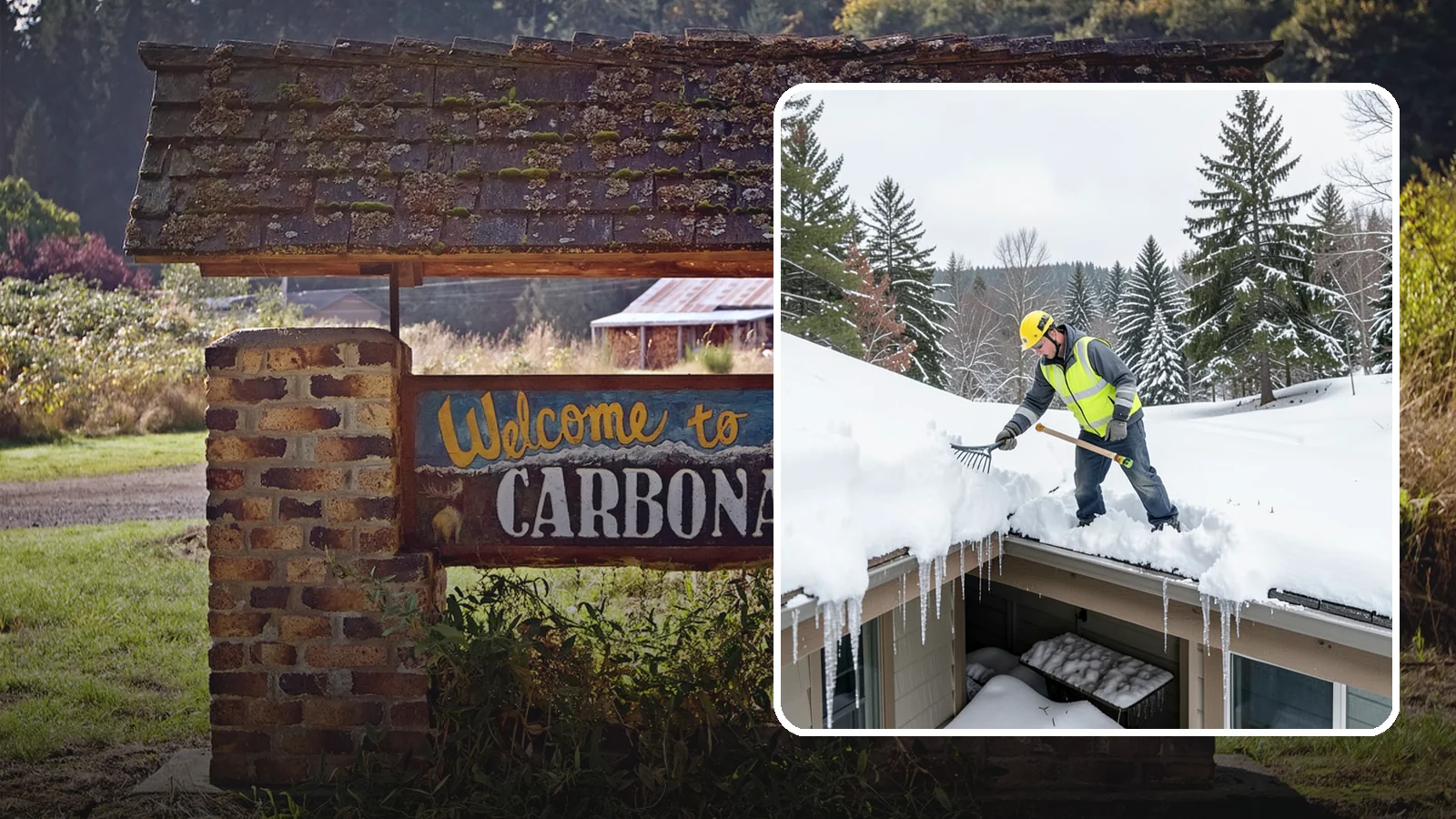
- Removing snow and ice from the valley by hand
- Keeping tools off roofing surfaces where possible
- Clearing fallen snow from walkways below
Hand work is billed at $110 per person-hour, plus the $525 trip charge for Carbonado.