How Sidewalk Snow Removal Works in Carbonado, WA
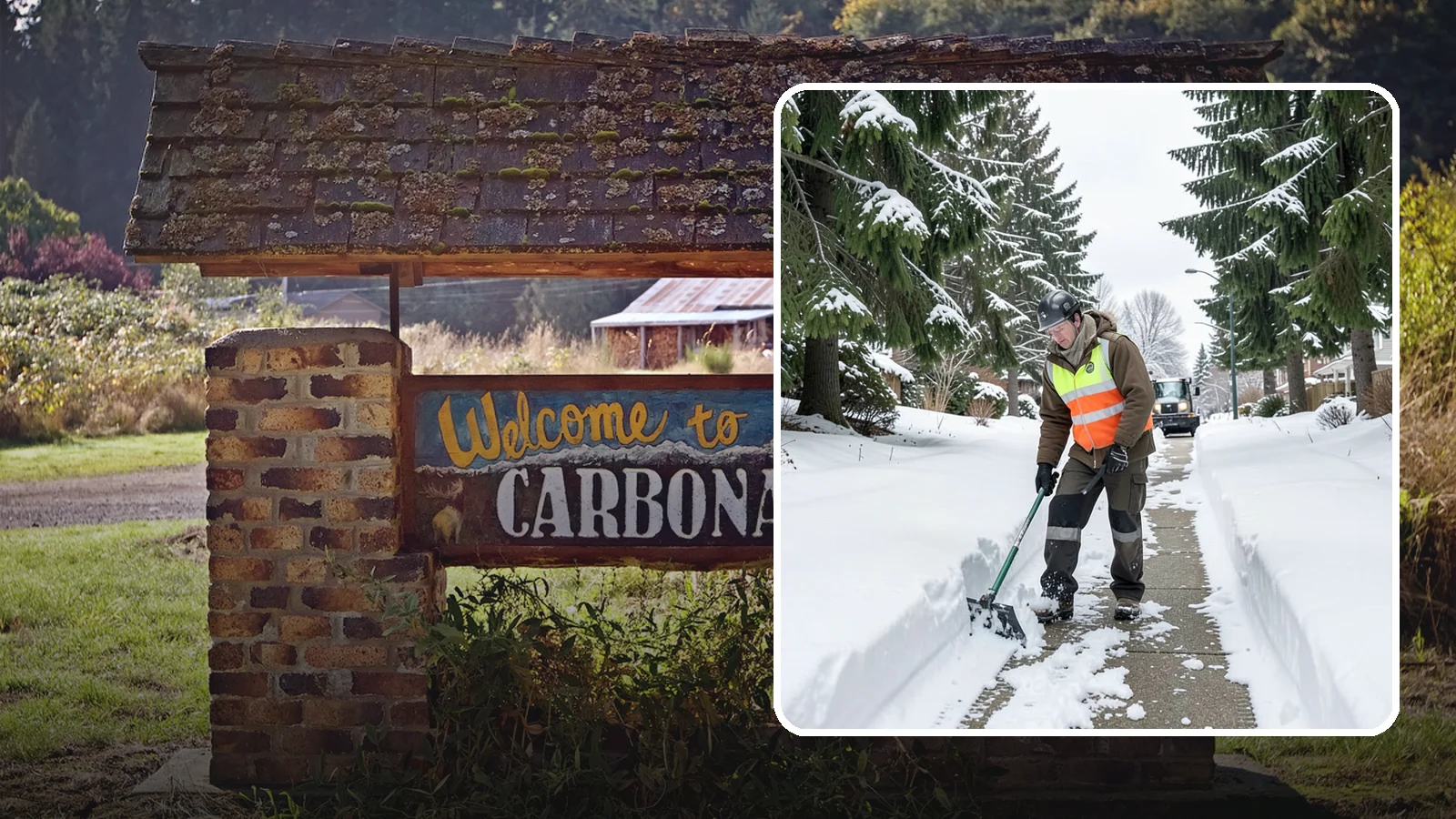
Snow here comes in few events, but they can be large. Carbonado averages about 2.8 days a year with 1 in or more of snow, and about 6 days with snow on the ground. Snow records near Carbonado are limited, so treat these figures as approximate. Storms since 2005 include 14.5 in on Feb 6, 2017, 12.0 in over Nov 21–23, 2010, and 12.0 in over Feb 11–13, 2019. Walks buried under that much snow need real hand work.
Ice is the more frequent issue. There are about 46 freezing nights from October to April, and about 1.0 light-snow day a year that needs deicing. A thin glaze on a walk can be a bigger hazard than deep snow.
A typical visit includes:
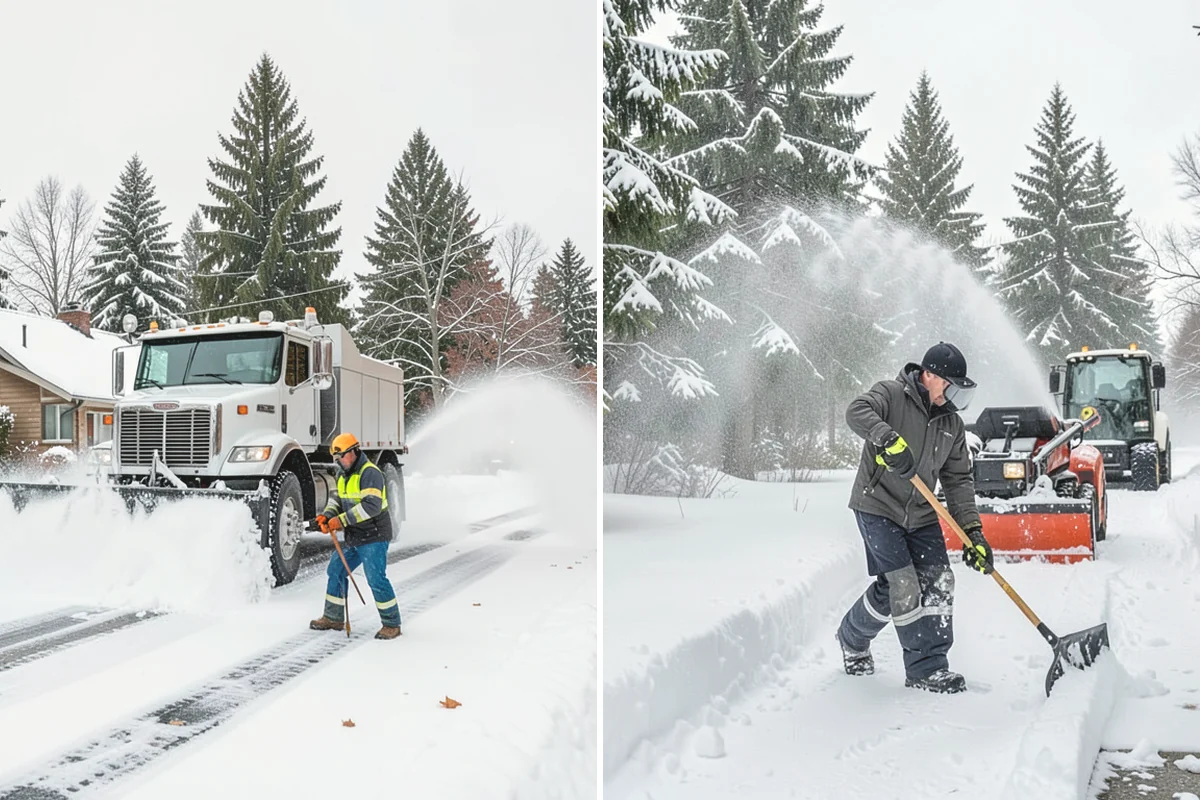
- Shoveling sidewalks, steps and entry paths
- Clearing around doors and walkway edges
- Spreading bagged ice melt where ice forms
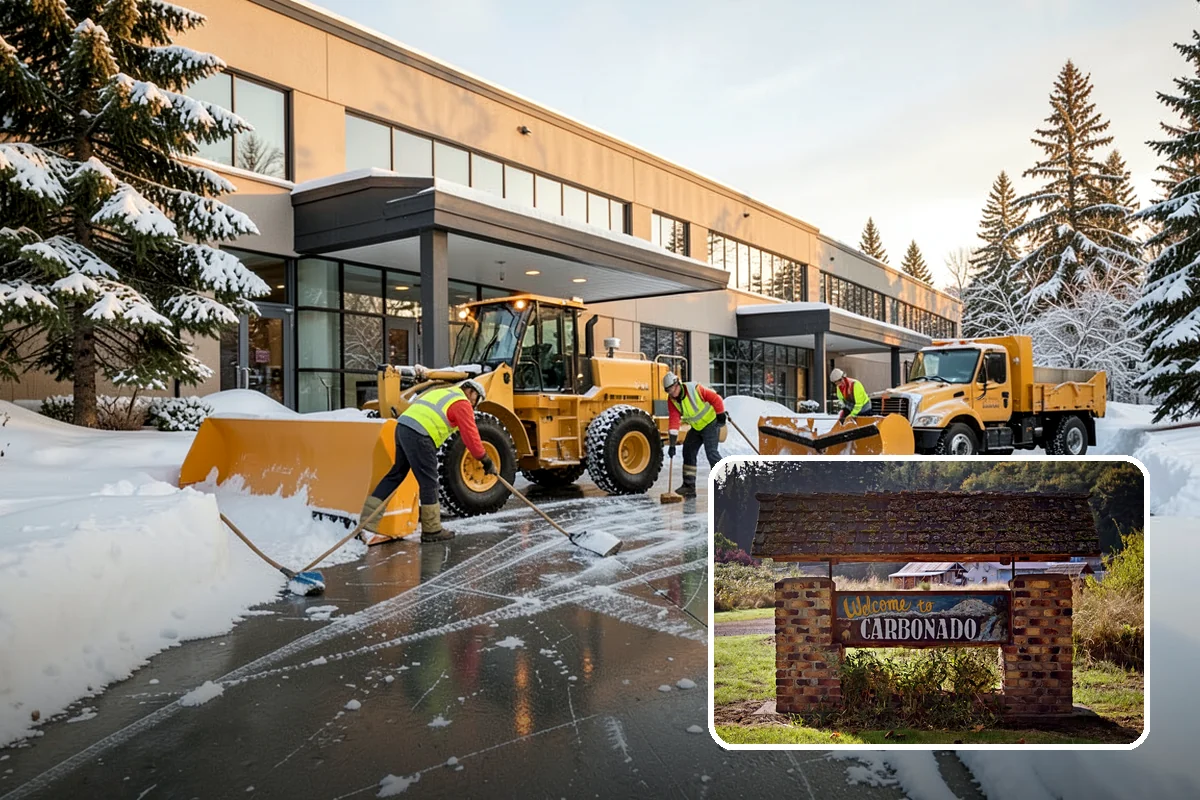
Pricing is simple. Crew members are $110 per person-hour, and ice melt is $45 per 50 lb bag. Carbonado is in zone D, with a $525 trip charge per dispatch. There is a 2-hour minimum per dispatch. Our Bothell yard is 93 minutes from Carbonado. For deeper snow on larger areas, a Kubota SCL1000 compact track loader with operator is $175 per hour.