How Trail Snow Removal Works in Carbonado
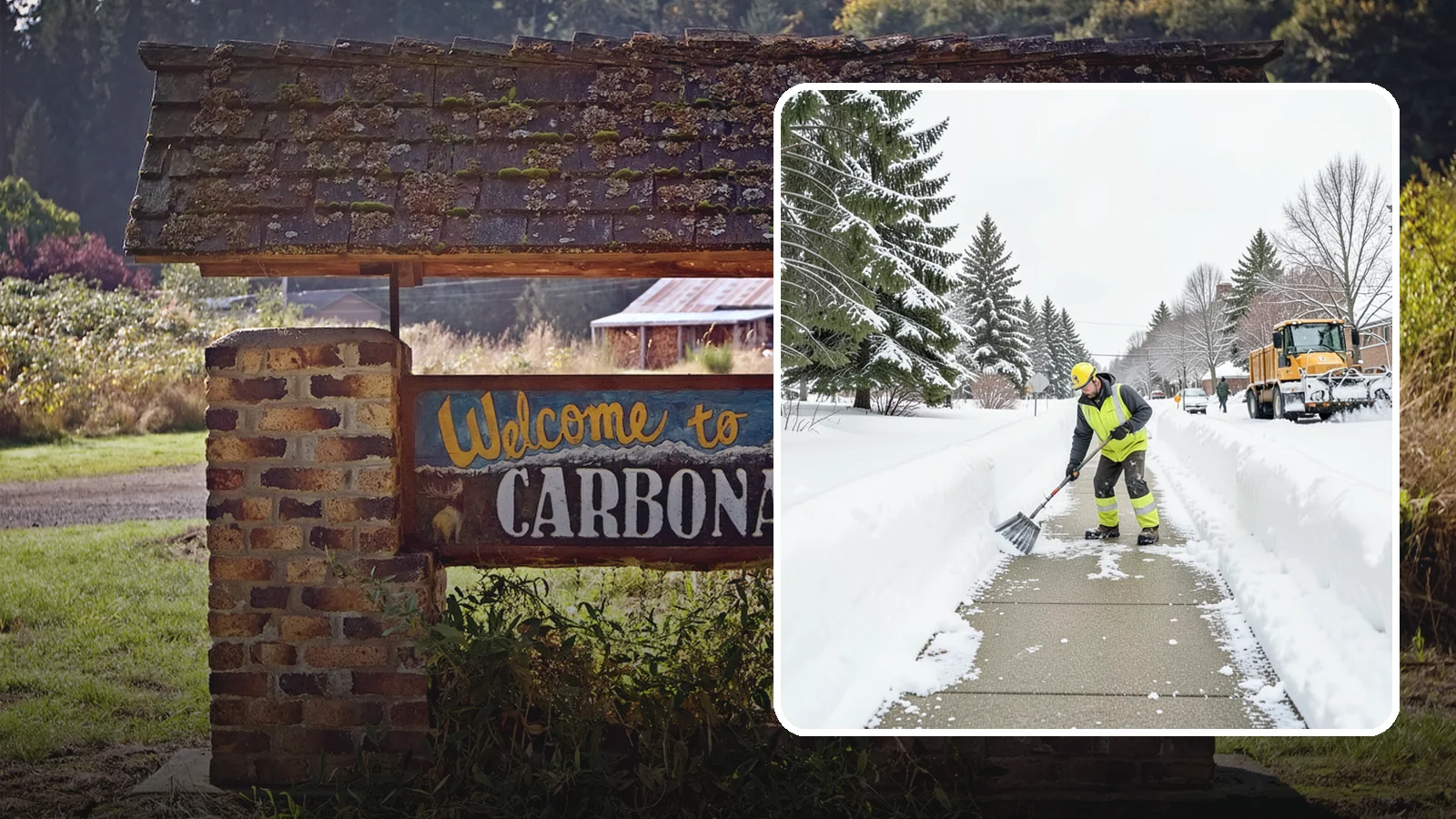
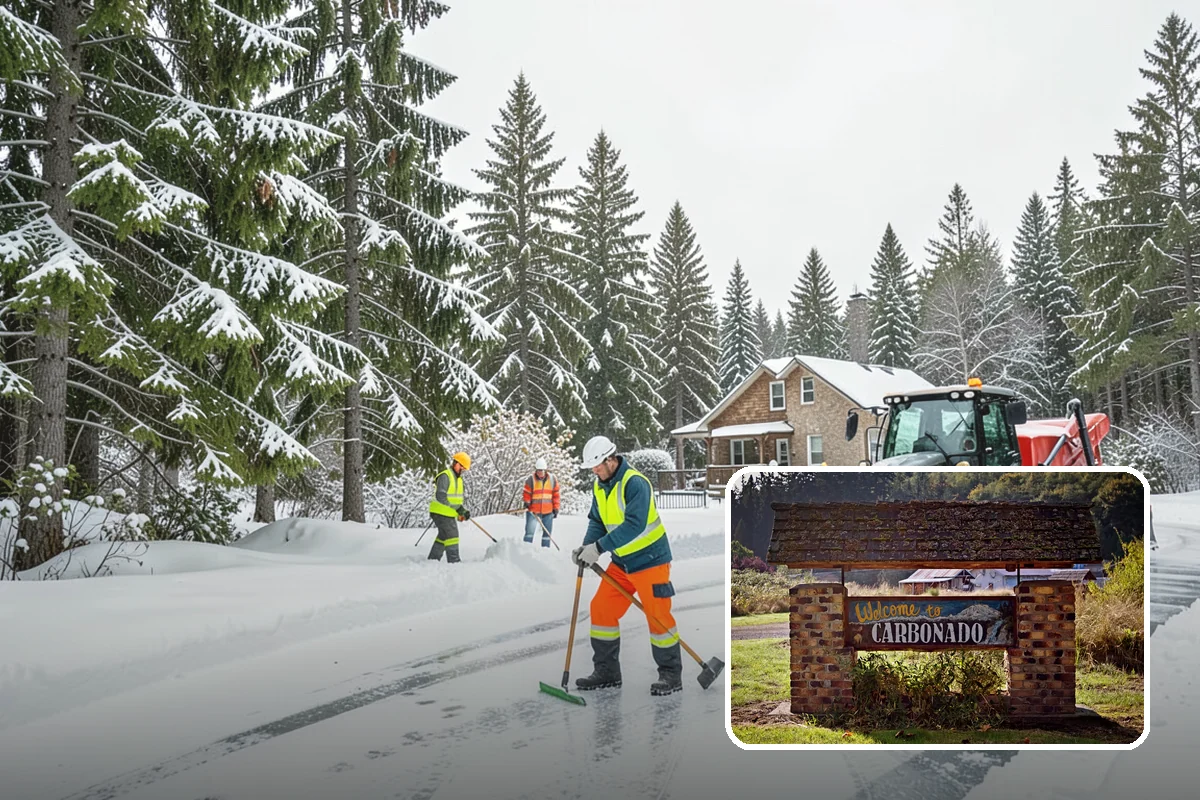
Trail clearing is different from plowing a lot. Paths are narrow, surfaces vary, and the edges matter. Our crews shovel and clear by hand, and when a trail is wide enough we bring a compact track loader with an operator.
Carbonado does not see snow often. Snow sits on the ground about 6 days a year, and days with 1 inch or more average 2.8. About 67% of winters have at least one 1-inch day. The bigger risk is ice. The area logs about 46 freezing nights from October to April, so wet trail surfaces can freeze even when little snow falls. Approximate records also show larger events, such as about 12.0 inches over Nov 21-23, 2010, and about 12.0 inches over Feb 11-13, 2019.
Typical work on a trail includes:
- Shoveling and hand clearing of the walking surface
- Loader work on wider trail sections
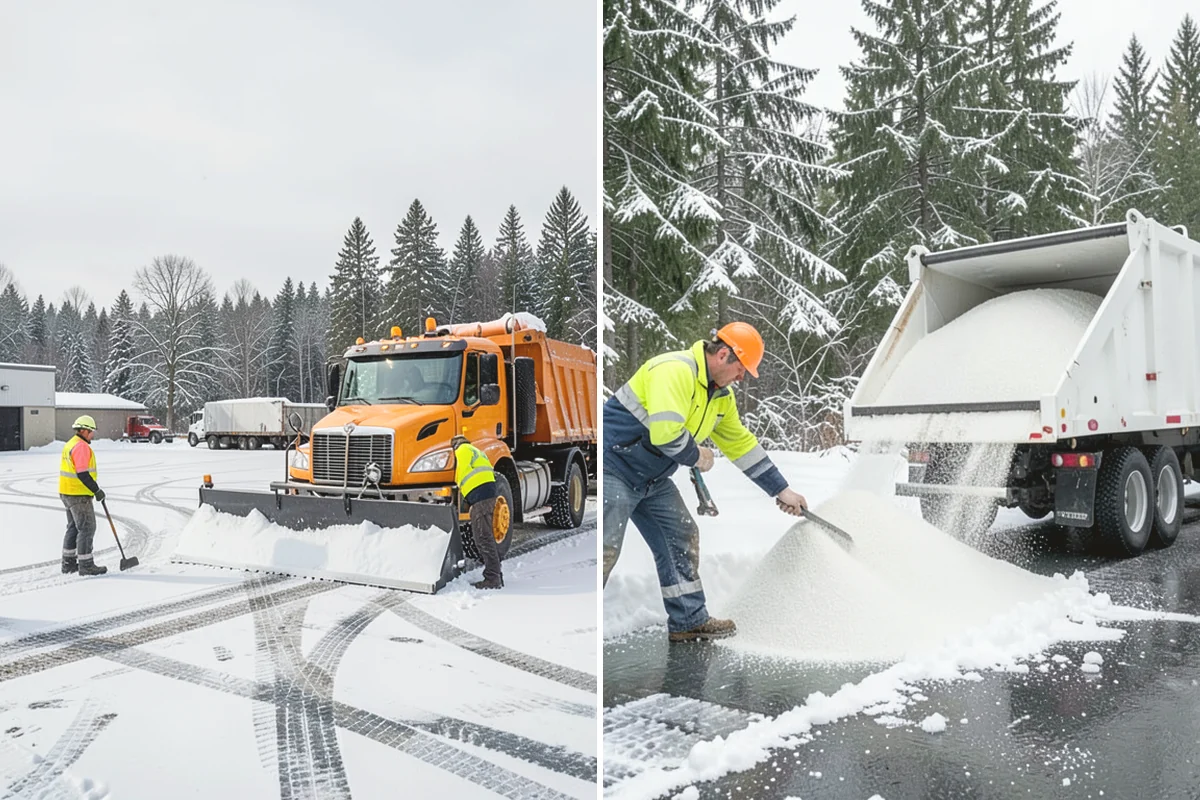
- Bagged ice melt where it suits the surface
Carbonado is 93 minutes from our Bothell yard. Pricing is a $525 trip charge per dispatch (zone D), $110 per person-hour for crew members, $175 per hour for the Kubota SCL1000 loader with operator, and $45 per 50 lb bag of ice melt. Each dispatch has a 2-hour minimum.