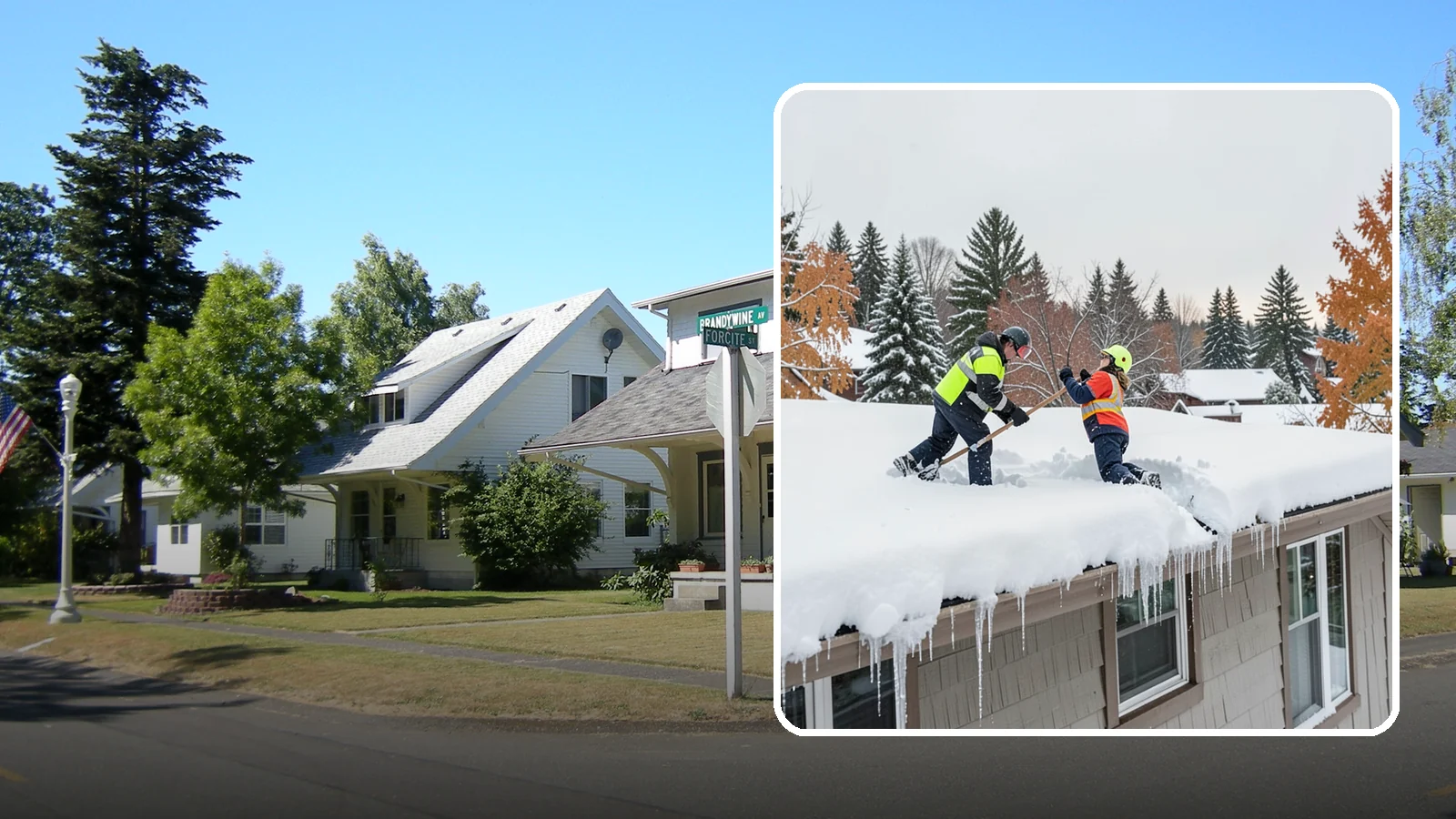
How Roof Snow Removal Works in DuPont, WA
Most DuPont winters bring little snow. The snowiest season, 2018-19, totaled 15.1 in. The largest storm since 2005 dropped 13.8 in, and the biggest single day was 7.2 in. Those are the events that put real weight on a roof.
Freezing nights matter as well. DuPont has 40 of them between October and April. Snow that melts by day and refreezes at night can form ice at eaves and in gutters, so removal often includes more than the snow itself.
A roof job here usually involves:
- Checking the roof for access, edges and hazards
- Removing snow by hand in controlled sections
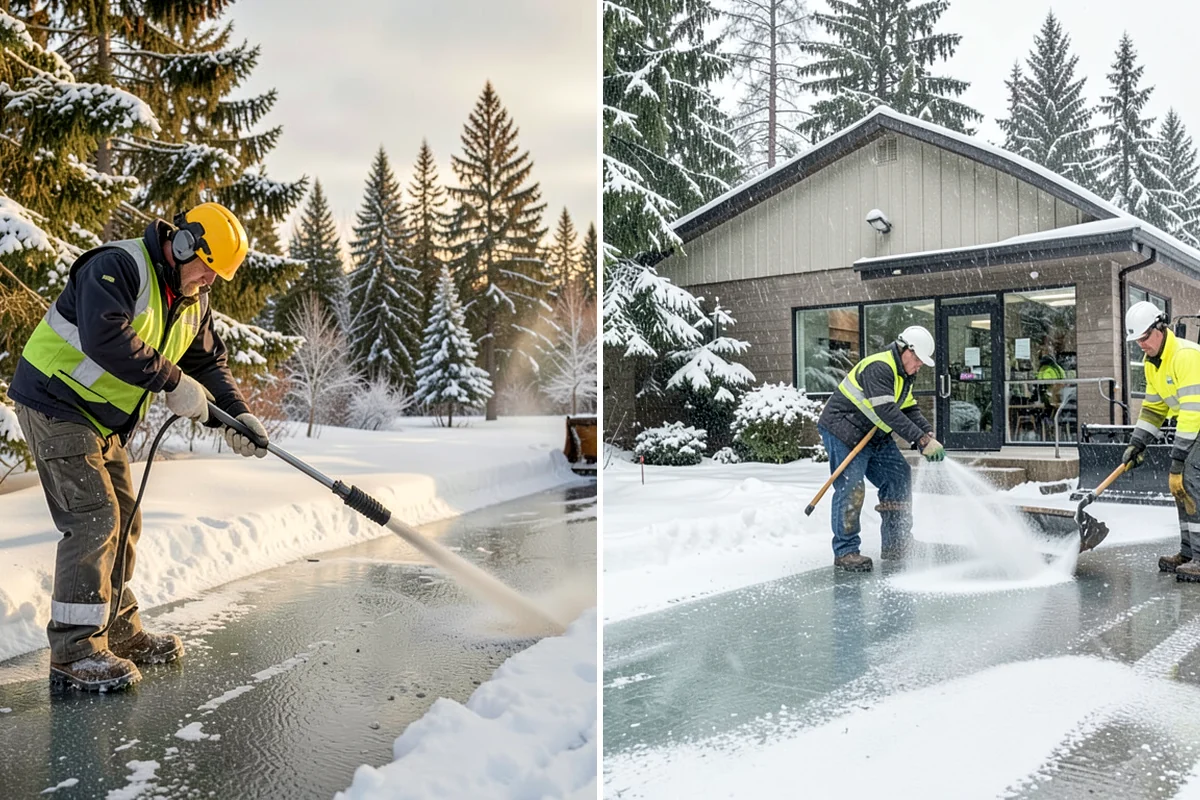
- Clearing ice build-up where it can be reached safely
- Clearing sidewalks and entries below the work area
Because snow is infrequent, many homes and buildings go years without needing this service. Nearby spotter reports show how light most events are: 4.4 in near DuPont on Feb 9, 2014, and 2.3 in at Steilacoom on Feb 14, 2021. Roof work is usually worth calling about after a larger storm or when ice is building up.
Pricing is simple. A crew member costs $110 per person-hour for shoveling, sidewalks and hand work. DuPont is in zone D, with a trip charge of $525 per dispatch. The drive from Bothell is 90 minutes, so we recommend calling early.