How Culvert Thawing Works at Edgewood Properties
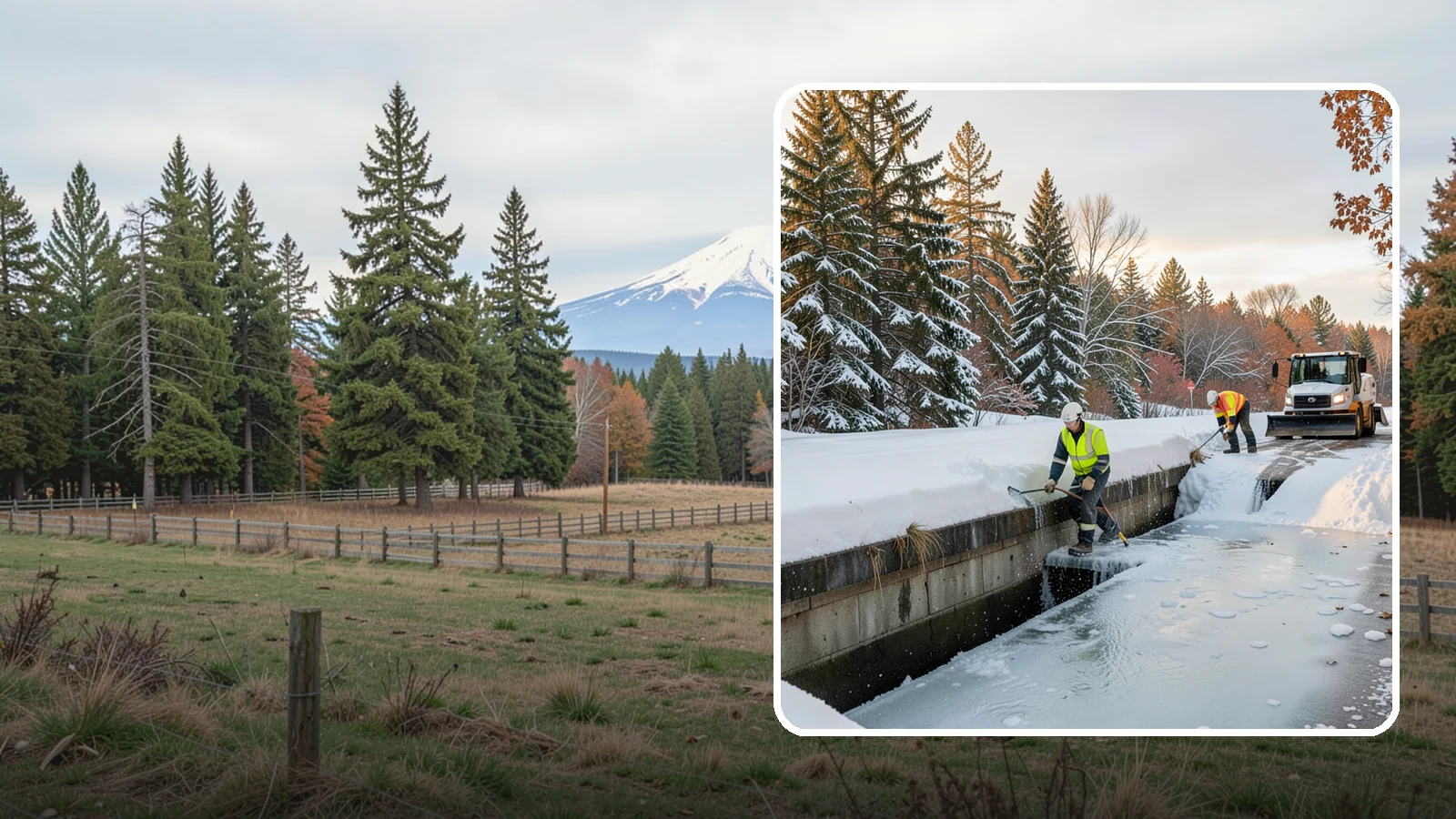
A frozen culvert is usually a small problem that turns into a bigger one. Water pools at the inlet, freezes overnight, and narrows the opening a little more each time. Our crew works on the inlet and outlet by hand, clearing ice, slush and debris so water can move again.
The local pattern shapes the work. Edgewood has only 1.2 days a year that stay below freezing, so most ice forms overnight and breaks down by afternoon. Much of the trouble comes from repeated freeze and thaw cycles across 30 freezing nights, not from deep snow. Larger events do happen. Recent ones logged for the area include Heavy Snow on Feb 22, 2018, and a Winter Storm on Feb 12, 2021. The area also sees about 3.38 Winter Weather Advisories a year, and two ice storm reports have been logged since 2005.
A typical visit may include:
- Checking the inlet and outlet for ice and debris
- Hand clearing frozen material from the pipe opening
- Clearing the path of runoff away from driveways and walkways
Pricing is based on crew time and travel. Crew members are $110 per person-hour for hand work. The trip charge for Edgewood, zone C, is $350 per dispatch. Edgewood is 66 minutes from our Bothell yard.