Emergency Roof Snow Removal in Edgewood, WA
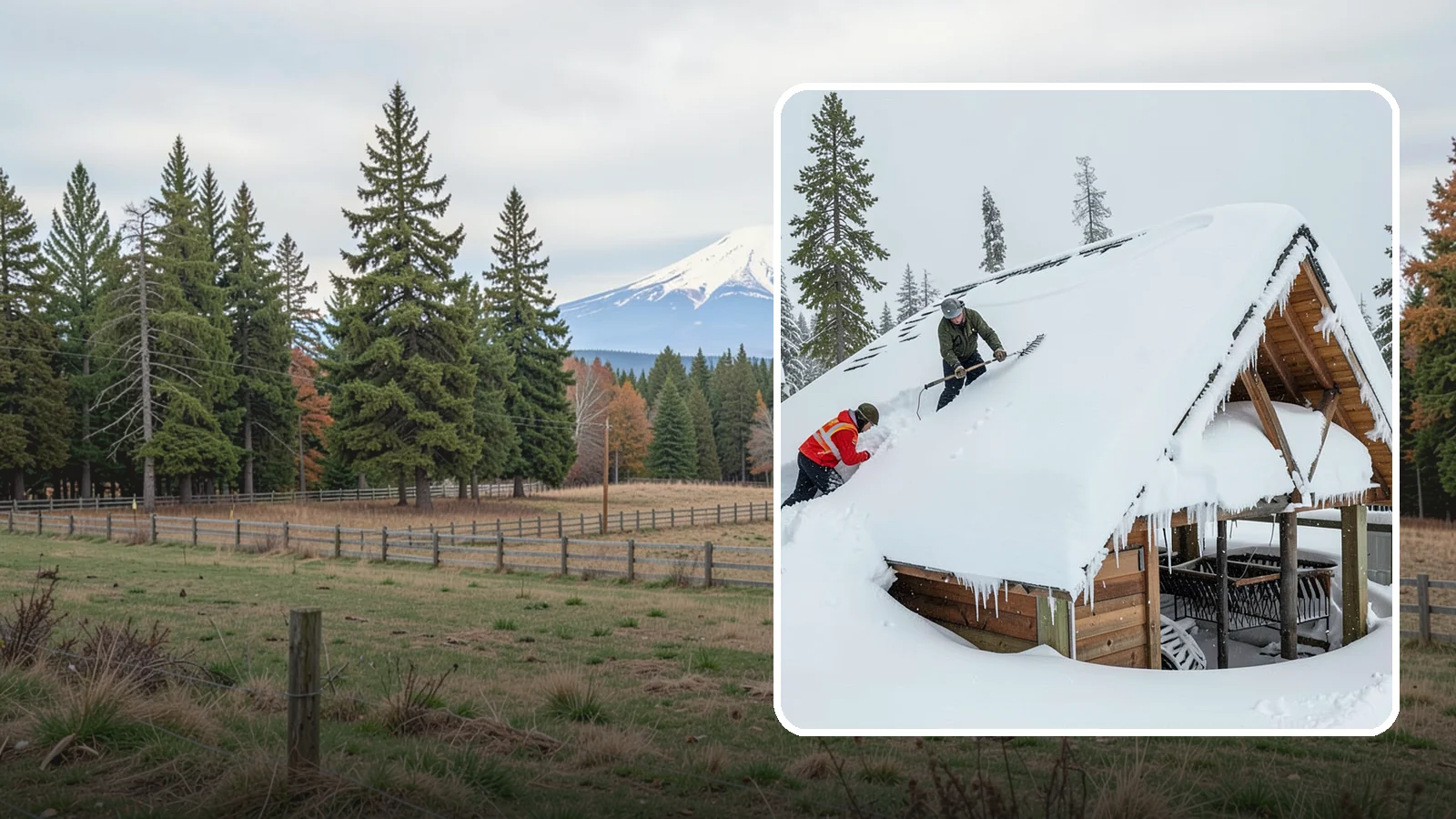
Emergency roof snow removal means clearing snow from a roof by hand when the load is a concern. In Edgewood, that usually means homes, garages, sheds and small commercial buildings after a storm that leaves more snow than usual.
The local pattern shapes the work. Edgewood averages 6.8 inches of snow per season and only 2.1 days a year with 1 inch or more. Days with 4 inches or more are very rare, at about 0.33 a year. Most winters bring little. A few storms bring a lot. The snowiest season on record here, 2008-09, reached 17.5 inches. Nearby spotters reported 10 inches near Puyallup on Feb 14, 2021, and 8 inches in Puyallup on Feb 9, 2019.
Because storms are infrequent, many roofs here are not built or watched with snow in mind. There are also about 30 freezing nights between October and April. Snow that melts by day can refreeze overnight, which adds weight and ice at the eaves.
A typical job involves:
- Crew members clearing snow by hand from the roof
- Care taken around vents, skylights and gutters
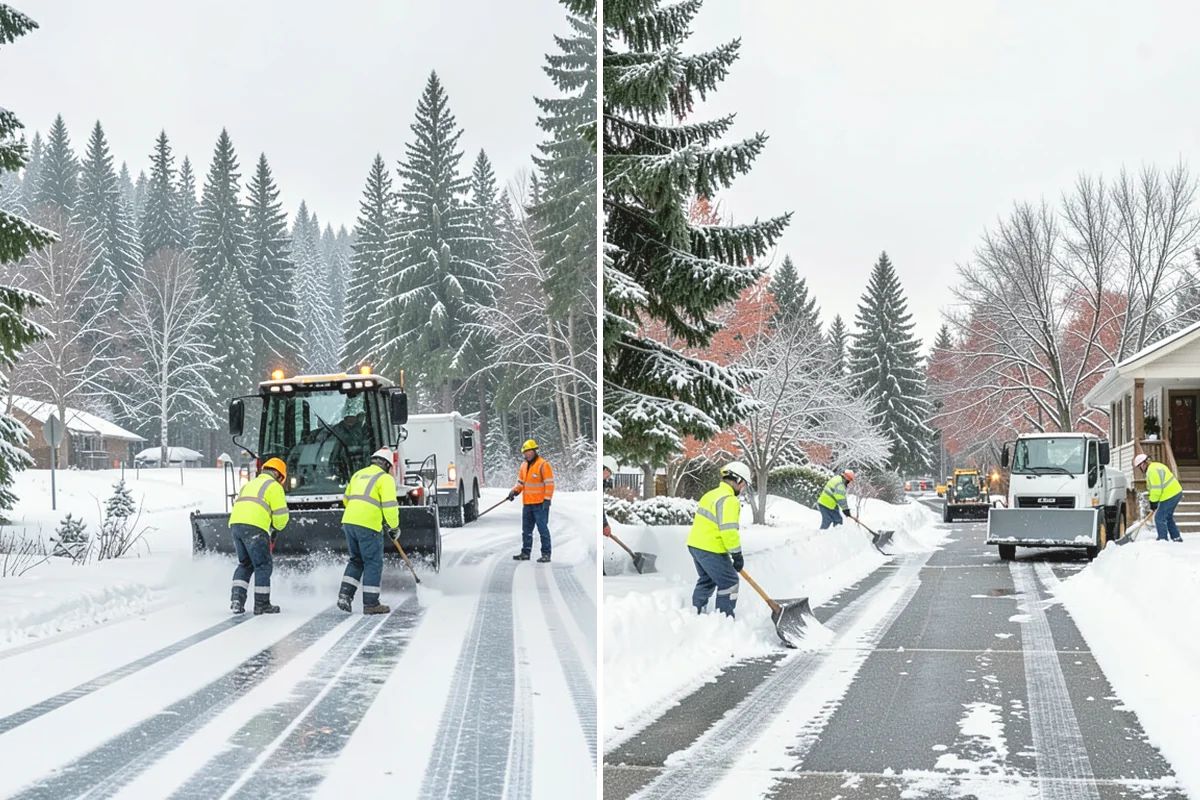
- Clearing walkways and areas below the roof edge
Pricing is simple. Crew members are $110 per person-hour for shoveling, sidewalks and hand work. The trip charge for Edgewood (zone C) is $350 per dispatch.