Roof Valley Clearing in Edgewood, WA: What the Job Involves
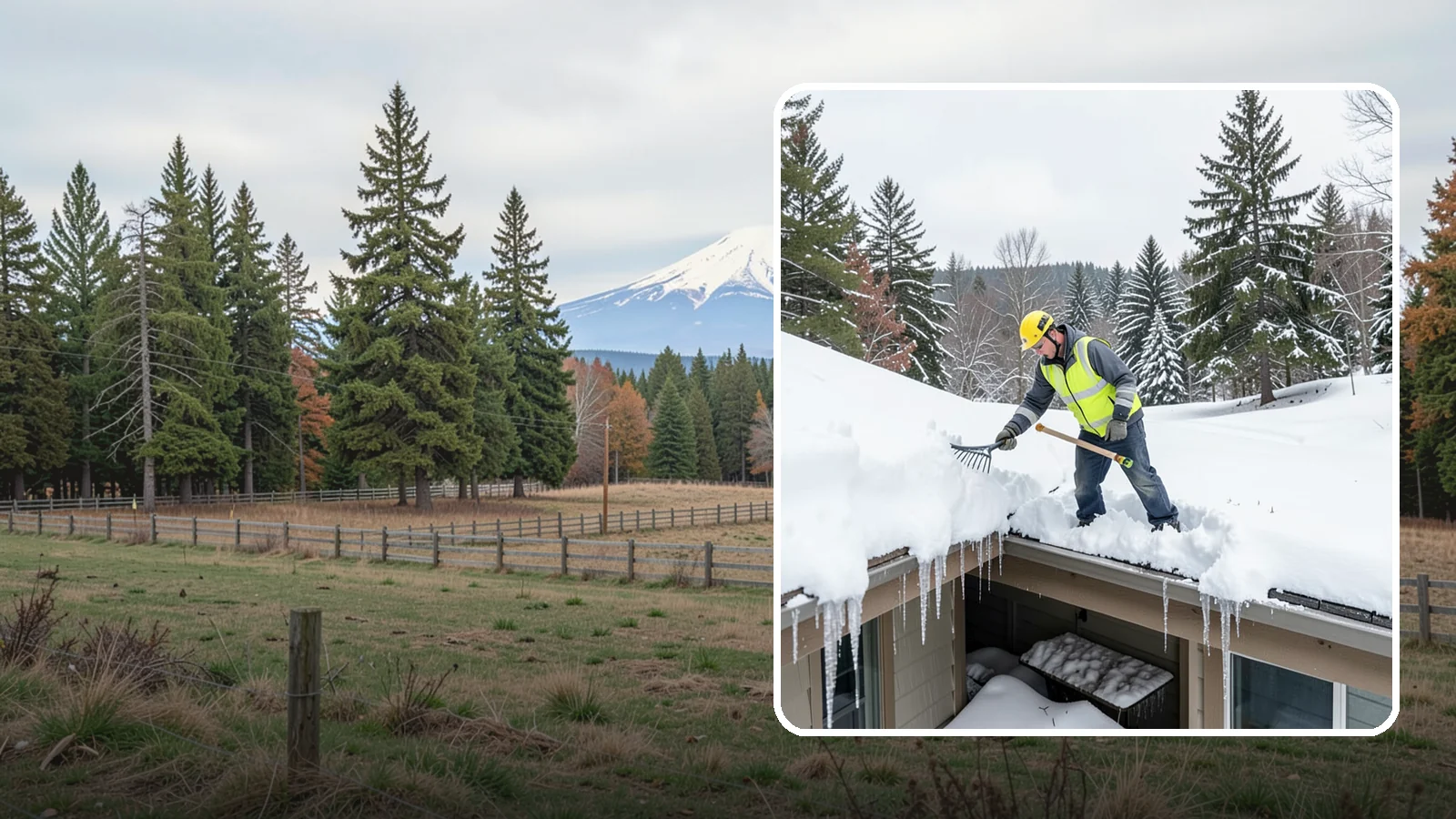
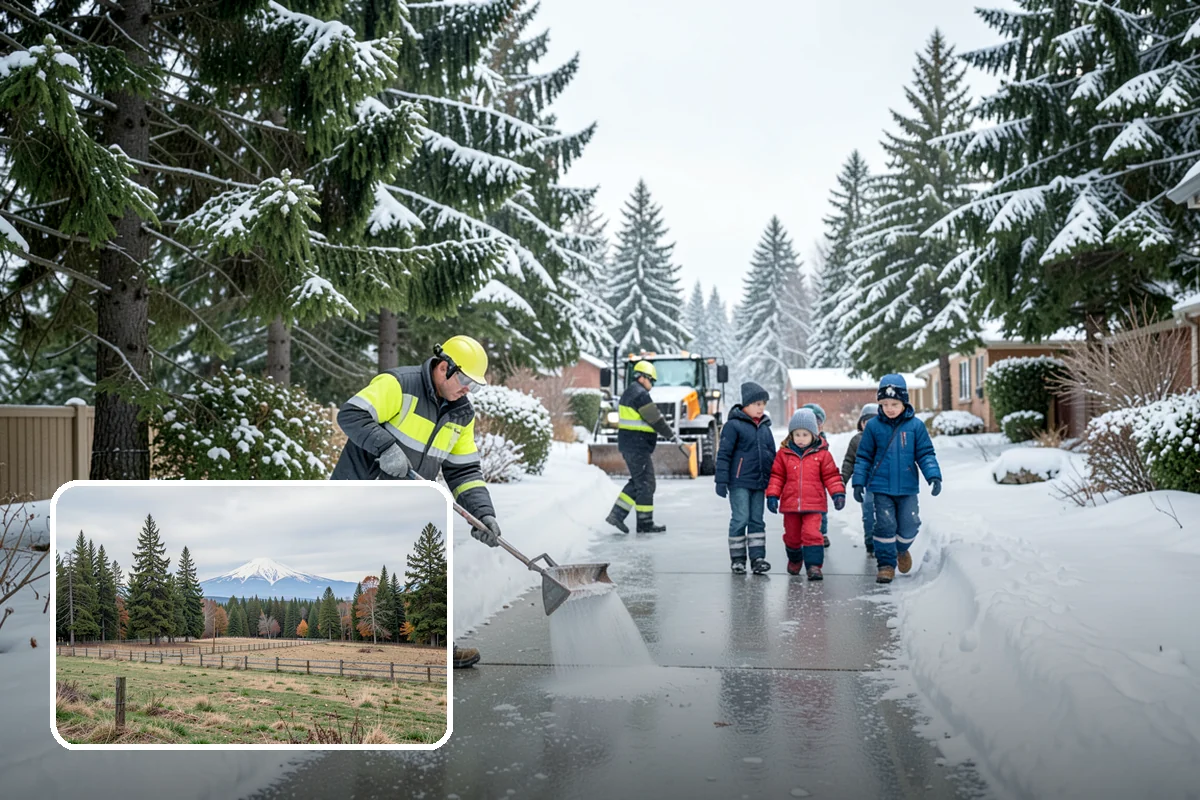
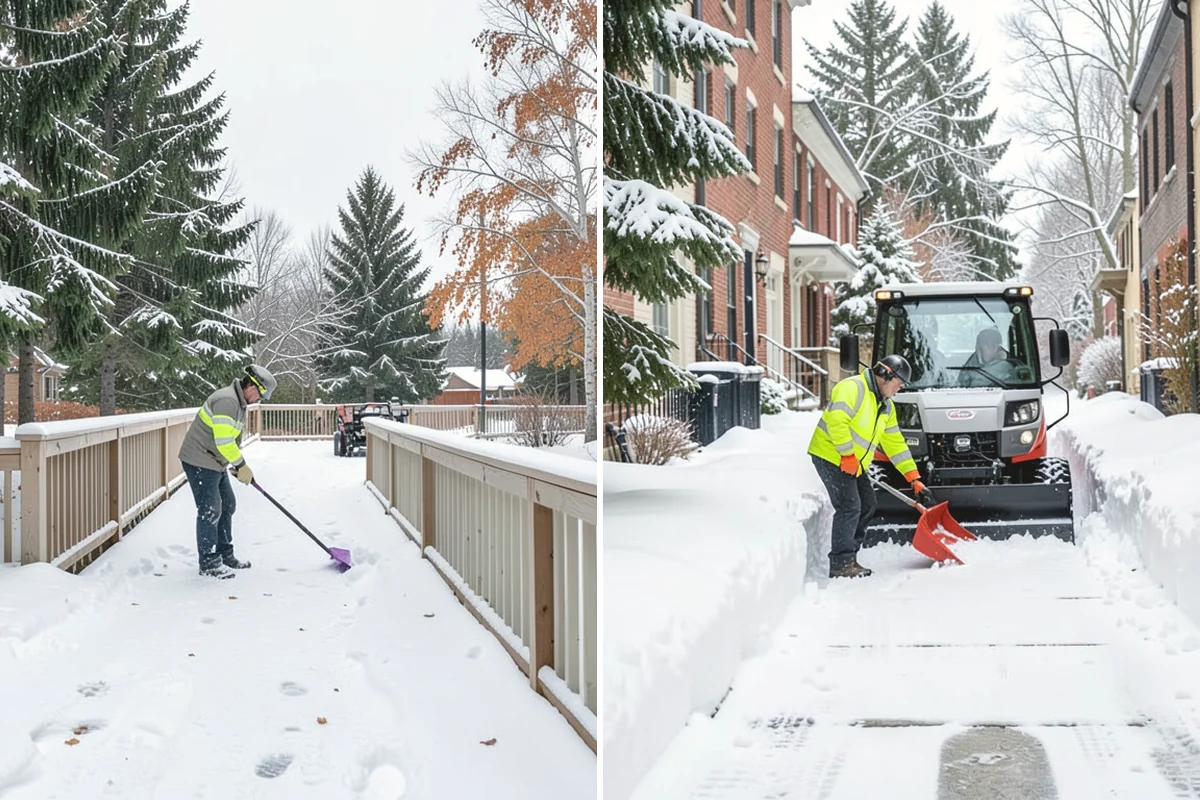
Valley clearing is hand work. A crew member works along the valley and removes the snow and ice that has built up where the slopes join. The goal is to open the channel so melt can run to the gutters and downspouts instead of backing up under shingles.
Edgewood does not get snow often. The area averages 6.8 in per season, 2.1 days a year with 1 in or more, and only 0.33 heavy-snow days of 4 in or more. But the big days can be sharp. Spotters near Edgewood reported 8.3 in near Sumner and 8 in at Puyallup on Feb 9, 2019, and 6.4 in near Algona on Feb 13, 2021. The snowiest season on record, 2008-09, reached 17.5 in.
Freezing nights matter too. Edgewood averages 30 freezing nights from October to April. Snow that melts by day and refreezes overnight can turn a valley into ice.
- Crew member hand work: $110 per person-hour
- Trip charge for Edgewood (zone C): $350 per dispatch
Because snow is infrequent here, many roofs get little attention until a storm hits. If you see a heavy load sitting in a valley, call us at 206-809-9669.