Keeping You Moving. Beyond Expectations.

Edmonds Gas Station Deicing
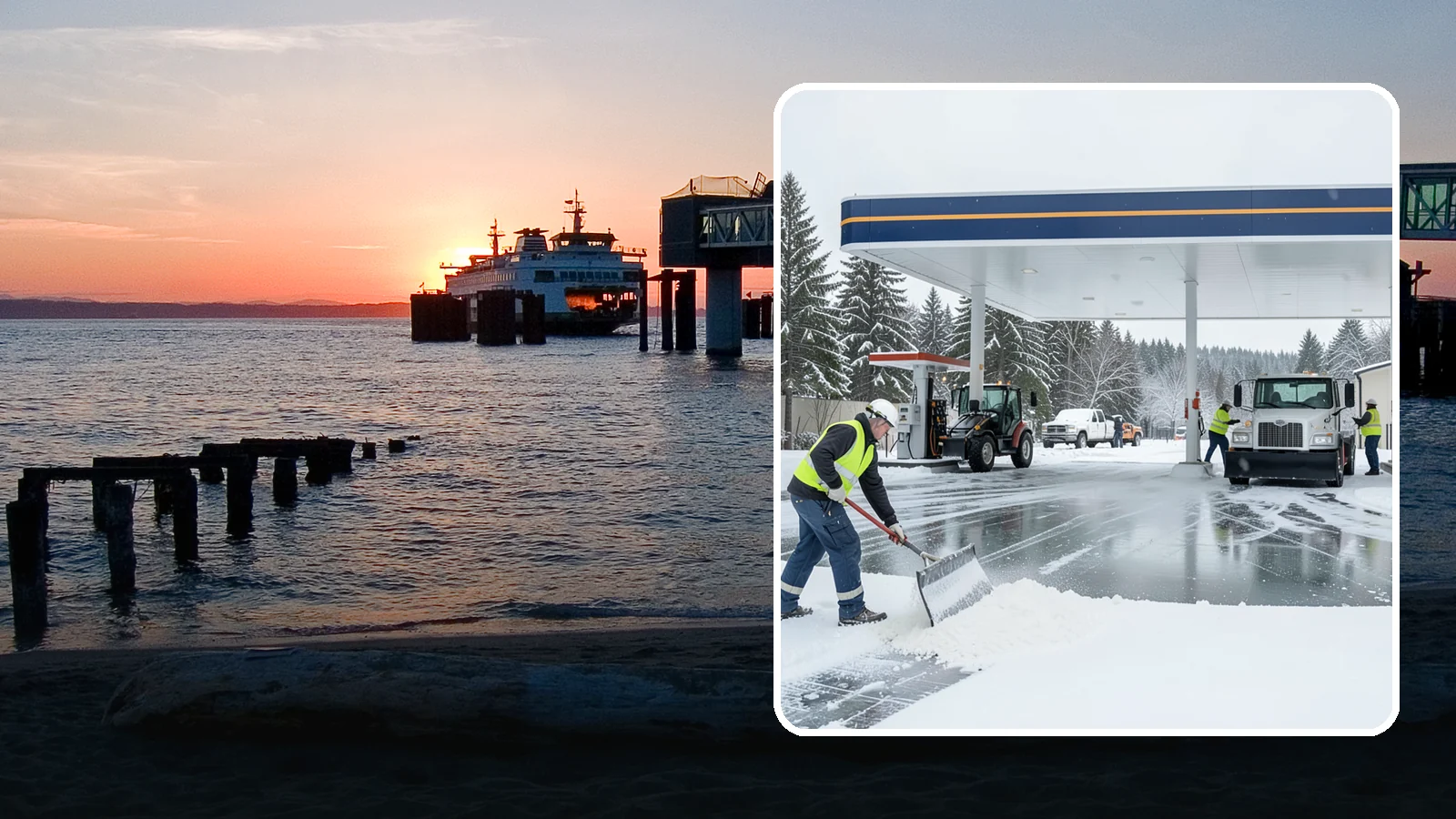
Deicing for gas stations and convenience stores, keeping fuel islands, pump approaches, and store entrances safe during a hard freeze.
Gas stations in Edmonds have wet pavement, fuel islands, and steady foot traffic. A thin layer of ice at the pumps or the driveway apron is a slip hazard. Washington Snow Removal treats these surfaces from our Bothell yard, 22 minutes away.
Edmonds averages 6.0 in of snow a season, with 33 freezing nights from Oct to Apr. We are licensed, bonded and insured. Call 206-809-9669 to set up deicing for your station.
Ice and freezing nights in Edmonds
Recent winter events logged for the Edmonds area
- Feb 3–5, 2025: Winter Weather
- Dec 19, 2022: Winter Weather
- Nov 29–Dec 1, 2022: Winter Weather; Heavy Snow
- Feb 12, 2021: Winter Storm
Sources: NOAA and National Weather Service records for Edmonds, 2005–2026.
Gas Station Deicing in Edmonds: What the Work Involves
Edmonds sees snow on only 1.9 days a year at 1 in or more. The bigger problem is the 33 freezing nights between Oct and Apr, plus about 3.0 light-snow days that need deicing. Light snow and frost can leave a glaze on concrete before anyone notices. OpenStreetMap lists 6 gas stations inside city limits, including Chevron, Shell and Shell Express. Each has its own layout and traffic pattern.
A typical station visit covers:
- Spreading salt or ice melt on the pump islands and the lanes around them
- Treating the store entrance, walkways and driveway aprons
- Hand work and shoveling by crew members where trucks cannot reach
- Clearing sidewalks along the property
Under ECC 9.20.050 (with 9.20.010(B)), the abutting property owner is responsible for maintaining the sidewalks next to the property. The code states no deadline.
Recent events in the Edmonds area were logged on Feb 4, 2025, Dec 19, 2022, Dec 1, 2022, and Feb 12, 2021. Two ice storm reports have been logged since 2005.
Pricing: bulk salt applied is $300 / ton, bagged ice melt is $45 / 50 lb bag, and crew members are $110 / person-hour. The Edmonds trip charge is $200 / dispatch, with a 2-hour minimum per dispatch.
Prices in Edmonds
Billed by the hour for the crew and equipment on site, plus materials.
| Plow and spreader truck with driver (Ram 5500) | $325 / hour |
| Ice melt, bagged | $45 / 50 lb bag |
| Bulk salt, applied | $300 / ton |
| Crew member (shoveling, sidewalks, hand work) | $110 / person-hour |
| Trip charge for Edmonds (zone A) | $200 / dispatch |
- 2-hour minimum per dispatch.
- Edmonds is 22 minutes from our Bothell yard.
Prices approved Oct 2026.
Gas stations in Edmonds
OpenStreetMap lists 6 gas stations inside Edmonds city limits.
- Chevron
- Shell
- Shell Express
Source: OpenStreetMap contributors, Oct 2026. Named sites are examples of local facilities, not customers.
Service Area
Edmonds
Benefits
Keeps fuel islands and store entrances safe for customers; Treats pump approaches where vehicles and people mix; Handles nonstop turnover with frequent service; Reduces slip liability at a high-traffic fueling site; Uses deicer safe for sealed concrete around pumps