Keeping You Moving. Beyond Expectations.

Fife Emergency Residential Snow Removal
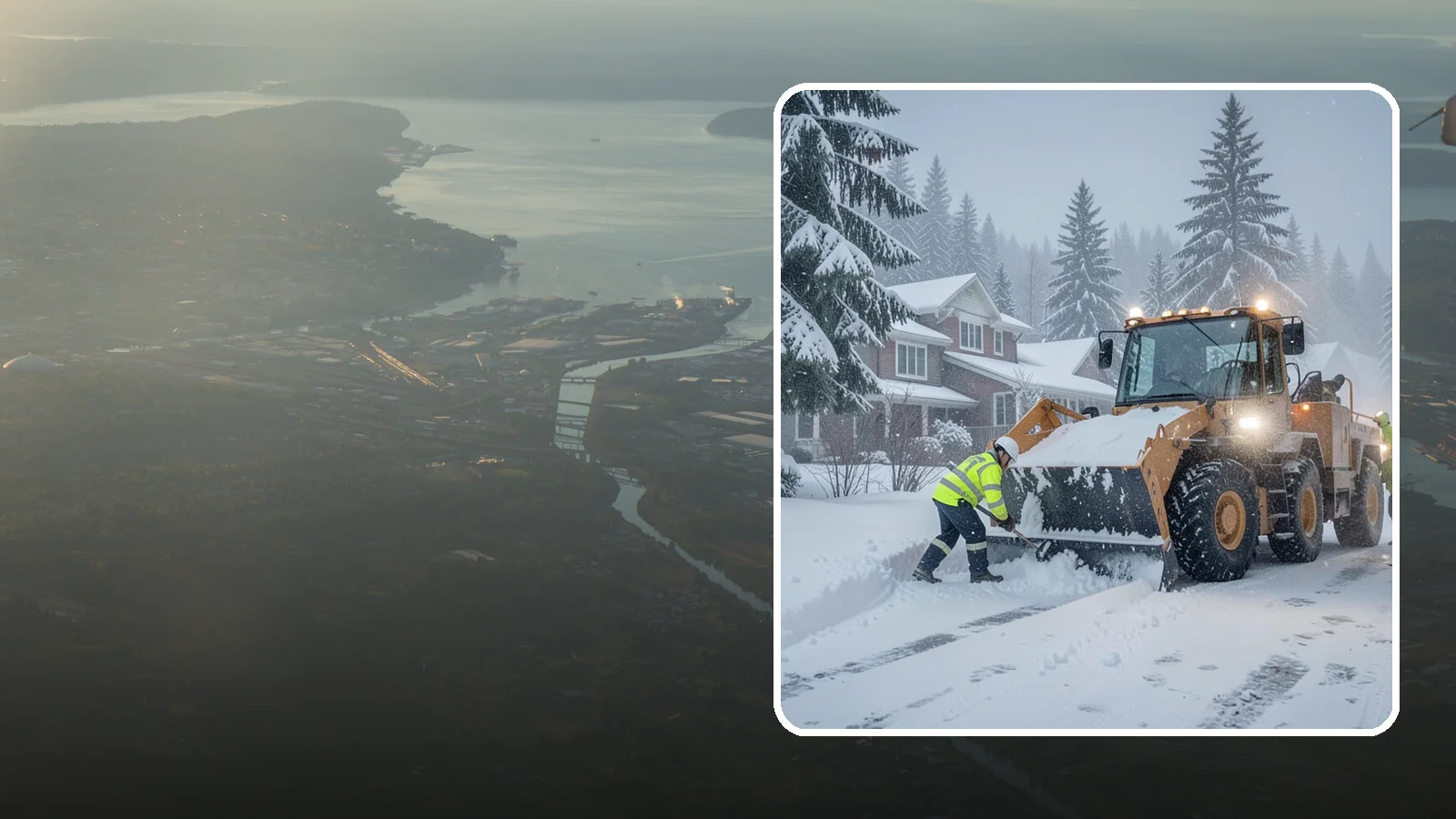
We respond fast to residential snow emergencies when a sudden storm traps your household at home.
Snow in Fife does not come often, but it can stop a driveway fast. Washington Snow Removal handles emergency residential snow removal for Fife homeowners when a storm leaves you blocked in. We are based in Bothell, we are licensed, bonded and insured, and you can reach us at 206-809-9669.
We clear driveways, walkways, steps and the paths to your front door. Fife is 65 minutes from our Bothell yard, so we dispatch to you by the job. Pricing is hourly, with a 2-hour minimum per dispatch and a $350 trip charge for Fife (zone C).
How hard Fife storms hit
Biggest storms in Fife since 2005
- Feb 12–15, 2021: 8.9 in total, 5.7 in on the biggest day
- Feb 8–12, 2019: 8.6 in total, 4.0 in on the biggest day
- Feb 5–6, 2017: 8.3 in total, 5.4 in on the biggest day
- Dec 26–28, 2021: 8.1 in total, 5.7 in on the biggest day
Sources: NOAA and National Weather Service records for Fife, 2005–2026.
Emergency Snow Removal for Fife Homes and Driveways
Fife averages 5.8 in of snow per season and only 1.8 days a year with 1 in or more. Most winters bring little. Then a short, heavy storm arrives. The biggest single day since 2005 was 5.7 in, and the largest storm since 2005 was 12.4 in. Four storms since 2005 each topped 8 in total, including Feb 12–15, 2021 at 8.9 in and Dec 26–28, 2021 at 8.1 in.
Because snow is rare, few homes keep plows or ice melt on hand. Fife also sees 27 freezing nights from Oct to Apr and 3.38 Winter Weather Advisories a year. Snow that is packed down by tires and refrozen overnight turns to ice on driveways and walks.
An emergency call at a Fife home can involve:
- Plowing the driveway with a Ram 3500 at $250 / hour
- A Ram 5500 with plow and spreader at $325 / hour
- A compact track loader at $175 / hour for tight or heavy spots
- Crew members at $110 / person-hour for steps, sidewalks and hand work
- Bagged ice melt at $45 / 50 lb bag, or bulk salt applied at $300 / ton
Call 206-809-9669 and tell us the size of your driveway and what is blocking you in.
Prices in Fife
Billed by the hour for the crew and equipment on site, plus materials.
| Plow truck with driver (Ram 3500) | $250 / hour |
| Plow and spreader truck with driver (Ram 5500) | $325 / hour |
| Compact track loader with operator (Kubota SCL1000) | $175 / hour |
| Crew member (shoveling, sidewalks, hand work) | $110 / person-hour |
| Ice melt, bagged | $45 / 50 lb bag |
| Bulk salt, applied | $300 / ton |
| Trip charge for Fife (zone C) | $350 / dispatch |
- 2-hour minimum per dispatch.
- Fife is 65 minutes from our Bothell yard.
Prices approved Oct 2026.
Service Area
Fife
Benefits
Prioritizes urgent household needs during sudden storms; clears the critical drive and entry path first; bridges the gap when plows fall behind; keeps medical and care access open; deploys when a shovel simply cannot keep up