Keeping You Moving. Beyond Expectations.

Gig Harbor Emergency Parking Access
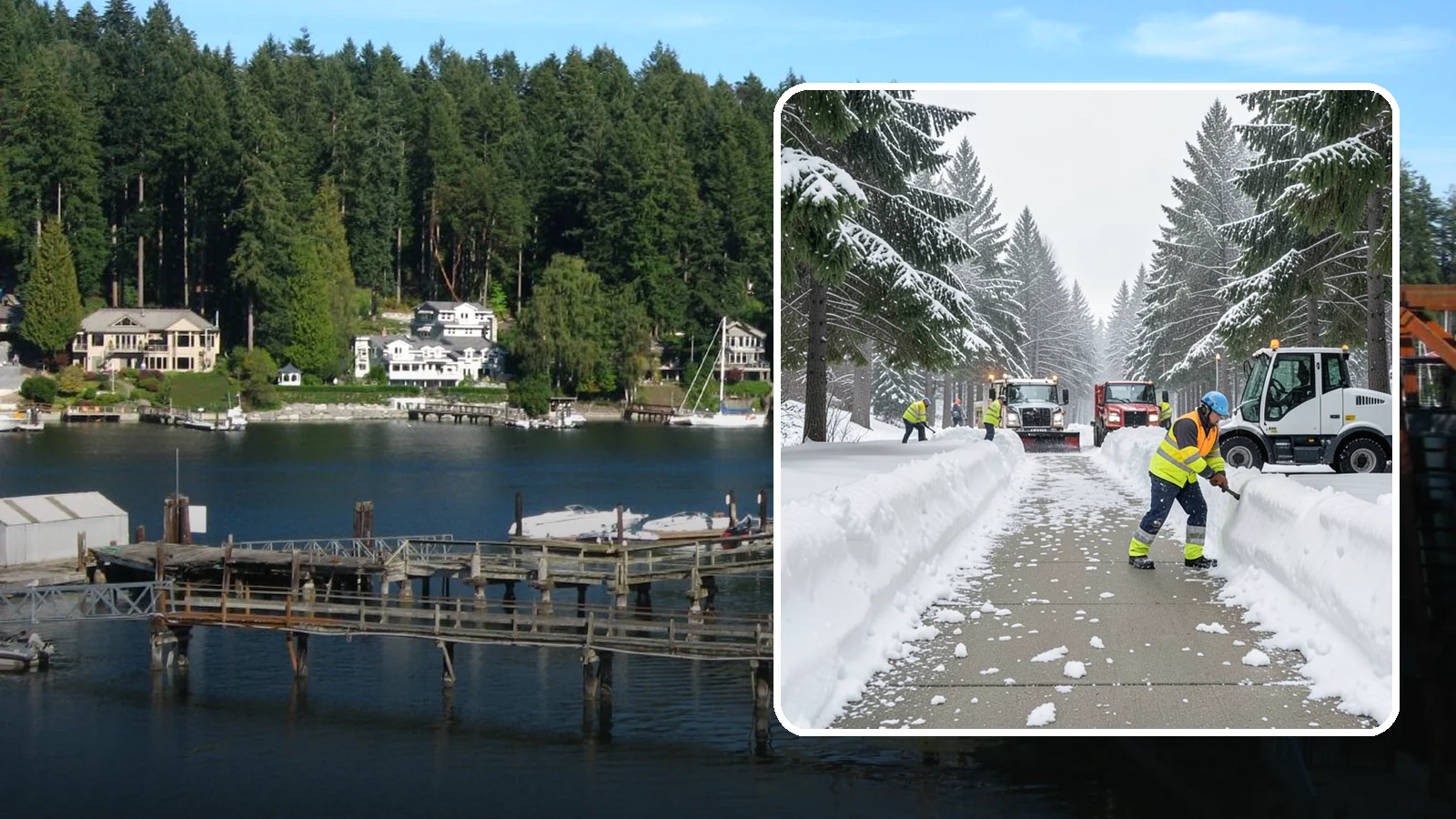
We rapidly reopen snowed-in parking lots and stalls across Western Washington so employees, customers, and residents can park and move safely.
Snow in Gig Harbor is rare, but when it falls, parking areas can stop working fast. Our Emergency Parking Access service clears a path into and through your lot so people, deliveries and service vehicles can get in. Washington Snow Removal is licensed, bonded and insured.
The city averages 5.5 in of snow per season and sees 1.5 days a year with 1 in or more. Most seasons are quiet, then a storm like Feb 9, 2019 arrives, when a spotter measured 12 in at Gig Harbor. Call 206-809-9669 to set up a dispatch.
Storm history for Gig Harbor
Largest snow totals reported near Gig Harbor
- Feb 9–12, 2019: Up to 12 in, 3 spotter reports: Gig Harbor 12 in, Artondale 5 in, Gig Harbor 5 in
- Feb 13–14, 2021: Up to 10 in, 3 spotter reports: Gig Harbor 10 in, 1 NE Artondale 7.8 in, 4 NNE Gig Harbor 3.8 in
- Feb 6, 2017: 5 in measured by a spotter at 4 NW Tacoma
- Dec 27, 2021: 4.2 in measured by a spotter at 1 NE Artondale
Sources: NOAA and National Weather Service records for Gig Harbor, 2005–2026.
What Emergency Parking Access Involves in Gig Harbor
Emergency access is about opening the essentials first. We clear the entrance, a main drive lane and enough stalls to use the lot. Then we treat the cleared surface. Crew members shovel walkways and hand-work areas where a truck cannot reach.
Gig Harbor gets heavy snow of 4 in or more only about 0.24 days a year. Since 2005 the largest storm was 16.7 in, and there have been 11 winter storm and heavy snow reports. Because big events are uncommon, many lots have no plan in place. The area also has 31 freezing nights from Oct to Apr, so ice can form on cleared pavement and needs treatment.
Our yard is in Bothell, 84 minutes from Gig Harbor. Dispatches here fall in zone C. A typical job may use:
- Plow truck with driver (Ram 3500): $250 / hour
- Plow and spreader truck (Ram 5500): $325 / hour
- Compact track loader (Kubota SCL1000): $175 / hour
- Crew member: $110 / person-hour
- Bulk salt, applied: $300 / ton
- Bagged ice melt: $45 / 50 lb bag
Each dispatch has a 2-hour minimum and a $350 trip charge for Gig Harbor.
Prices in Gig Harbor
Billed by the hour for the crew and equipment on site, plus materials.
| Plow truck with driver (Ram 3500) | $250 / hour |
| Plow and spreader truck with driver (Ram 5500) | $325 / hour |
| Compact track loader with operator (Kubota SCL1000) | $175 / hour |
| Crew member (shoveling, sidewalks, hand work) | $110 / person-hour |
| Ice melt, bagged | $45 / 50 lb bag |
| Bulk salt, applied | $300 / ton |
| Trip charge for Gig Harbor (zone C) | $350 / dispatch |
- 2-hour minimum per dispatch.
- Gig Harbor is 84 minutes from our Bothell yard.
Prices approved Oct 2026.
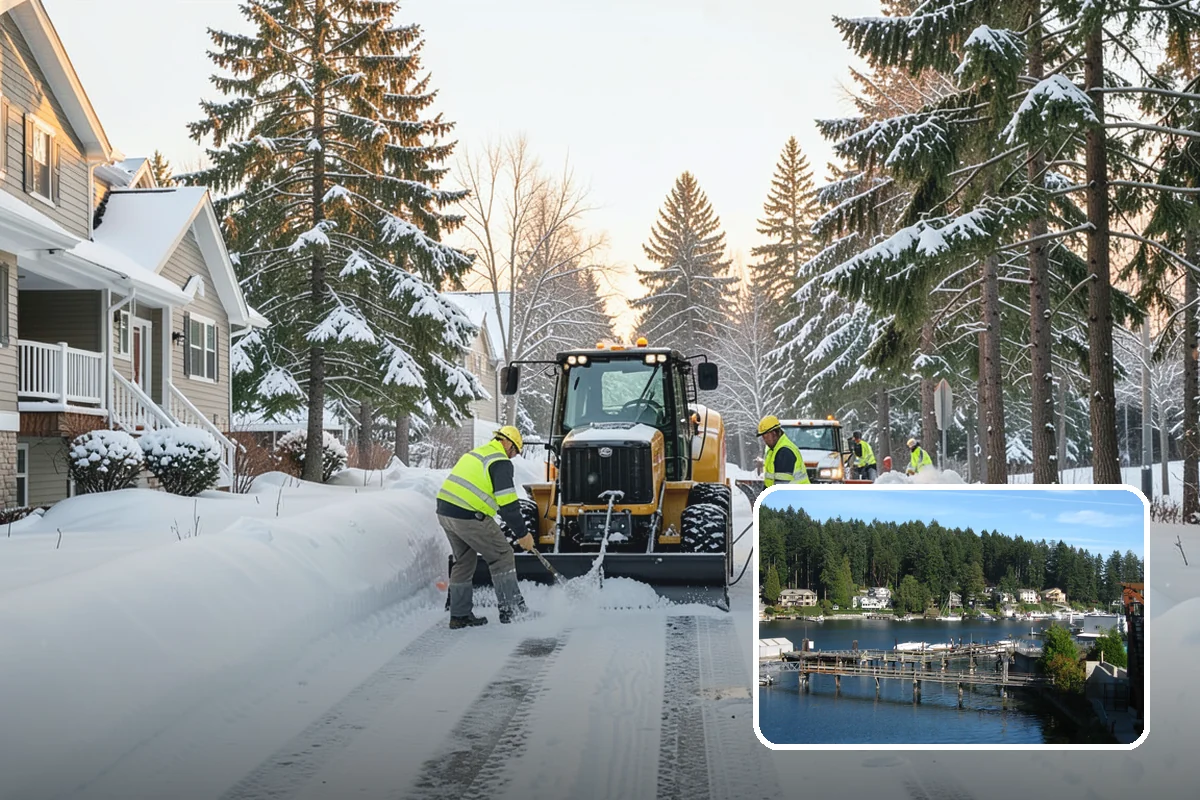
Service Area
Gig Harbor
Benefits
Fast reopening of snowed-in lots and stalls; Prioritizes drive lanes and high-use spaces first; Keeps businesses and residents operational during storms; Reduces vehicle damage and access complaints