Keeping You Moving. Beyond Expectations.

Gig Harbor HOA Parking Lot Snow Removal
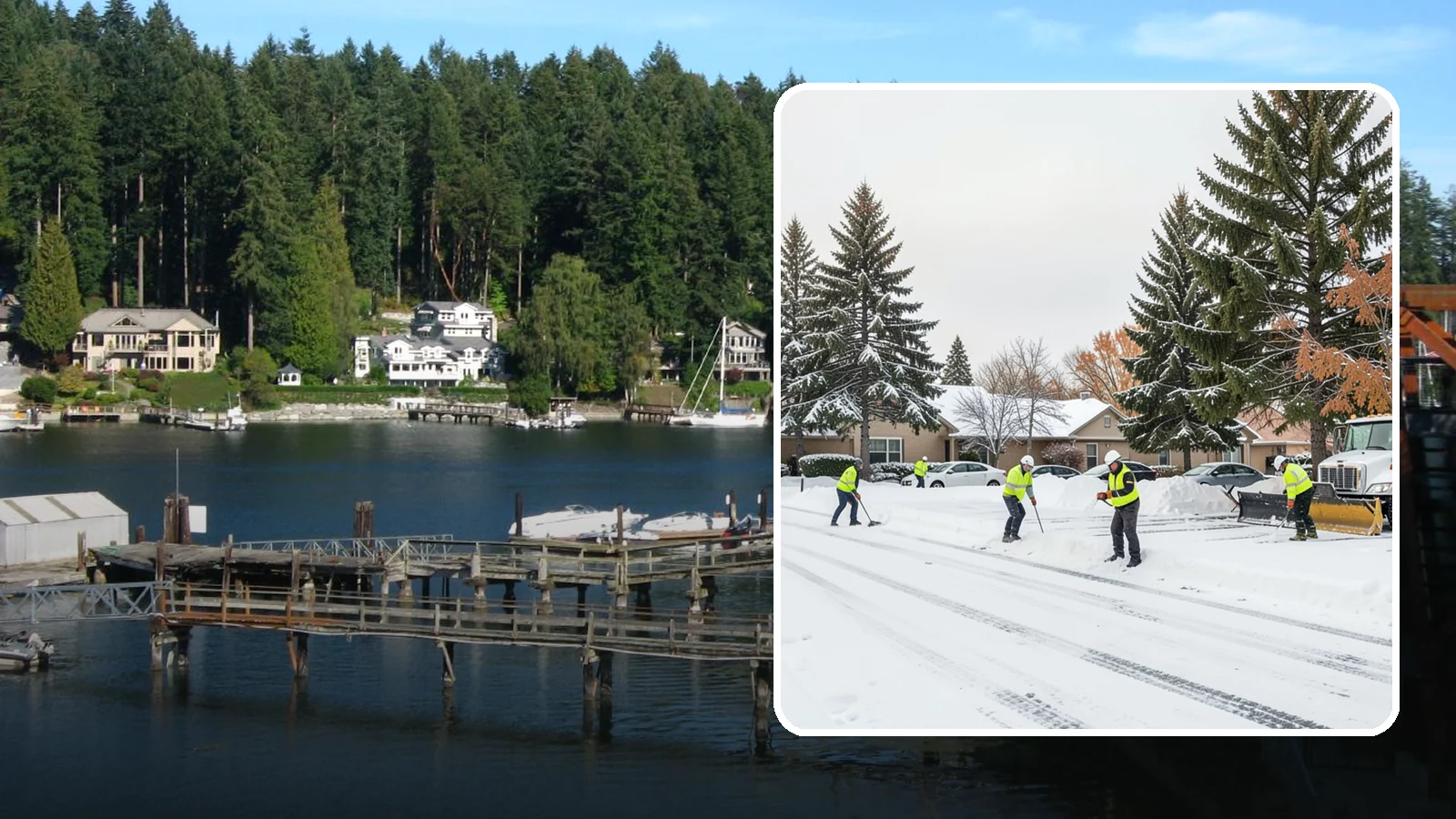
We service shared HOA community lots on a documented contract that protects the board from Western Washington winter liability.
Washington Snow Removal plows and treats HOA parking lots in Gig Harbor, Pierce County. We are licensed, bonded and insured, and we work from our Bothell yard, which is 84 minutes from Gig Harbor.
Gig Harbor averages 5.5 in of snow a season, but a single storm can change that. On Feb 9–12, 2019, the city got 16.7 in, with 8.4 in on the biggest day. For an HOA board, that means planning for rare, heavy events and frequent cold nights. Call 206-809-9669 to talk through your lot.
Planning a Gig Harbor snow season
Average snowfall by month in Gig Harbor
Biggest storms in Gig Harbor since 2005
- Feb 9–12, 2019: 16.7 in total, 8.4 in on the biggest day
- Feb 12–15, 2021: 12.7 in total, 7.6 in on the biggest day
- Jan 15–20, 2012: 11.9 in total, 4.5 in on the biggest day
- Dec 21–22, 2008: 6.7 in total, 3.9 in on the biggest day
Sources: NOAA and National Weather Service records for Gig Harbor, 2005–2026.
How We Handle HOA Parking Lots in Gig Harbor
An HOA lot has shared drive aisles, guest parking, mailbox areas and walkways that residents use every day. Our work covers plowing the lanes and stalls, spreading salt or ice melt, and hand work where a truck cannot reach.
Gig Harbor does not see snow often. The city gets 1.5 days a year with 1 in or more. But it has 31 freezing nights from October to April, and about 3.19 light-snow days a year that need deicing. Thin snow on a cold lot turns to ice, so treatment matters as much as plowing.
Big storms do happen. Since 2005, Gig Harbor has seen 12.7 in over Feb 12–15, 2021, with 7.6 in on the biggest day. It also saw 11.9 in over Jan 15–20, 2012. Those events can block an HOA entrance fast.
Typical equipment and rates for this service:
- Plow truck with driver (Ram 3500): $250 / hour
- Plow and spreader truck with driver (Ram 5500): $325 / hour
- Compact track loader with operator (Kubota SCL1000): $175 / hour
- Crew member for shoveling and sidewalks: $110 / person-hour
- Bulk salt, applied: $300 / ton
- Ice melt, bagged: $45 / 50 lb bag
Each dispatch to Gig Harbor (zone C) carries a $350 trip charge and a 2-hour minimum.
Prices in Gig Harbor
Billed by the hour for the crew and equipment on site, plus materials.
| Plow truck with driver (Ram 3500) | $250 / hour |
| Plow and spreader truck with driver (Ram 5500) | $325 / hour |
| Compact track loader with operator (Kubota SCL1000) | $175 / hour |
| Crew member (shoveling, sidewalks, hand work) | $110 / person-hour |
| Ice melt, bagged | $45 / 50 lb bag |
| Bulk salt, applied | $300 / ton |
| Trip charge for Gig Harbor (zone C) | $350 / dispatch |
- 2-hour minimum per dispatch.
- Gig Harbor is 84 minutes from our Bothell yard.
Prices approved Oct 2026.
Service Area
Gig Harbor
Benefits
Board liability is reduced with a documented, trigger-based service record; shared lots and guest parking stay usable for the whole community; meltwater drains freely because piles avoid catch basins; residents get consistent service without individual arrangements; reserve budgets are protected by a predictable seasonal agreement