Keeping You Moving. Beyond Expectations.

Kent Boardwalk Snow Clearing
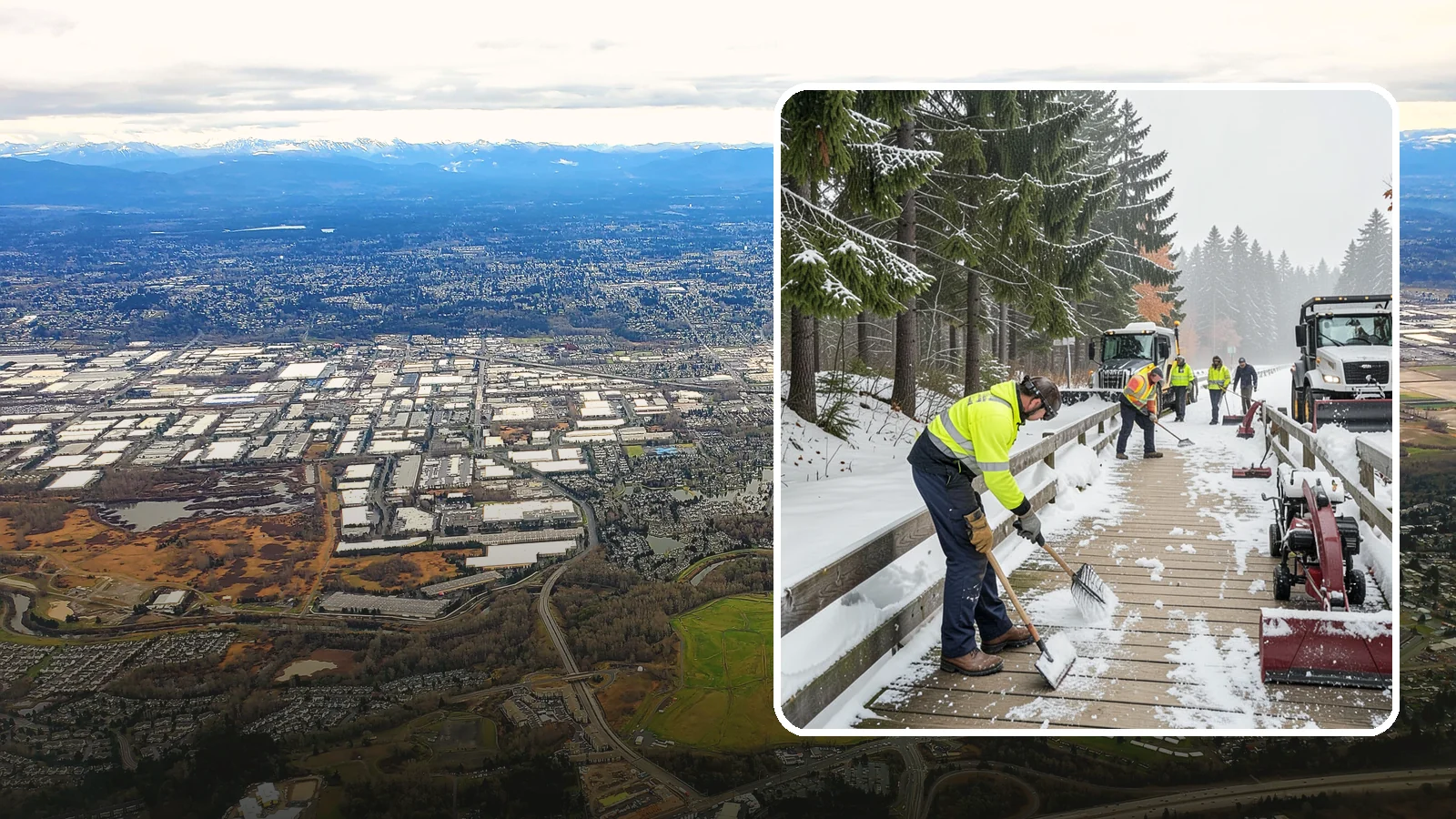
Gentle snow clearing of wood and composite boardwalks where blades and harsh deicers would damage the decking.
Boardwalk Snow Clearing in Kent covers the wooden and composite walkways that run along buildings, retail frontages and waterside paths. Washington Snow Removal sends crews from our Bothell yard to clear snow and ice from these surfaces by hand. We are licensed, bonded and insured.
Kent gets about 5.0 in of snow per season, and only 1.3 days a year bring 1 in or more. Most of the trouble comes from the 30 freezing nights between October and April. Call 206-809-9669 to set up a dispatch. Kent is 50 minutes from our yard, and each dispatch has a 2-hour minimum.
Kent walkway conditions in winter
Average snowfall by month in Kent
Biggest storms in Kent since 2005
- Feb 8–12, 2019: 12.2 in total, 5.9 in on the biggest day
- Feb 5–6, 2017: 8.1 in total, 7.6 in on the biggest day
- Feb 13–15, 2021: 6.5 in total, 5.0 in on the biggest day
Sources: NOAA and National Weather Service records for Kent, 2005–2026.
How Boardwalk Snow Clearing Works in Kent
Boardwalks are not like parking lots. Boards are narrow, rails limit where snow can go, and wet wood gets slick fast. For that reason we clear them with hand work, not heavy equipment. A crew member shovels and pushes snow off the surface, then treats it with ice melt where needed.
Kent rarely sees deep snow, but it does see big single events. The storm of Feb 8-12, 2019 dropped 12.2 in in total, with 5.9 in on the biggest day. Feb 5-6, 2017 brought 8.1 in, and 7.6 in fell on one day. Feb 13-15, 2021 added 6.5 in. In a normal year, light snow and frost matter more. Our data shows 2.43 light-snow days a year that need deicing.
- Crew member for shoveling and hand work: $110 per person-hour
- Ice melt, bagged: $45 per 50 lb bag
- Compact track loader with operator (Kubota SCL1000): $175 per hour, for larger areas that connect to the boardwalk
- Trip charge for Kent (zone B): $275 per dispatch
Kent code (KCC 8.01.030(8); KCC 6.04.100(6); KCC 6.04.110(B)) requires snow and ice to be removed from public sidewalks within a reasonable time after it stops falling. No exact hour is set. A boardwalk that serves as a public walkway should be cleared promptly.
Prices in Kent
Billed by the hour for the crew and equipment on site, plus materials.
| Crew member (shoveling, sidewalks, hand work) | $110 / person-hour |
| Compact track loader with operator (Kubota SCL1000) | $175 / hour |
| Ice melt, bagged | $45 / 50 lb bag |
| Trip charge for Kent (zone B) | $275 / dispatch |
- 2-hour minimum per dispatch.
- Kent is 50 minutes from our Bothell yard.
Prices approved Oct 2026.
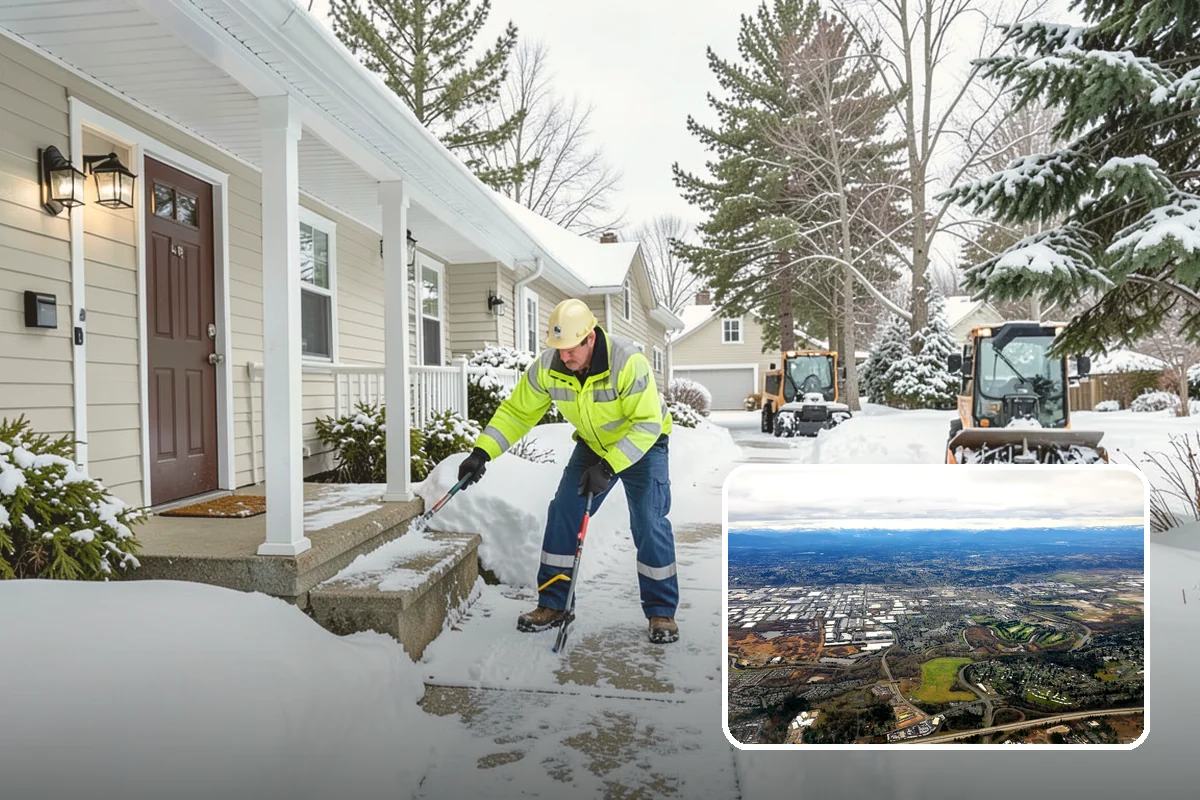
Service Area
Kent
Benefits
Protects wood and composite decking from blade damage; Avoids chloride deicers that corrode fasteners; Keeps plank gaps clear for drainage; Uses sand or grit that will not contaminate the water below