What Arctic Blast Response Means in Lake Forest Park
In Lake Forest Park, a hard freeze often matters more than deep snow. Recent logged events include an Ice Storm on Jan 17, 2024, Cold/Wind Chill on Oct 28, 2023, an Ice Storm on Dec 23, 2022, and Cold/Wind Chill on Dec 28, 2021. The area also averages 3.33 Winter Weather Advisories a year.
Snow can still be serious. Since 2005 there have been 15 winter storm and heavy snow reports, and the largest storm in that span reached 15.6 in. Monroe's record daily snowfall is 12.0 in, set in 1972.
A response visit can include:
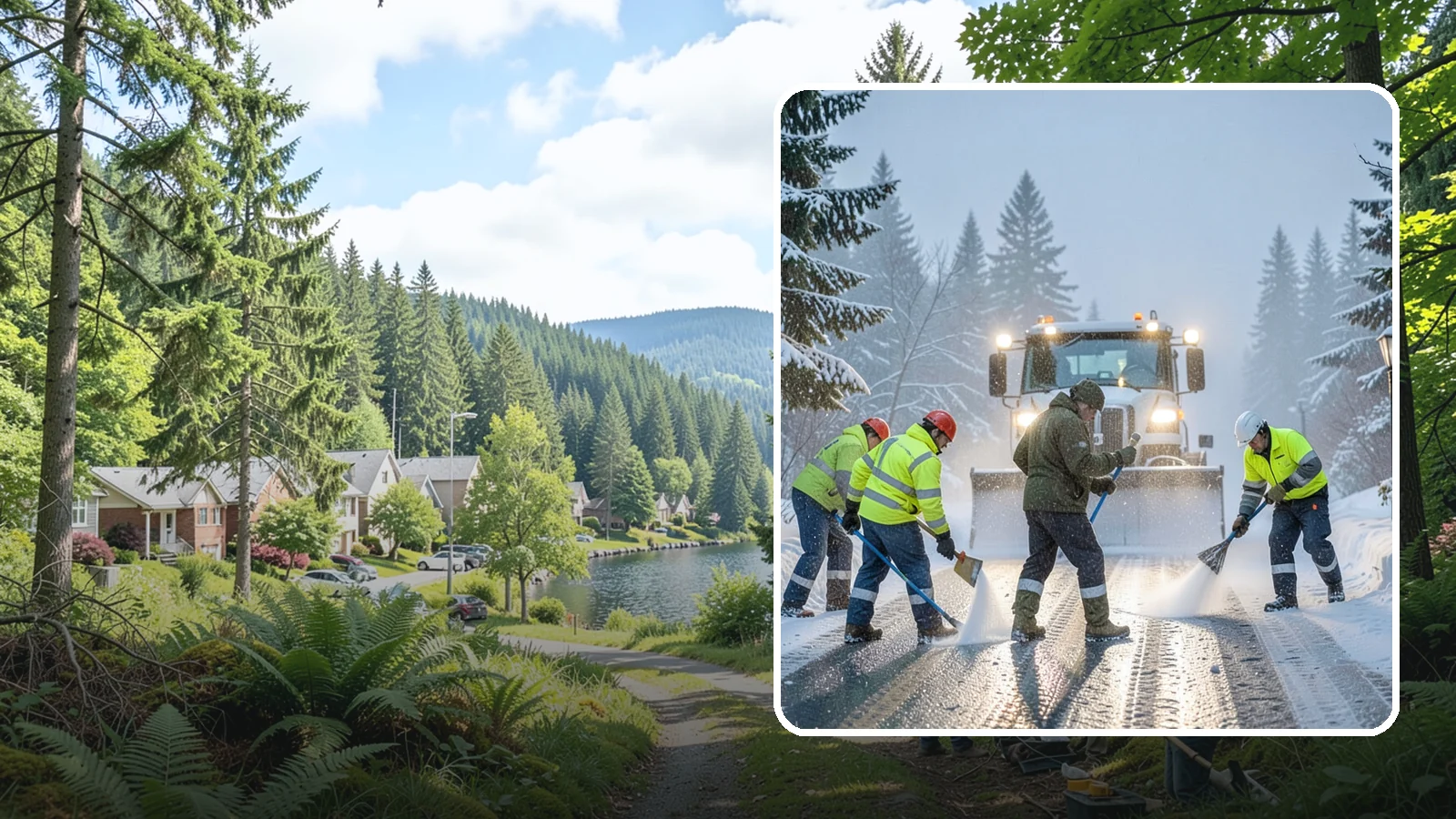
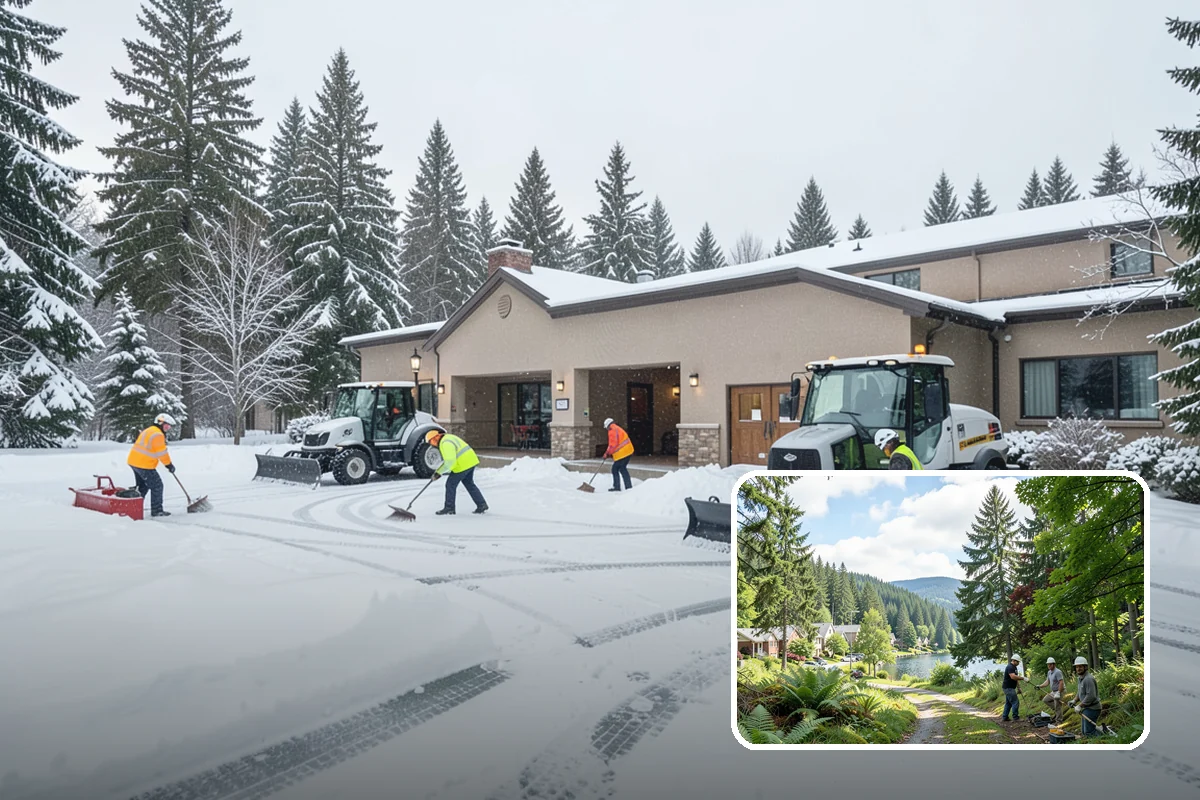
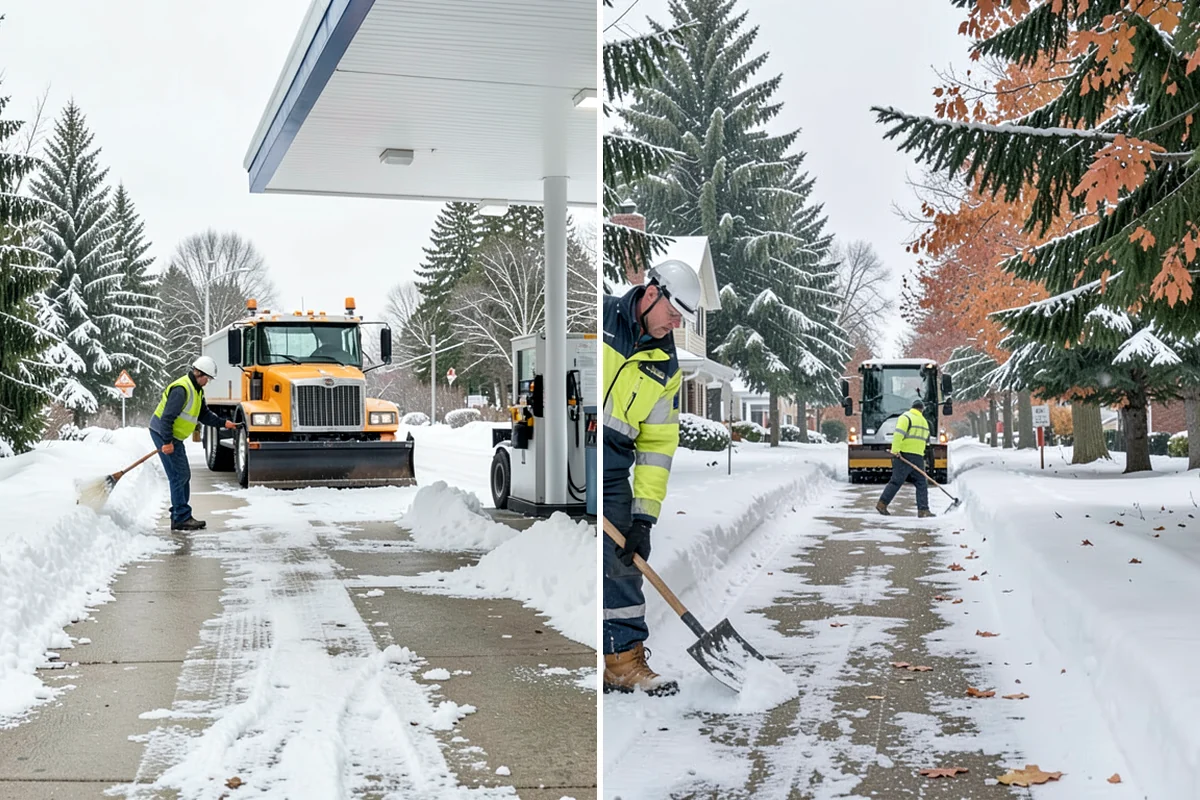
- Plowing driveways and lots with a Ram 3500 at $250 per hour, or a Ram 5500 plow and spreader truck at $325 per hour
- Bulk salt applied at $300 per ton
- Bagged ice melt at $45 per 50 lb bag
- Hand crews for steps, walkways and sidewalks at $110 per person-hour
- A Kubota SCL1000 compact track loader with operator at $175 per hour for tight areas
Each dispatch has a 2-hour minimum. The trip charge for Lake Forest Park (zone A) is $200 per dispatch. Because ice shows up more often than deep snow here, treating surfaces matters as much as clearing them.