Keeping You Moving. Beyond Expectations.

Lake Forest Park Emergency Residential Snow Removal
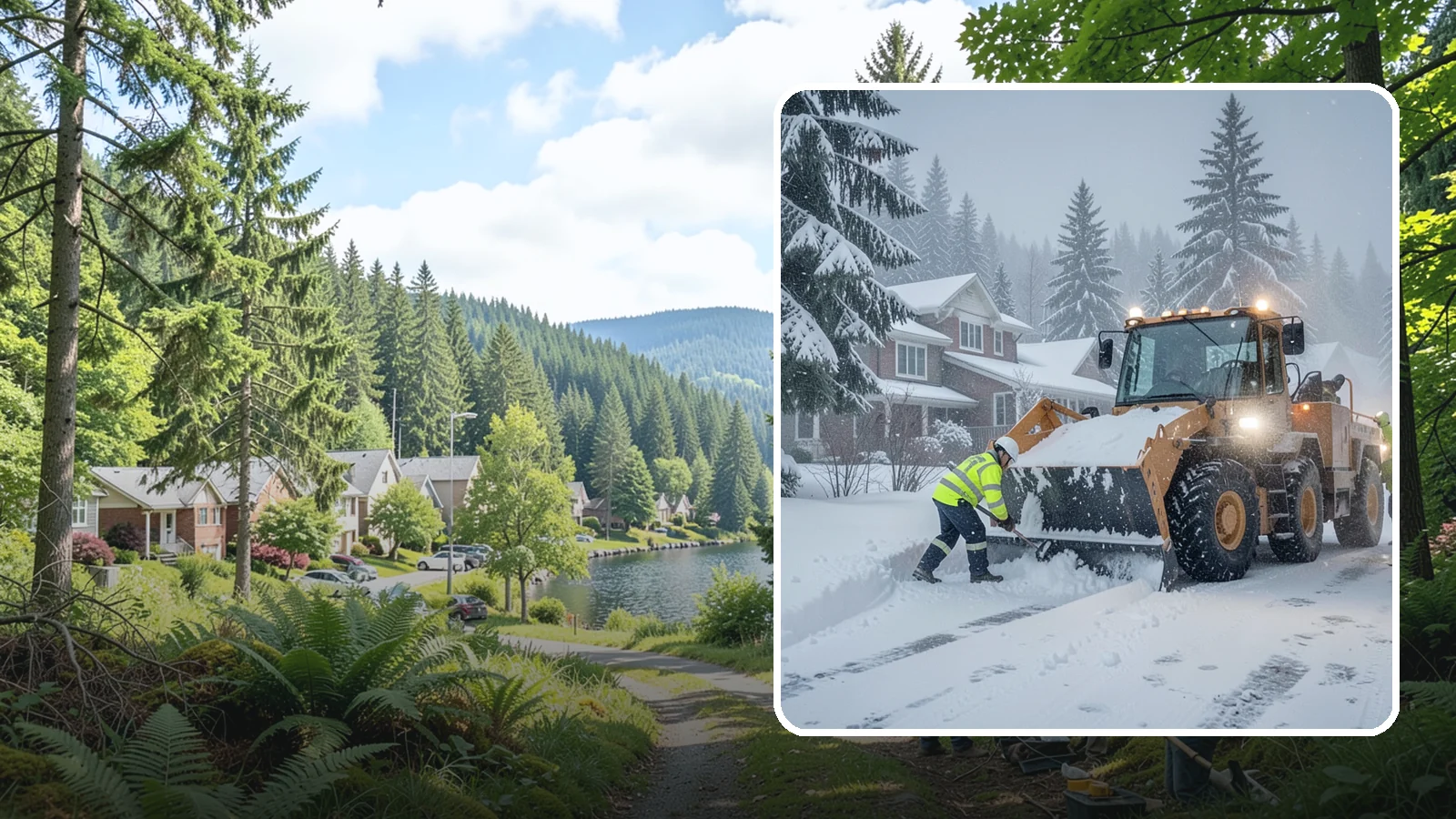
We respond fast to residential snow emergencies when a sudden storm traps your household at home.
Snow is uncommon in Lake Forest Park. The city averages 5.3 in per season and sees 1.7 days a year with 1 in or more. When a storm does hit, driveways, steep side streets and walkways can become hard to use quickly.
Washington Snow Removal offers emergency residential snow removal from our Bothell yard, 18 minutes away. We are licensed, bonded and insured. Call 206-809-9669 to request a dispatch.
Storm history for Lake Forest Park
Largest snow totals reported near Lake Forest Park
- Feb 13–14, 2021: Up to 10 in, 8 spotter reports: 4 S Shoreline 10 in, 6.2 NNE Seattle 10 in, Brier 9.5 in, Bothell 9.3 in, 1 SE Alderwood Manor 9.3 in, 3 SSW Sheridan Beach 9 in, 4 S Shoreline 9 in, Lynnwood 9 in
- Feb 8–12, 2019: 15.6 in total, 5.8 in on the biggest day
- Jan 14–20, 2012: 8.4 in total, 3.1 in on the biggest day
- Feb 4, 2019: 5.9 in total, 5.9 in on the biggest day
Sources: NOAA and National Weather Service records for Lake Forest Park, 2005–2026.
Emergency snow removal for Lake Forest Park homes
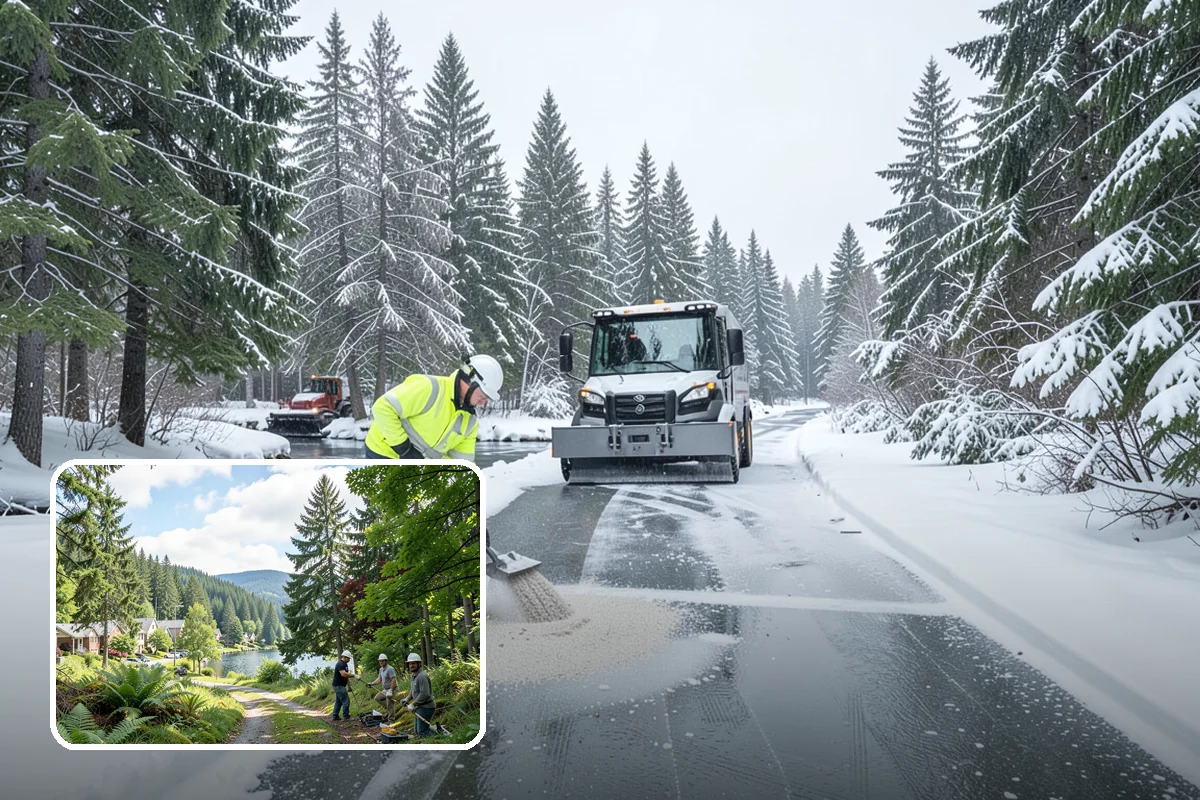
Emergency work at a home usually means clearing the driveway, the path to the front door and any walkway needed to get out. Hand work and equipment are matched to the site. A short flat driveway may need a crew member with a shovel. A longer or sloped one may need a plow truck or a compact track loader.
Big snow is rare here. Heavy-snow days of 4 in or more average 0.19 a year. Winter Weather Advisories average 3.33 a year and Winter Storm Warnings 0.76. The storm of February 13 and 14, 2021 showed what can happen. Spotters near Lake Forest Park reported 9 to 10 in, including 10 in at 4 S Shoreline and 9.3 in at 1 Se Alderwood Manor.
Ice is the more regular problem. The area has about 30 freezing nights from October to April, so melted snow can refreeze on walkways and drives. We can apply ice melt or bulk salt after clearing.
Pricing for Lake Forest Park, zone A:
- Trip charge: $200 per dispatch
- Plow truck with driver (Ram 3500): $250 per hour
- Compact track loader with operator (Kubota SCL1000): $175 per hour
- Crew member for shoveling and hand work: $110 per person-hour
- Ice melt, bagged: $45 per 50 lb bag
Each dispatch has a 2-hour minimum.
Prices in Lake Forest Park
Billed by the hour for the crew and equipment on site, plus materials.
| Plow truck with driver (Ram 3500) | $250 / hour |
| Plow and spreader truck with driver (Ram 5500) | $325 / hour |
| Compact track loader with operator (Kubota SCL1000) | $175 / hour |
| Crew member (shoveling, sidewalks, hand work) | $110 / person-hour |
| Ice melt, bagged | $45 / 50 lb bag |
| Bulk salt, applied | $300 / ton |
| Trip charge for Lake Forest Park (zone A) | $200 / dispatch |
- 2-hour minimum per dispatch.
- Lake Forest Park is 18 minutes from our Bothell yard.
Prices approved Oct 2026.
Service Area
Lake Forest Park
Benefits
Prioritizes urgent household needs during sudden storms; clears the critical drive and entry path first; bridges the gap when plows fall behind; keeps medical and care access open; deploys when a shovel simply cannot keep up