Keeping You Moving. Beyond Expectations.

Lake Forest Park Hydrant Snow Clearing
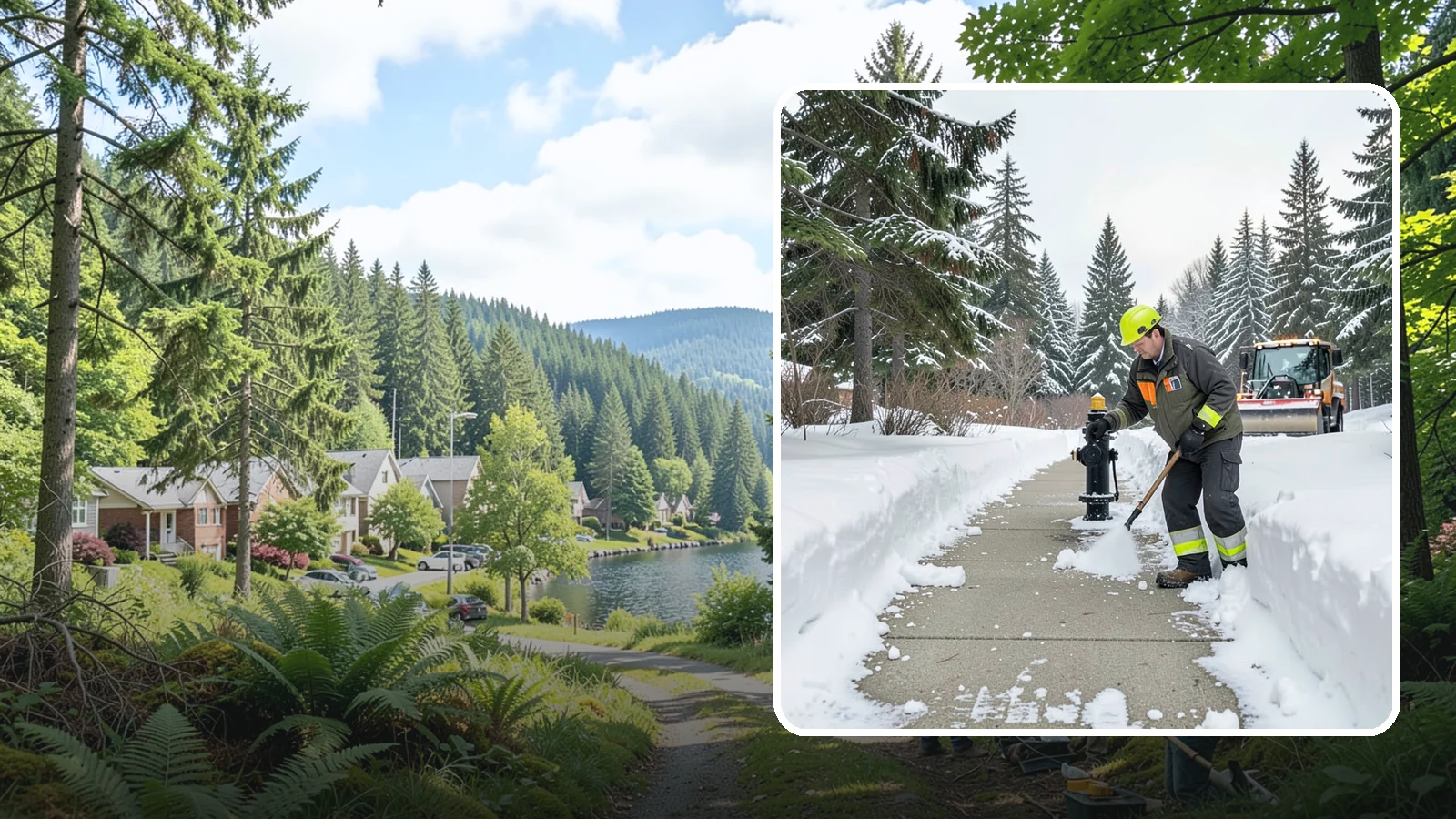
We clear snow and ice from fire hydrants so crews can connect without delay in an emergency.
Fire hydrants in Lake Forest Park need to be found and reached when snow falls. Washington Snow Removal, based in Bothell, WA, clears snow and ice from hydrants and the ground around them. We are licensed, bonded and insured.
OpenStreetMap lists 22 mapped fire hydrants inside city limits. Lake Forest Park is 18 minutes from our Bothell yard. Snow here is infrequent, averaging 5.3 in per season, so a hydrant buried in a storm can be easy to overlook. Call 206-809-9669 to set up service.
Snow and ice on Lake Forest Park sidewalks
Recent winter events logged for the Lake Forest Park area
- Dec 19, 2022: Winter Weather
- Nov 29–Dec 1, 2022: Winter Weather; Heavy Snow
- Dec 26–28, 2021: Cold/Wind Chill; Heavy Snow
Sources: NOAA and National Weather Service records for Lake Forest Park, 2005–2026.
Hydrant Snow Clearing in Lake Forest Park: What It Involves
Hydrant clearing is hand work. A crew member locates the hydrant, shovels a clear area around it and opens a path to the street or sidewalk. Where ice has formed, we break it up and can apply ice melt.
The local pattern shapes the job. Lake Forest Park averages 5.3 in of snow per season and sees 1.7 days a year with 1 in or more. Snow stays on the ground about 4 days a year, and 1.2 days a year stay below freezing. Even so, there are 30 freezing nights from October to April, and about 2.52 light-snow days a year need deicing. Recent logged events include Heavy Snow on Nov 29, 2022, Winter Weather on Dec 19, 2022, and Heavy Snow on Dec 26, 2021. Snow is rare, so it often arrives when people are not ready for it.
The city sidewalk rule, LFPMC 8.12.040(A), covers snow and ice left on public sidewalks. The deadline is a reasonable time after the snow stops. Hydrants near sidewalks can be cleared in the same visit.
- Crew member: $110 per person-hour
- Ice melt, bagged: $45 per 50 lb bag
- Trip charge for Lake Forest Park (zone A): $200 per dispatch
- 2-hour minimum per dispatch
Prices in Lake Forest Park
Billed by the hour for the crew and equipment on site, plus materials.
| Crew member (shoveling, sidewalks, hand work) | $110 / person-hour |
| Compact track loader with operator (Kubota SCL1000) | $175 / hour |
| Ice melt, bagged | $45 / 50 lb bag |
| Trip charge for Lake Forest Park (zone A) | $200 / dispatch |
- 2-hour minimum per dispatch.
- Lake Forest Park is 18 minutes from our Bothell yard.
Prices approved Oct 2026.
Mapped fire hydrants in Lake Forest Park
OpenStreetMap lists 22 mapped fire hydrants inside Lake Forest Park city limits.
Source: OpenStreetMap contributors, Oct 2026. Named sites are examples of local facilities, not customers.
Service Area
Lake Forest Park
Benefits
Keeps hydrants visible and reachable for responding crews; Helps property owners meet fire-access clearance rules; Clears plow wash that often reburies hydrants; Maintains a safe working zone around connection points