What ADA access clearing involves in Langley, WA
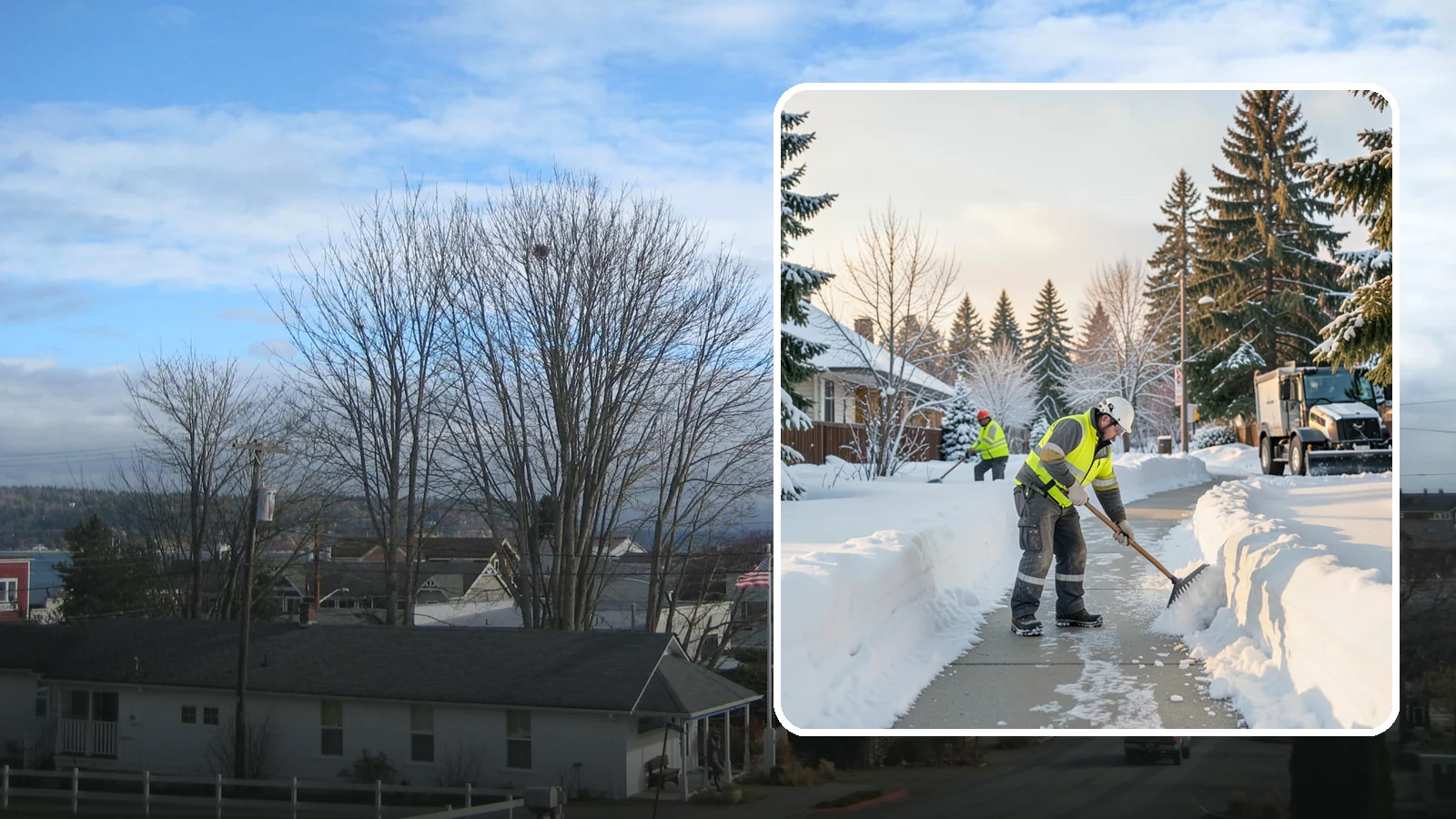
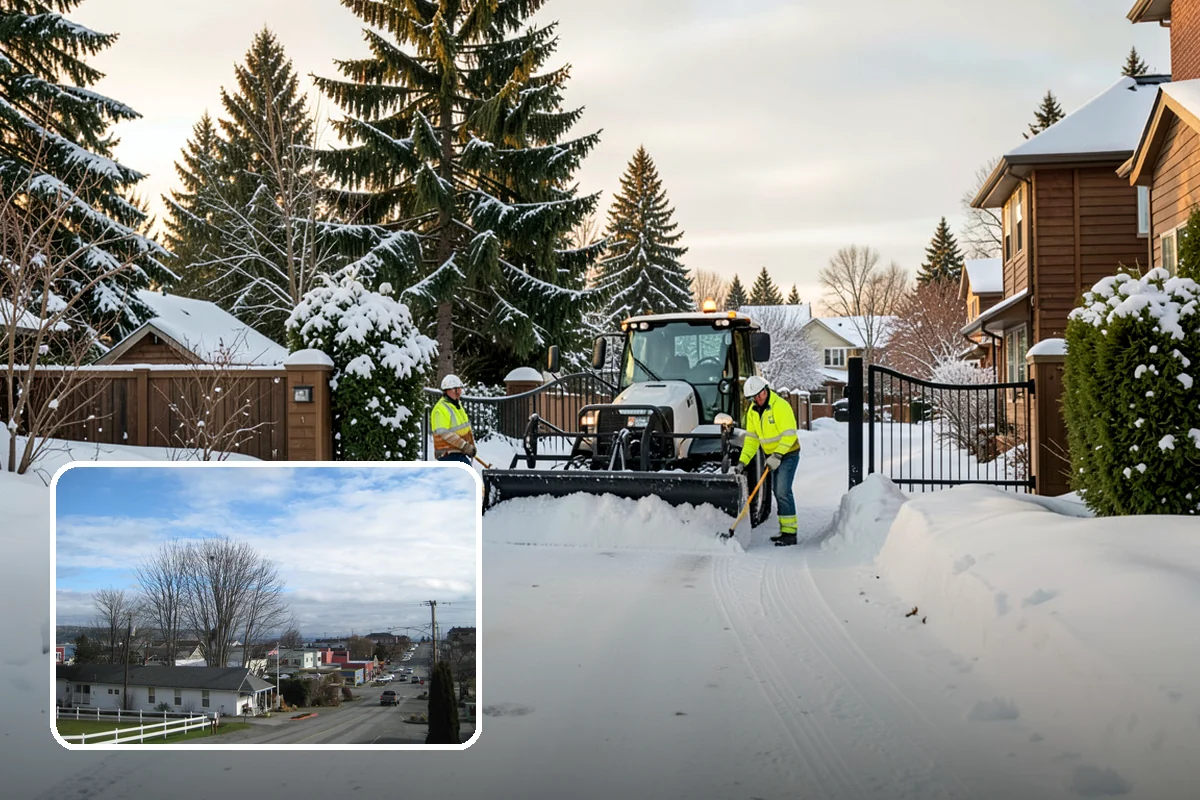
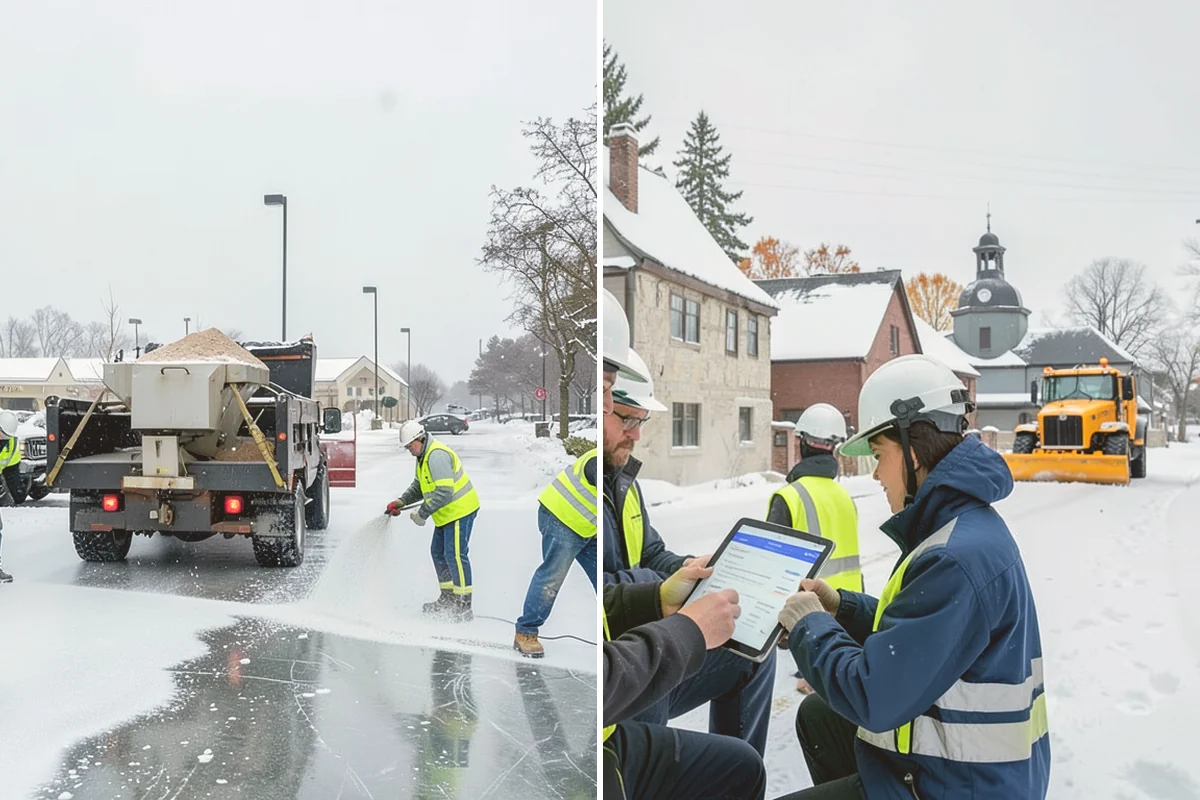
Accessible routes are narrow and specific, so the work is mostly by hand. A crew member shovels the ramp, the curb cut, the access aisle beside accessible stalls, and the path to the door. Ice melt is applied where meltwater could refreeze. We keep routes clear to the pavement, not just pushed aside.
Langley sees about 2.3 days a year with 1 in or more of snow, and 35 freezing nights between October and April. Most winters bring only a few snow days, so the bigger risk is often ice. Wet pavement can freeze overnight on ramps and in shaded spots. Recent logged events in the area include Feb 27, 2024 (Winter Weather), Feb 12, 2021 (Winter Storm), Feb 8, 2019 (Heavy Snow) and Jan 18, 2012 (Heavy Snow).
Pricing is listed up front:
- Crew member for shoveling, sidewalks and hand work: $110 per person-hour
- Bagged ice melt: $45 per 50 lb bag
- Compact track loader with operator (Kubota SCL1000): $175 per hour, for larger lots
- Trip charge for Langley (zone C): $350 per dispatch
Each dispatch has a 2-hour minimum. Langley is 61 minutes from our Bothell yard, which is reflected in the trip charge.