Keeping You Moving. Beyond Expectations.
We clear the public sidewalk fronting your home so pedestrians pass safely and you stay within city ordinance.
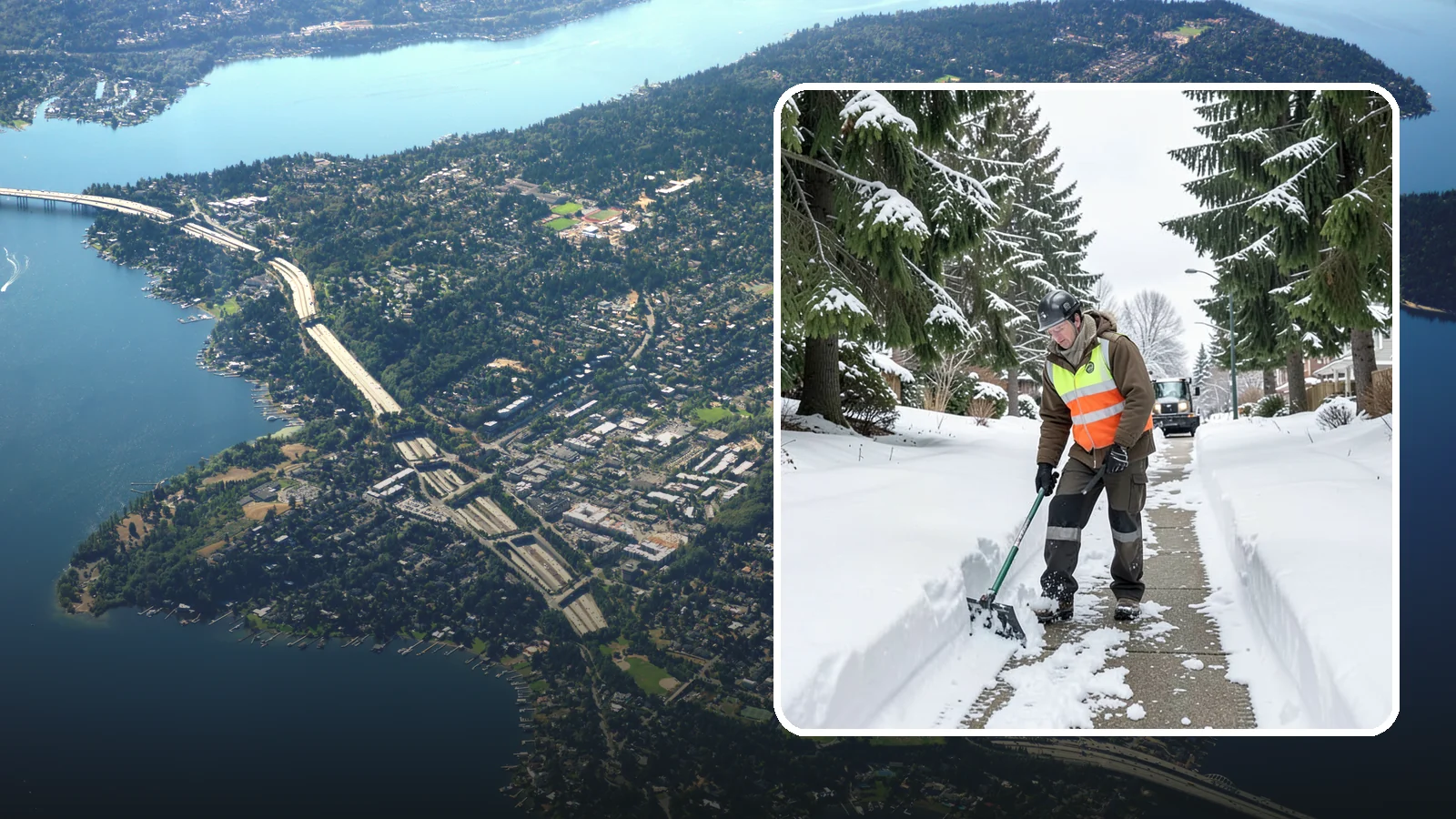
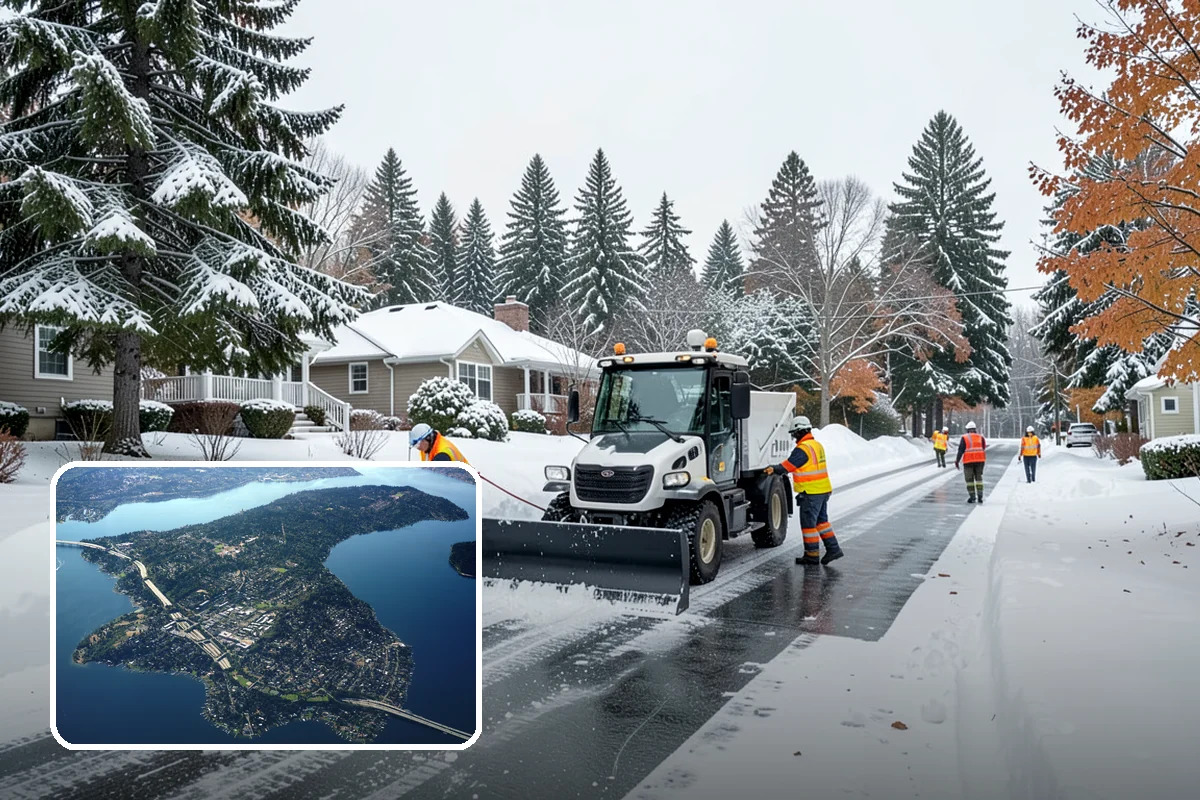
Sidewalk snow removal on Mercer Island is mostly hand work. A crew member shovels the walks, clears the steps and entries, and treats the surface so it does not refreeze into a slick sheet. Washington Snow Removal is licensed, bonded and insured, and we dispatch from our Bothell yard, 35 minutes away.
Snow here does not come often. The island averages 5.5 in per season, and 62% of winters have at least one 1-inch day. When it does fall, walks at homes, shops and offices still need to be safe. Call 206-809-9669 to talk through your property.
Sources: NOAA and National Weather Service records for Mercer Island, 2005–2026.
Mercer Island sees about 1.9 days a year with 1 in or more of snow, and snow stays on the ground for about 3 days. That means most storms are short. The bigger problem is often ice, not depth. There are 28 freezing nights between October and April, and light-snow days that need deicing average 1.81 a year. A thin dusting on a cold night can leave a walk slick by morning.
Freezing rain also shows up. On Jan 17, 2024, freezing rain was reported at 1 Ese Bryn Mawr. Shoveling does nothing for a glaze like that, so treatment matters as much as clearing.
A typical visit includes:
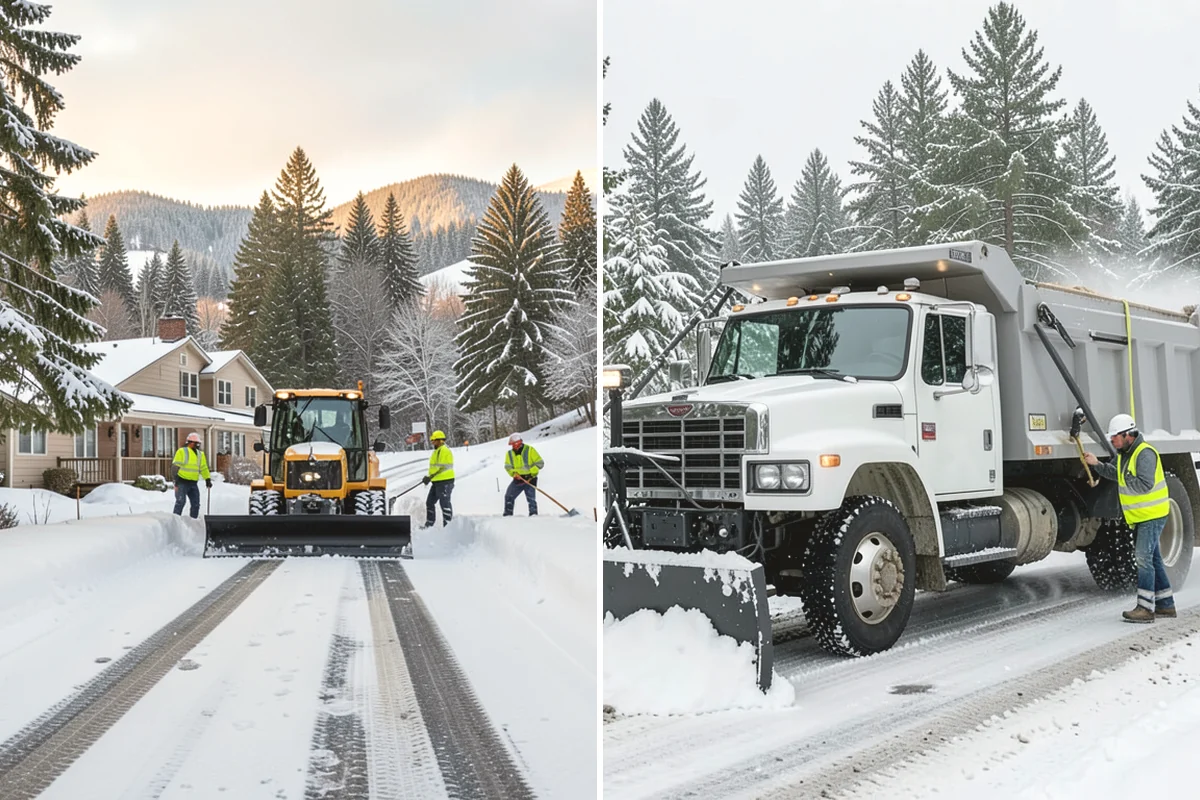
Pricing is simple. A crew member is $110 per person-hour, and ice melt is $45 per 50 lb bag. The trip charge for Mercer Island (zone A) is $200 per dispatch, and each dispatch has a 2-hour minimum. Larger lots with long frontage can use a Kubota SCL1000 compact track loader with operator at $175 per hour.

Billed by the hour for the crew and equipment on site, plus materials.
| Crew member (shoveling, sidewalks, hand work) | $110 / person-hour |
| Compact track loader with operator (Kubota SCL1000) | $175 / hour |
| Ice melt, bagged | $45 / 50 lb bag |
| Trip charge for Mercer Island (zone A) | $200 / dispatch |
Prices approved Oct 2026.
Keeps you compliant with local snow-clearing ordinances; protects passing pedestrians from slick concrete; targets shaded stretches that refreeze fastest; reduces your exposure to sidewalk injury claims; leaves a gritted surface that resists refreeze