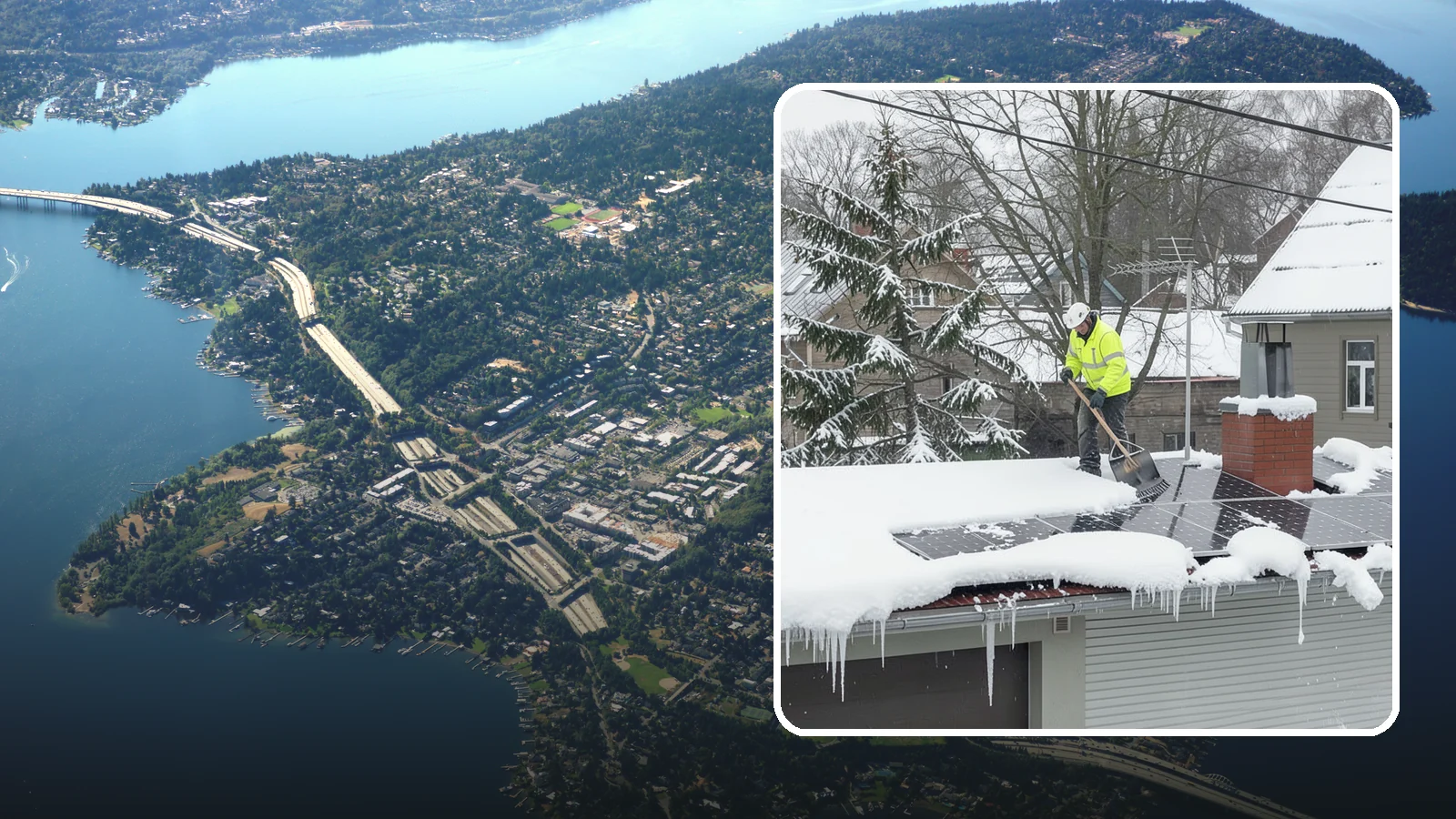
How We Clear Solar Panels on Mercer Island, WA
Clearing solar panels is careful hand work. A crew member uses soft tools made for glass and works from the ground or a safe position. We do not scrape, chip or pour hot water on the panels. Ice that is bonded to the surface is better left to melt than forced off.
Mercer Island snow is rare but can be sudden. Only 1.9 days a year bring 1 in or more, and heavy-snow days of 4 in or more average 0.33 a year. Still, the largest storm since 2005 reached 12.9 in, and the biggest single day was 8.5 in. On Feb 14, 2021, a spotter at 1 S Mercer Island measured 12 in. An array can go from clear to buried in one event.
Freezing nights matter too. The island sees 28 between October and April, so snow that melts by day can refreeze on lower panel edges overnight. We look at that when we plan a visit.
What a visit involves:
- Check the roof or ground mount for safe access
- Clear snow from the panels by hand with soft tools
- Clear walkways to the array or meter if needed
- Leave stuck ice alone rather than risk the glass
Pricing is simple. Crew time is $110 per person-hour. The trip charge for Mercer Island (zone A) is $200 per dispatch. Our Bothell yard is 35 minutes away.