Keeping You Moving. Beyond Expectations.

Mill Creek Apartment Complex Deicing
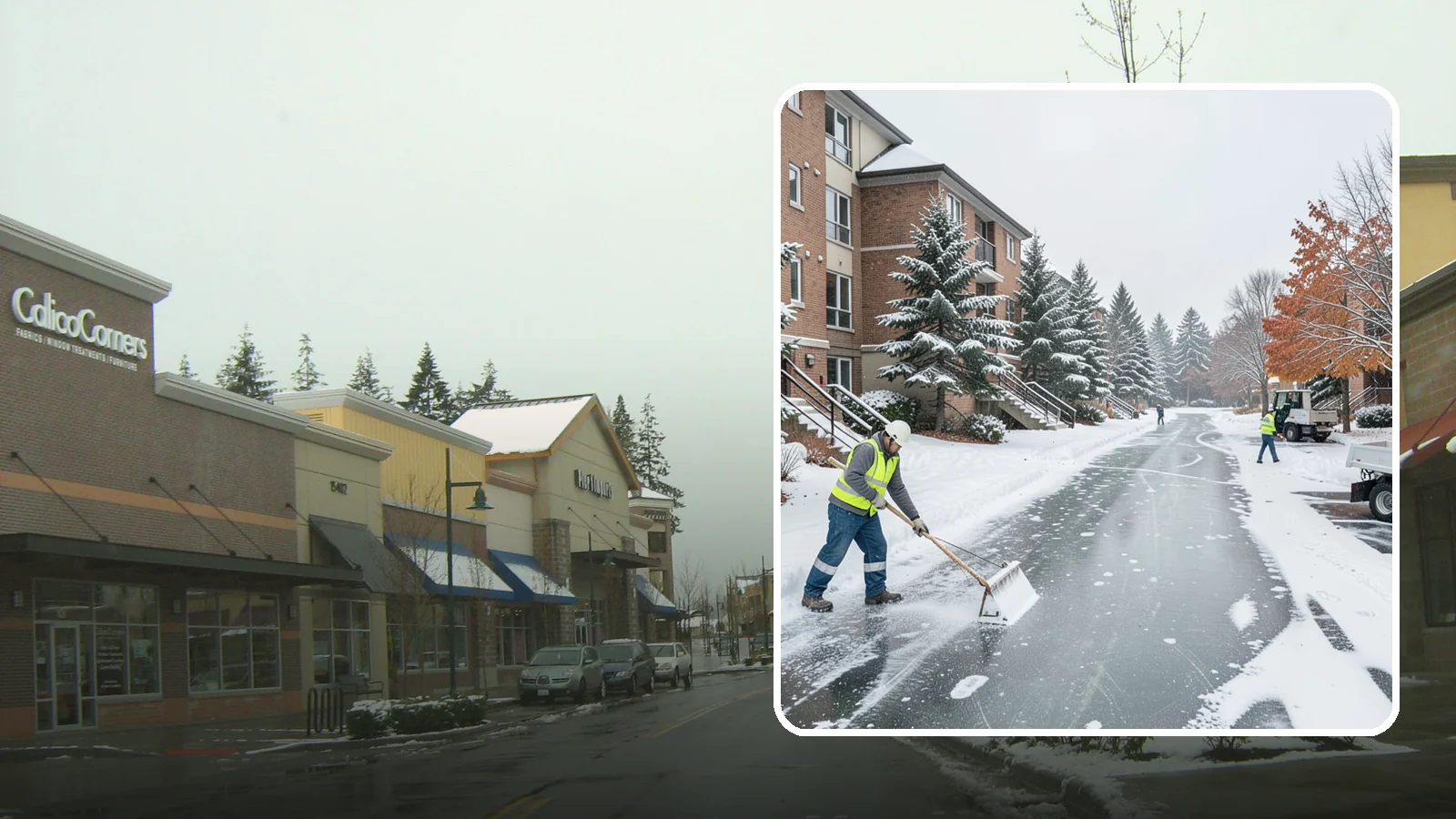
Comprehensive ice control for apartment communities, covering shared stairwells, breezeways, and resident parking where slip-and-fall claims are a constant risk.
Apartment Complex Deicing in Mill Creek means keeping parking lots, walkways and building entrances safe when frost, freezing rain or light snow turns them slick. Mill Creek has 126 apartment buildings on the map, and each one has lots, walks or entrances that residents use every day.
Washington Snow Removal is licensed, bonded and insured. We work from our Bothell yard, which is 9 minutes from Mill Creek. Call 206-809-9669 to talk through your property and set up service.
Mill Creek ice season, by the numbers
Average snowfall by month in Mill Creek
Ice storms and freezing rain near Mill Creek
- Jan 17, 2024: Ice Storm
- Dec 23, 2022: Ice Storm
- Jan 19, 2012: Freezing Rain reported at 2 S Mill Creek
Sources: NOAA and National Weather Service records for Mill Creek, 2005–2026.
How Deicing Works at Mill Creek Apartment Complexes
Mill Creek gets an average of 8.5 in of snow per season. Snow of 1 in or more falls only about 2.6 days a year, and snow stays on the ground about 6 days. The bigger problem is ice. There are 35 freezing nights between October and April, and about 4.24 light-snow days a year need deicing. Ice storms hit near Mill Creek on Jan 17, 2024 and Dec 23, 2022, and freezing rain was reported 2 S of Mill Creek on Jan 19, 2012.
At an apartment complex, a thin glaze on a stairwell landing or a shaded walk can cause a fall even when no plow is needed. Deicing focuses on the places residents walk and drive first.
- Entrances, stairs and mailbox areas
- Walkways between buildings
- Parking lot lanes and drive aisles
- Shaded spots and slopes that stay icy longest
We apply bagged ice melt at $45 per 50 lb bag or bulk salt at $300 per ton. Crew members for hand work are $110 per person-hour. A plow and spreader truck with driver is $325 per hour. Mill Creek is in zone A, with a $200 trip charge per dispatch and a 2-hour minimum.
Prices in Mill Creek
Billed by the hour for the crew and equipment on site, plus materials.
| Plow and spreader truck with driver (Ram 5500) | $325 / hour |
| Ice melt, bagged | $45 / 50 lb bag |
| Bulk salt, applied | $300 / ton |
| Crew member (shoveling, sidewalks, hand work) | $110 / person-hour |
| Trip charge for Mill Creek (zone A) | $200 / dispatch |
- 2-hour minimum per dispatch.
- Mill Creek is 9 minutes from our Bothell yard.
Prices approved Oct 2026.
Apartment buildings in Mill Creek
Mill Creek has 126 apartment buildings on the map, each with lots, walks or entrances to keep clear.
- Apartment Buidling
- Apartment Building
Source: OpenStreetMap contributors, Oct 2026. Named sites are examples of local facilities, not customers.

Service Area
Mill Creek
Benefits
Reduces tenant slip-and-fall exposure across shared common areas; Keeps every stairwell and breezeway passable between building floors; Provides timestamped service records for insurance and management; Treats resident and visitor parking before peak morning traffic; Uses deicers that spare landscaping and building foundations