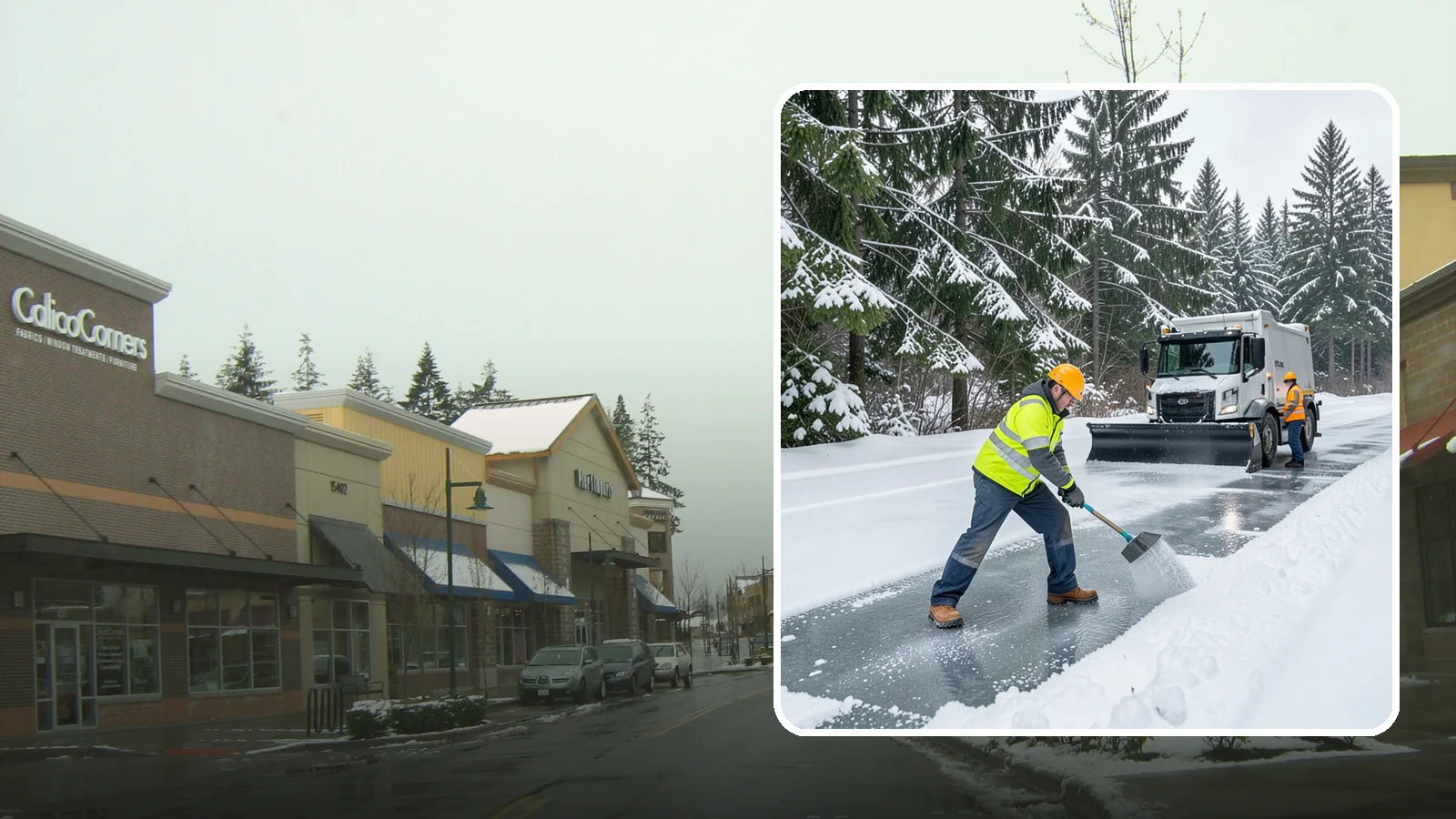
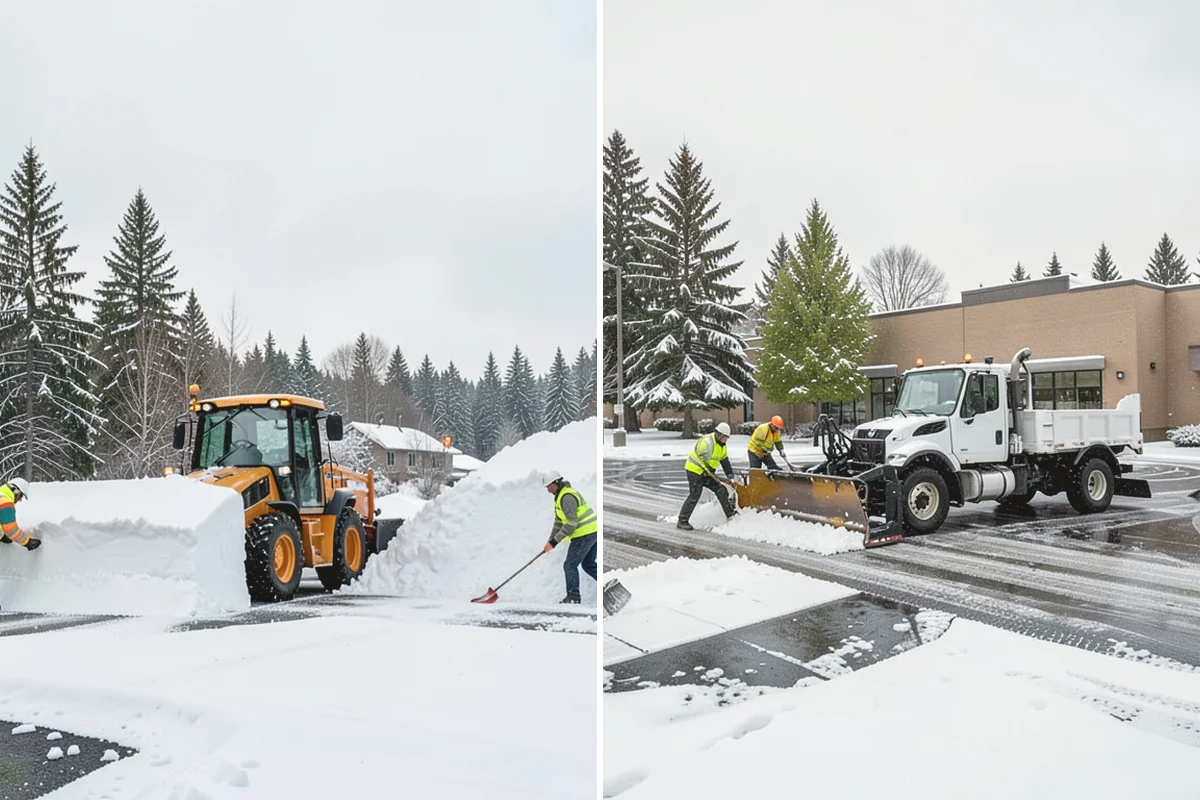
Calcium Chloride Application for Mill Creek Properties
Calcium chloride melts ice and bonds poorly with pavement once it has done its work, so it suits the short, icy events Mill Creek sees. The area has about 6 days a year with snow on the ground and 4.24 light-snow days that need deicing. Only 2.6 days a year bring 1 in or more of snow. That means most calls are about a thin, slick surface, not a big plow job.
Ice still does real damage here. Ice storms hit near Mill Creek on Jan 17, 2024 and Dec 23, 2022, and freezing rain was reported 2 S Mill Creek on Jan 19, 2012. With 4.33 Winter Weather Advisories a year, timing matters. Applying before ice forms is easier than breaking it up afterward.
At a typical Mill Creek property, the work usually covers:
- Front walks, steps and building entries
- Accessible ramps and curb cuts
- Shaded driveway slopes and parking lot drive lanes
- Mailbox and trash-bin areas
Pricing is posted plainly. Bagged ice melt is $45 per 50 lb bag. A crew member for hand work is $110 per person-hour. The Mill Creek trip charge is $200 per dispatch, zone A, with a 2-hour minimum per dispatch.