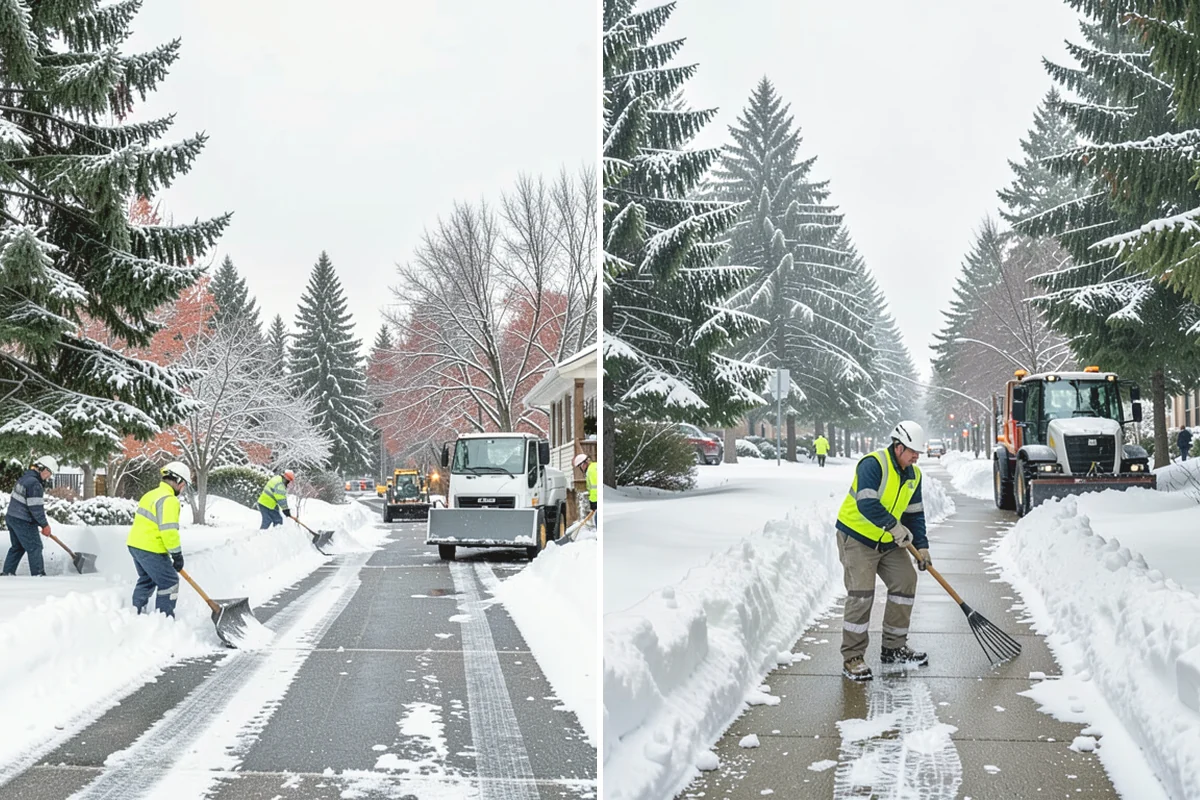
Keeping You Moving. Beyond Expectations.

Mill Creek Emergency Deicing
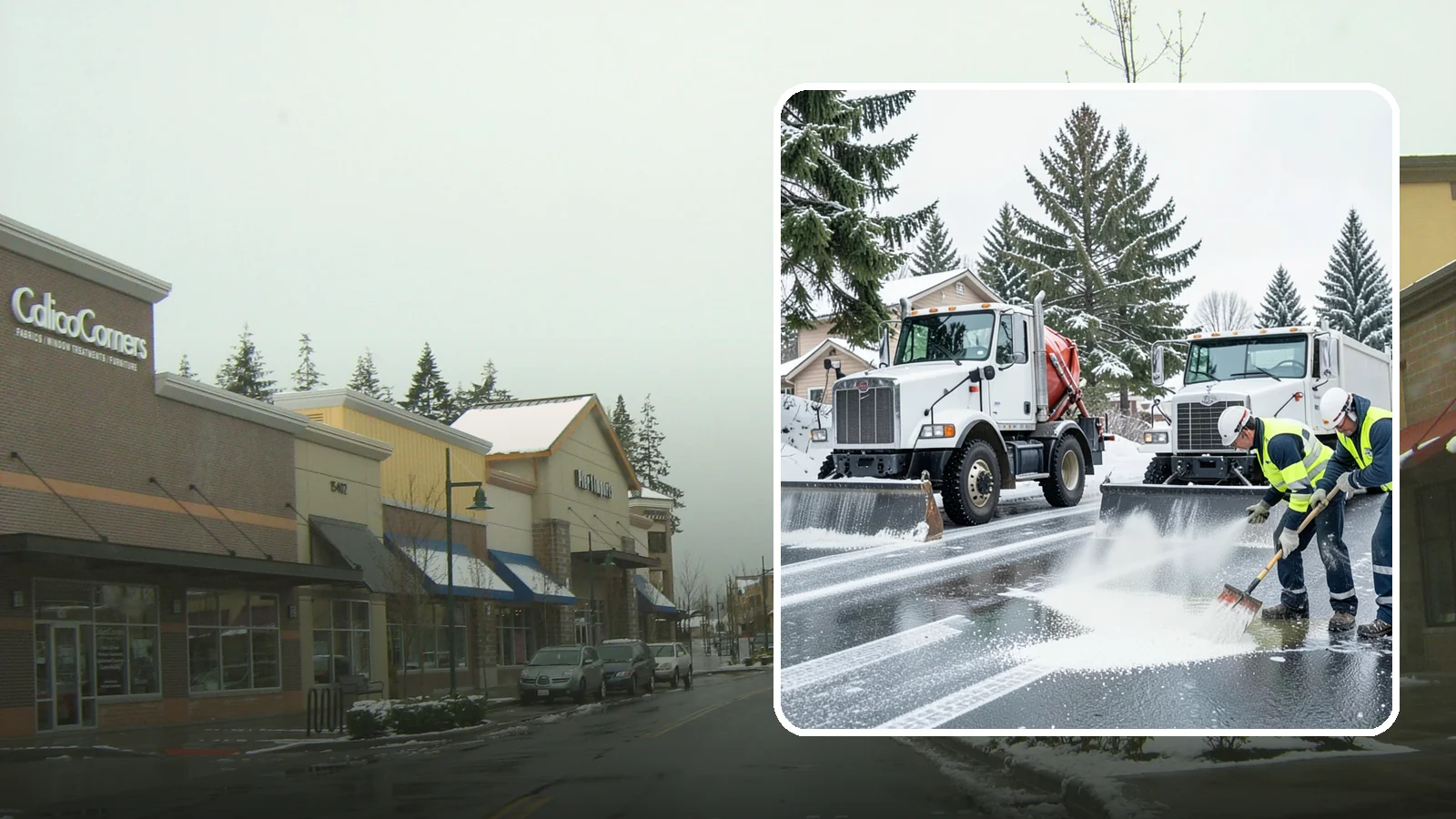
We respond fast across Western Washington to treat icy lots, walks, and entrances when a freeze turns your surfaces into a slip hazard.
Emergency deicing in Mill Creek is for the day ice shows up and a walkway, lot or driveway is unsafe to use. Washington Snow Removal is licensed, bonded and insured, and we dispatch from our Bothell yard, 9 minutes from Mill Creek.
Mill Creek averages 8.5 in of snow a season and about 35 freezing nights from Oct to Apr. Most trouble comes from thin ice, not deep snow. We treat the surface, clear hand-work areas and leave it safer to walk and drive. Call 206-809-9669 to book a dispatch.
Storm history for Mill Creek
Largest snow totals reported near Mill Creek
- Dec 22, 2008: Up to 10.5 in, 2 spotter reports: 3 NE Mill Creek 10.5 in, 3 NE Mill Creek 9 in
- Mar 1, 2007: Up to 10.4 in, 2 spotter reports: 3 NE Mill Creek 10.4 in, 6 SW Everett 8 in
- Feb 4, 2019: Up to 10 in, 2 spotter reports: Clearview 10 in, 2 S Mill Creek 8.6 in
- Feb 14, 2021: 9.5 in measured by a spotter at 1 S Mill Creek
Sources: NOAA and National Weather Service records for Mill Creek, 2005–2026.
How Emergency Deicing Works in Mill Creek, WA
Mill Creek sees only 2.6 days a year with 1 in or more of snow, and heavy-snow days (4 in or more) average 0.43 a year. But the area gets about 4.33 Winter Weather Advisories a year, and 35 freezing nights between Oct and Apr. That means refreezing meltwater and frost on shaded steps, ramps and parking stalls are common. Big storms do happen. The largest since 2005 was 15.5 in, and spotters reported 10.4 in near Mill Creek on Mar 1, 2007.
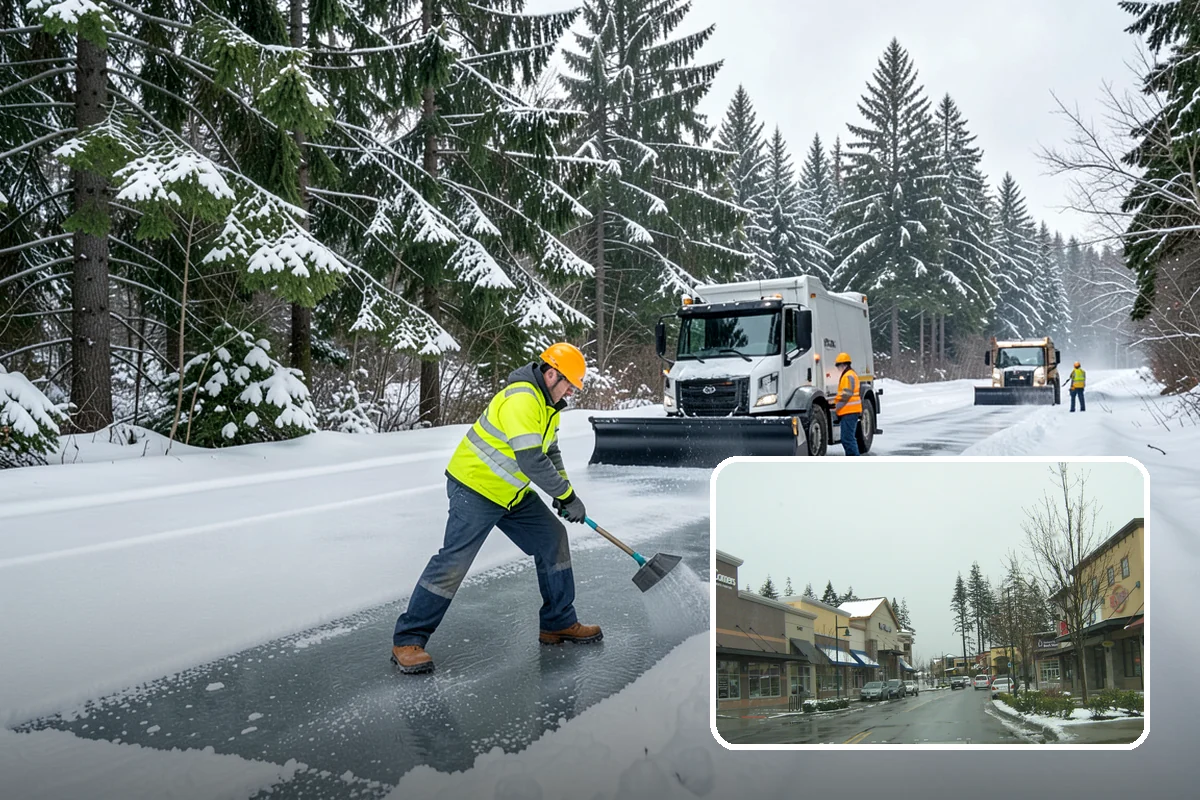
A typical emergency deicing visit can include:
- Spreading bulk salt ($300 per ton, applied) or bagged ice melt ($45 per 50 lb bag) on lots and drives
- Crew members ($110 per person-hour) treating entries, sidewalks and stairs by hand
- A plow and spreader truck with driver (Ram 5500, $325 per hour) for larger lots
- A plow truck with driver (Ram 3500, $250 per hour) when snow needs to be pushed first
Mill Creek is in our zone A, so the trip charge is $200 per dispatch. Each dispatch has a 2-hour minimum. Because ice can form fast on cold nights, call 206-809-9669 with your address and the areas that need treatment.
Prices in Mill Creek
Billed by the hour for the crew and equipment on site, plus materials.
| Plow truck with driver (Ram 3500) | $250 / hour |
| Plow and spreader truck with driver (Ram 5500) | $325 / hour |
| Compact track loader with operator (Kubota SCL1000) | $175 / hour |
| Crew member (shoveling, sidewalks, hand work) | $110 / person-hour |
| Ice melt, bagged | $45 / 50 lb bag |
| Bulk salt, applied | $300 / ton |
| Trip charge for Mill Creek (zone A) | $200 / dispatch |
- 2-hour minimum per dispatch.
- Mill Creek is 9 minutes from our Bothell yard.
Prices approved Oct 2026.
Service Area
Mill Creek
Benefits
Rapid response to sudden ice and freeze events; Deicer matched to temperature and surface type; Targets the highest-traffic slip hazards first; Reduces injury risk and liability from icy surfaces