Keeping You Moving. Beyond Expectations.

Mill Creek Freezing Rain Response
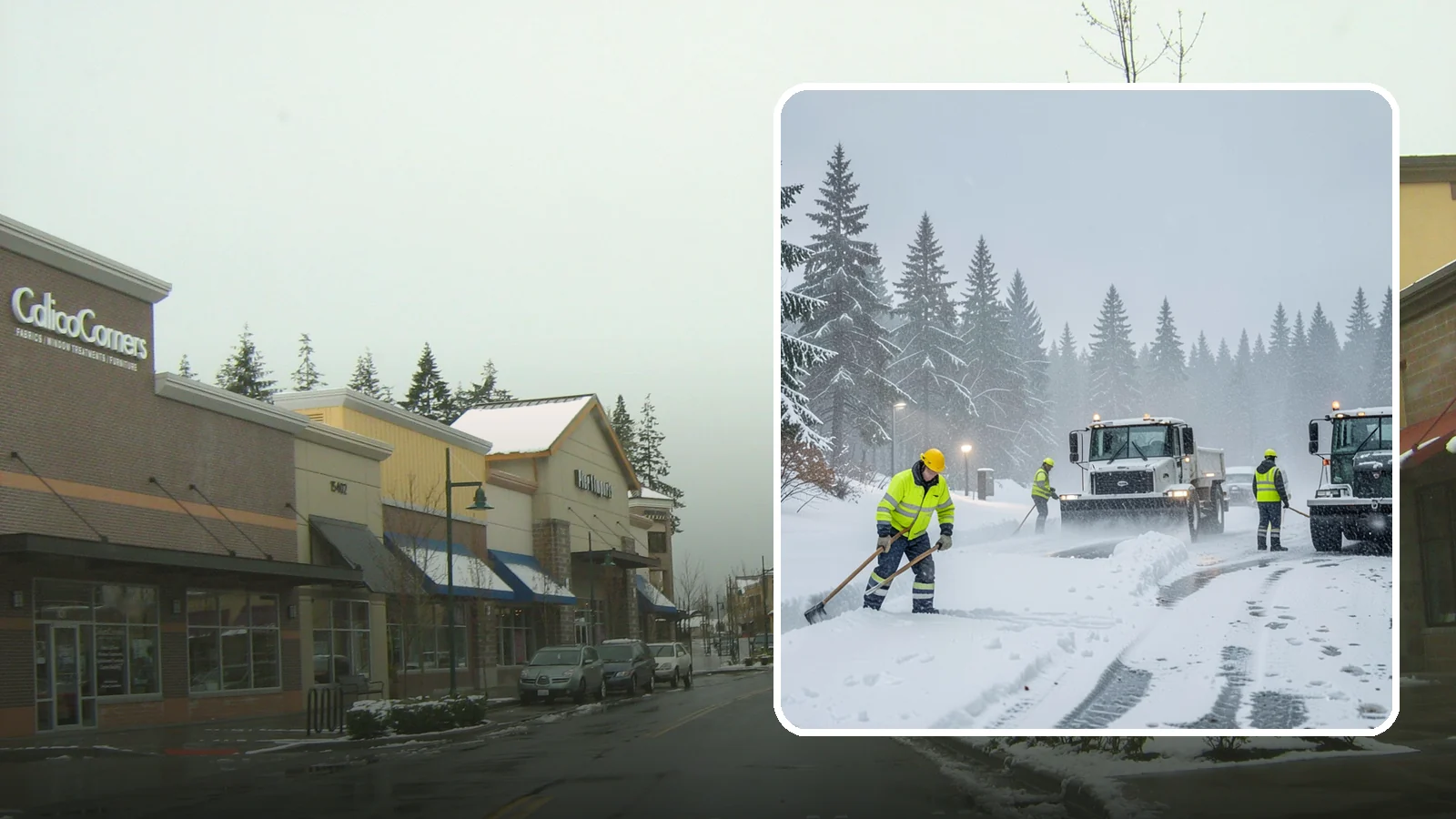
When freezing rain turns every surface to invisible glass, we treat your property before the first fall happens.
Freezing rain is a different problem from snow. It coats walkways, lots and driveways with a thin layer of ice that a plow blade cannot lift. Washington Snow Removal provides freezing rain response in Mill Creek, WA, from our yard in Bothell, 9 minutes away.
Mill Creek averages 8.5 in of snow per season and 35 freezing nights from October to April. Ice is a regular part of the season here. We are licensed, bonded and insured. Call 206-809-9669 to set up a dispatch.
Storm history for Mill Creek
Largest snow totals reported near Mill Creek
- Dec 22, 2008: Up to 10.5 in, 2 spotter reports: 3 NE Mill Creek 10.5 in, 3 NE Mill Creek 9 in
- Mar 1, 2007: Up to 10.4 in, 2 spotter reports: 3 NE Mill Creek 10.4 in, 6 SW Everett 8 in
- Apr 19, 2008: 10.2 in measured by a spotter at Clearview
- Feb 4, 2019: Up to 10 in, 2 spotter reports: Clearview 10 in, 2 S Mill Creek 8.6 in
Sources: NOAA and National Weather Service records for Mill Creek, 2005–2026.
How Freezing Rain Response Works in Mill Creek
Our freezing rain work is about treating and breaking up ice. We spread salt or ice melt on lots, entries, ramps and sidewalks. Crew members chip and shovel where ice has bonded to the surface. On larger lots, a truck applies bulk salt.
Mill Creek sees about 4.33 Winter Weather Advisories a year, and only 2.6 days with 1 in or more of snow. Heavy-snow days of 4 in or more average 0.43 a year. So many winter events here are thin ice or a light freeze, not deep snow. Those are the events where timing matters most, because 35 freezing nights a year give wet pavement many chances to turn to ice.
Larger storms do happen. Spotters near Mill Creek reported 10.4 in on Mar 1, 2007, and 8.6 in on Feb 4, 2019. If snow follows ice, we can plow as well.
- Plow and spreader truck (Ram 5500): $325 / hour
- Crew member for hand work: $110 / person-hour
- Bulk salt, applied: $300 / ton
- Bagged ice melt: $45 / 50 lb bag
- Trip charge for Mill Creek (zone A): $200 / dispatch
Each dispatch has a 2-hour minimum.
Prices in Mill Creek
Billed by the hour for the crew and equipment on site, plus materials.
| Plow truck with driver (Ram 3500) | $250 / hour |
| Plow and spreader truck with driver (Ram 5500) | $325 / hour |
| Compact track loader with operator (Kubota SCL1000) | $175 / hour |
| Crew member (shoveling, sidewalks, hand work) | $110 / person-hour |
| Ice melt, bagged | $45 / 50 lb bag |
| Bulk salt, applied | $300 / ton |
| Trip charge for Mill Creek (zone A) | $200 / dispatch |
- 2-hour minimum per dispatch.
- Mill Creek is 9 minutes from our Bothell yard.
Prices approved Oct 2026.

Service Area
Mill Creek
Benefits
Pre-treatment that stops the glaze from bonding before drizzle even falls; Targeted attention to the clear, hard-to-see layer that causes surprise falls; Extra coverage on shaded and north-facing surfaces that stay frozen longest; Reduced liability from slip-and-fall claims during marginal-temperature events