What Liquid Deicing Involves in Milton, WA
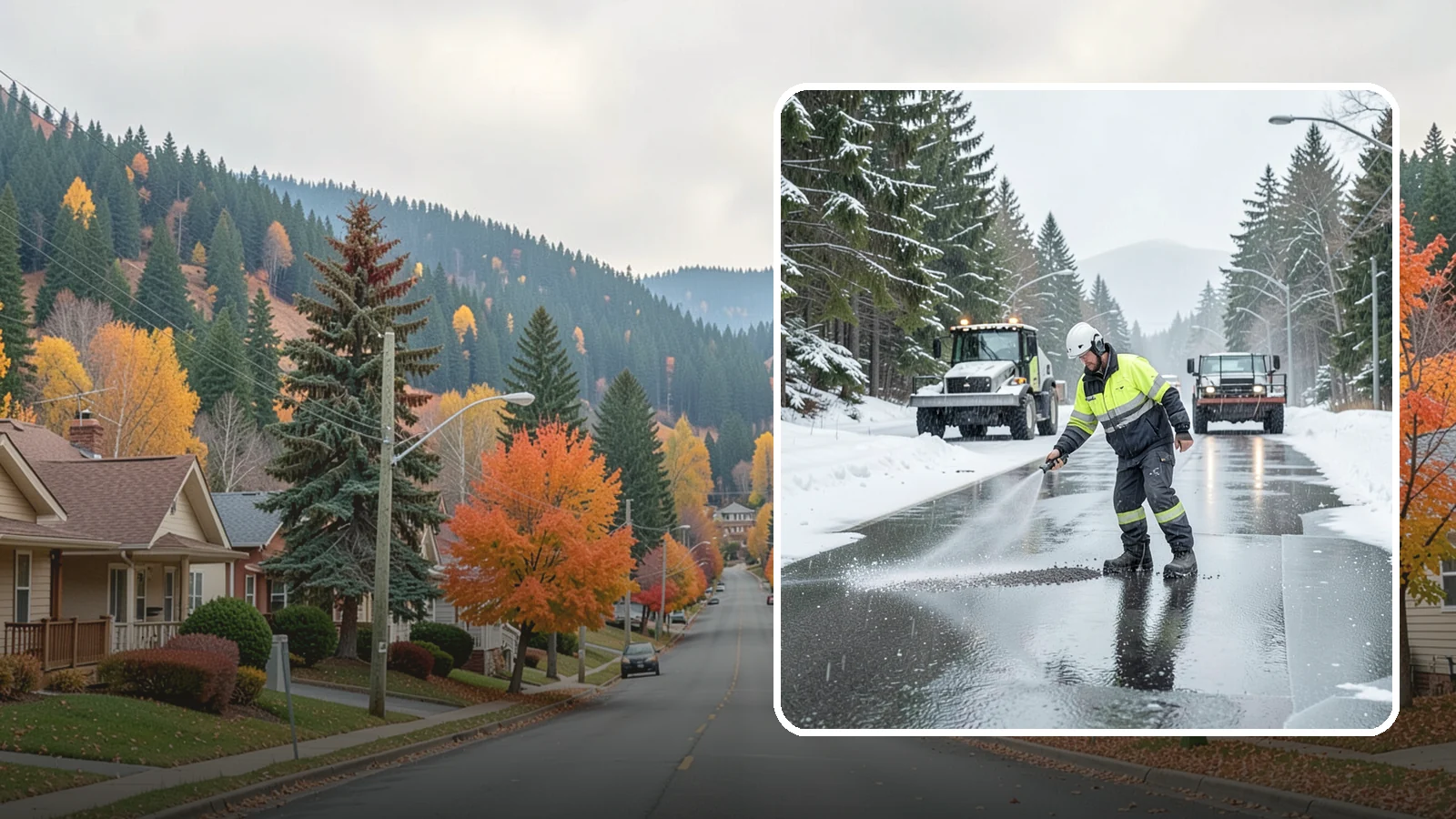
Liquid deicing means spraying brine on pavement before ice bonds to it. The brine lowers the freezing point of the surface, so frost and thin ice are easier to clear or never grip at all. It suits parking lots, driveways, entries and walkways that see cold, damp nights.
Milton's pattern explains why. The area sees only 1.9 days a year with 1 in or more of snow, but it has 28 freezing nights from October to April and 3.38 Winter Weather Advisories a year. Ice is the bigger risk than deep snow. Recent logged events include a Winter Storm on Feb 12, 2021, and an Ice Storm on Jan 19, 2012, one day after Heavy Snow on Jan 18, 2012. Dec 26, 2021 brought Heavy Snow. Two ice storm reports have been logged since 2005.
A typical visit looks like this:
- Walk the property and mark the areas that need treatment.
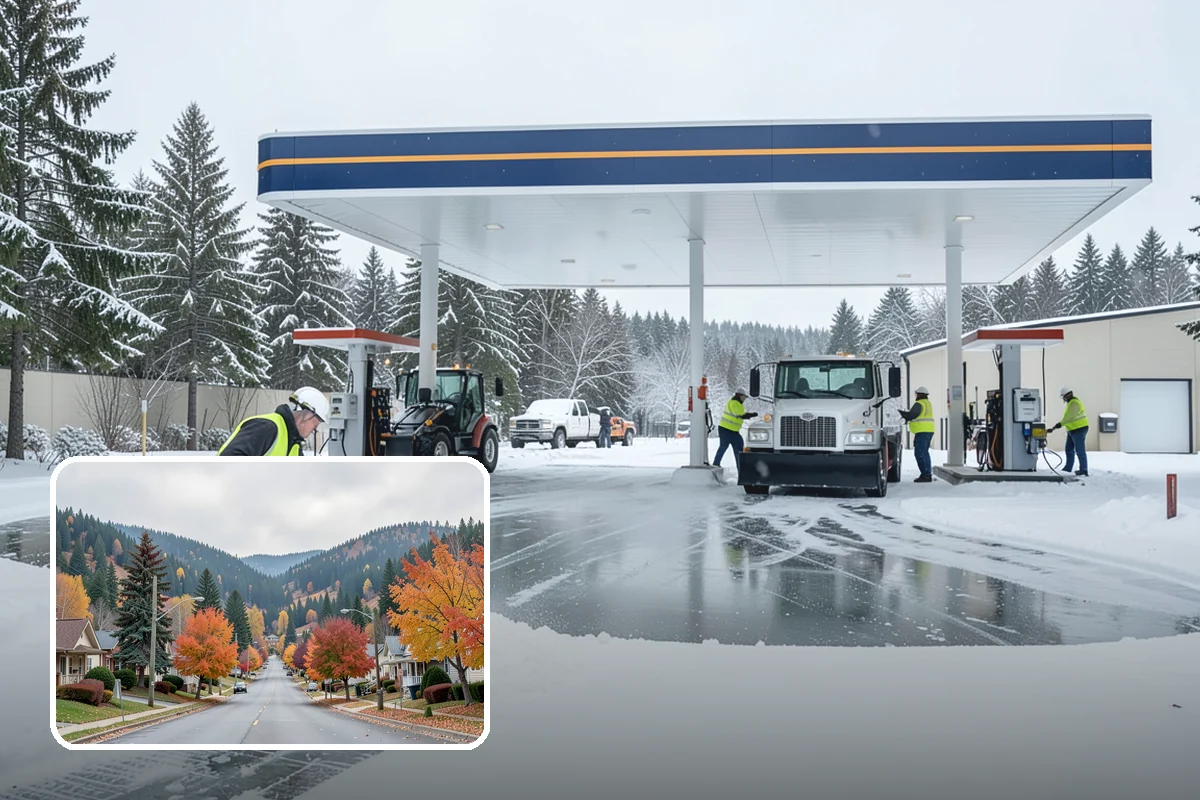
- Apply brine to lots, drives and approaches.
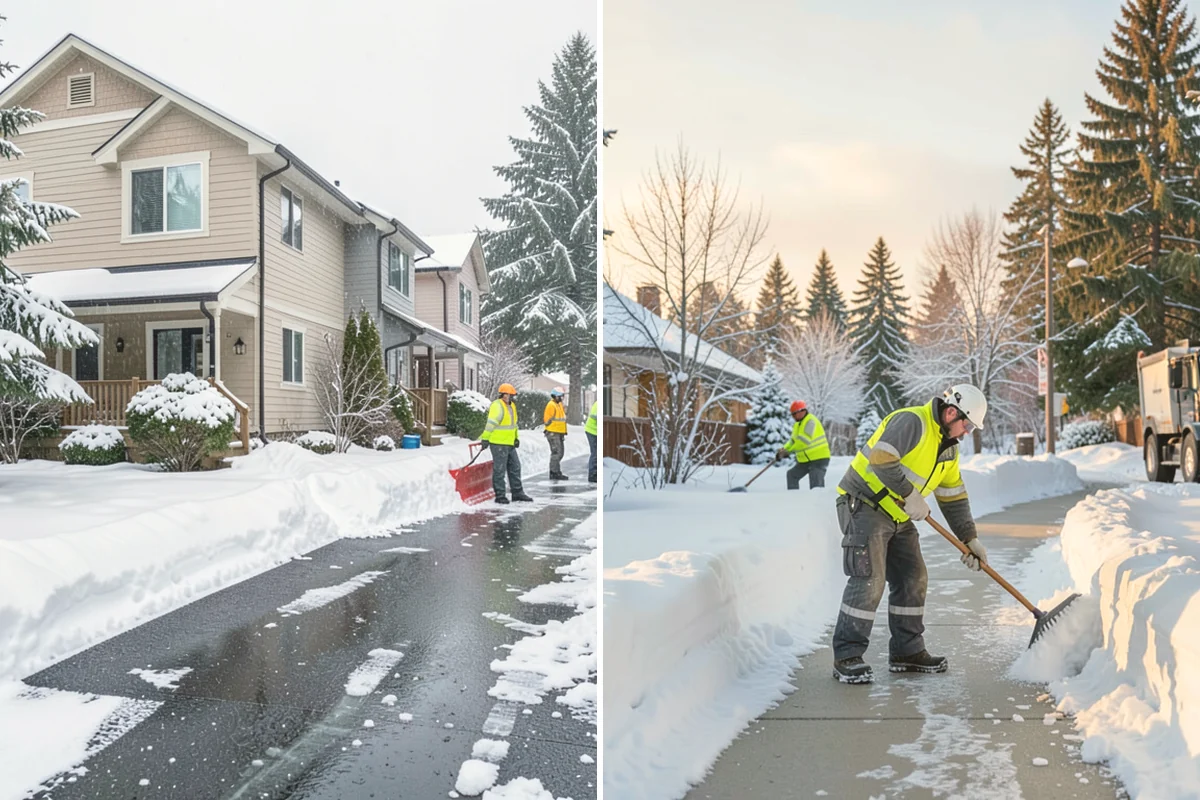
- Follow up with hand work on sidewalks if needed.
Pricing for Milton (zone C) includes a $350 trip charge per dispatch and a 2-hour minimum. Truck time with driver is $325 per hour. Crew members for hand work are $110 per person-hour. Call 206-809-9669 for details.