Keeping You Moving. Beyond Expectations.

Monroe Stairs Snow Removal
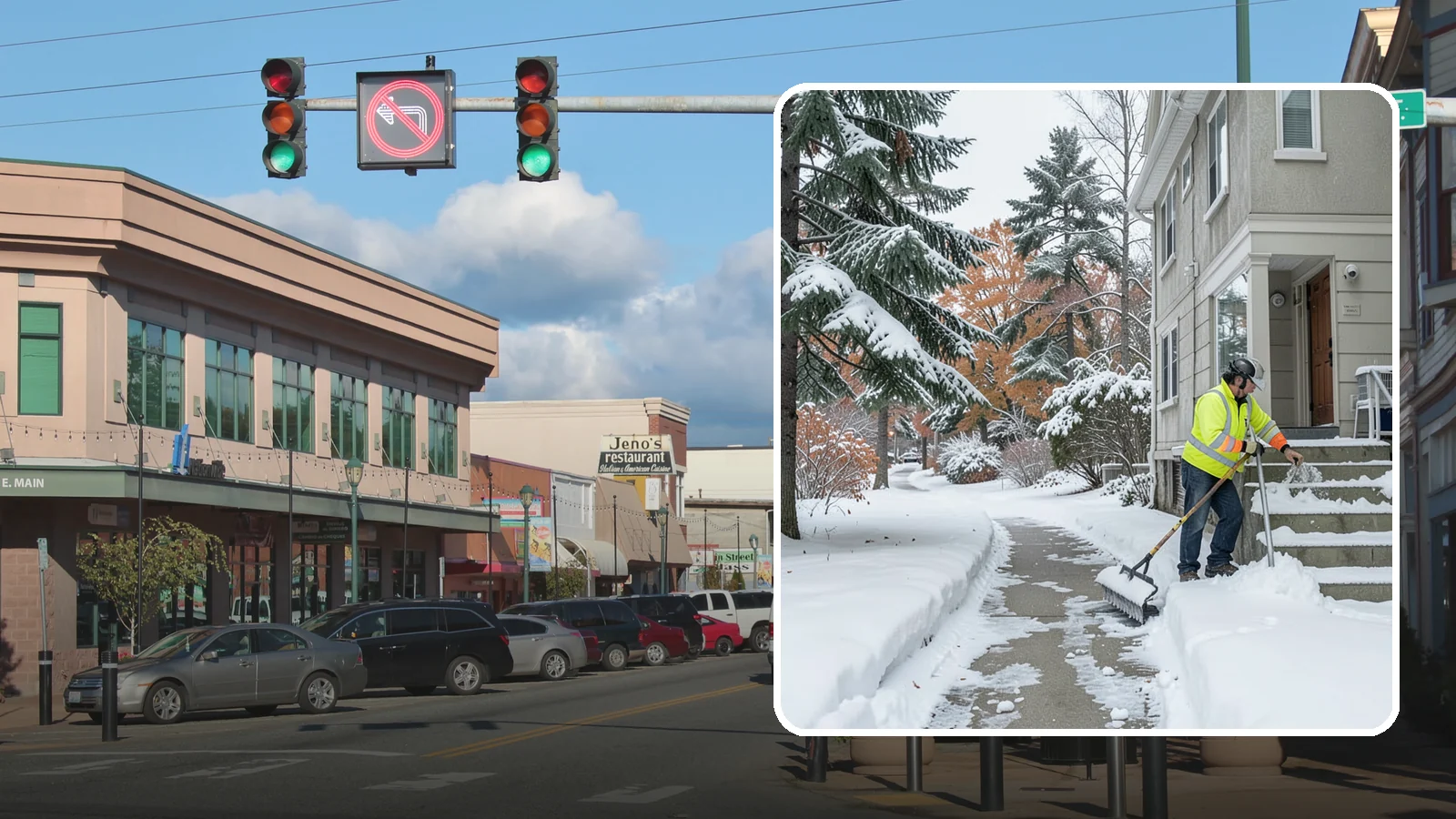
Step-by-step clearing of exterior stairs where compacted snow and hidden ice create the highest slip risk on any property.
Stairs hold ice longer than flat ground. Monroe sees only 8.5 inches of snow in an average season, but the 38 freezing nights between October and April are enough to glaze steps, landings and handrails. Washington Snow Removal clears and treats stairs at Monroe properties.
We are licensed, bonded and insured, and our yard is in Bothell, 25 minutes away. Crews work by hand on steps, so the job is shoveling, scraping and ice melt, not machines. Call 206-809-9669 to set up a dispatch.
Why Monroe walkways freeze
Average snowfall by month in Monroe
Freezing rain and sleet reports near Monroe
- Jan 19, 2024: Freezing Rain reported at Monroe and 1 E Monroe
- Feb 15, 2021: Freezing Rain reported at Monroe
Sources: NOAA and National Weather Service records for Monroe, 2005–2026.
Stairs Snow Removal in Monroe: What the Work Involves
Stairs are hand work. A crew member shovels each tread, clears the landings, and scrapes down to the surface. Then we spread ice melt so the steps do not refreeze overnight. We also treat the path from the steps to the sidewalk or driveway.
Monroe's pattern shapes the job. A typical year has only 2.5 days with 1 inch or more of snow and about 5 days with snow on the ground. But 67% of winters have at least one 1-inch day, and about 2.95 light-snow days a year need deicing. Many of our stair calls are about thin ice, not deep snow.
Freezing rain also matters here. Freezing rain was reported at Monroe on Jan 19, 2024, and on Feb 15, 2021. That kind of glaze sticks to steps and needs melt, not just a shovel.
Monroe code (MMC 12.14.020) makes the owner, occupant or person in charge of a property responsible for clearing the public sidewalk next to it. The deadline is 12 hours after snow stops. Stairs that lead to that sidewalk should be clear as well.
Pricing:
- Crew member: $110 per person-hour
- Ice melt, bagged: $45 per 50 lb bag
- Trip charge for Monroe (zone A): $200 per dispatch
- 2-hour minimum per dispatch
Prices in Monroe
Billed by the hour for the crew and equipment on site, plus materials.
| Crew member (shoveling, sidewalks, hand work) | $110 / person-hour |
| Compact track loader with operator (Kubota SCL1000) | $175 / hour |
| Ice melt, bagged | $45 / 50 lb bag |
| Trip charge for Monroe (zone A) | $200 / dispatch |
- 2-hour minimum per dispatch.
- Monroe is 25 minutes from our Bothell yard.
Prices approved Oct 2026.
Service Area
Monroe
Benefits
Eliminates packed ice hidden in tread corners and nosings; Restores safe footing on the property’s highest-risk surface; Clears handrails and landings for a continuous route; Uses treatments that will not stain wood or composite treads