Keeping You Moving. Beyond Expectations.

Monroe Trail Snow Removal
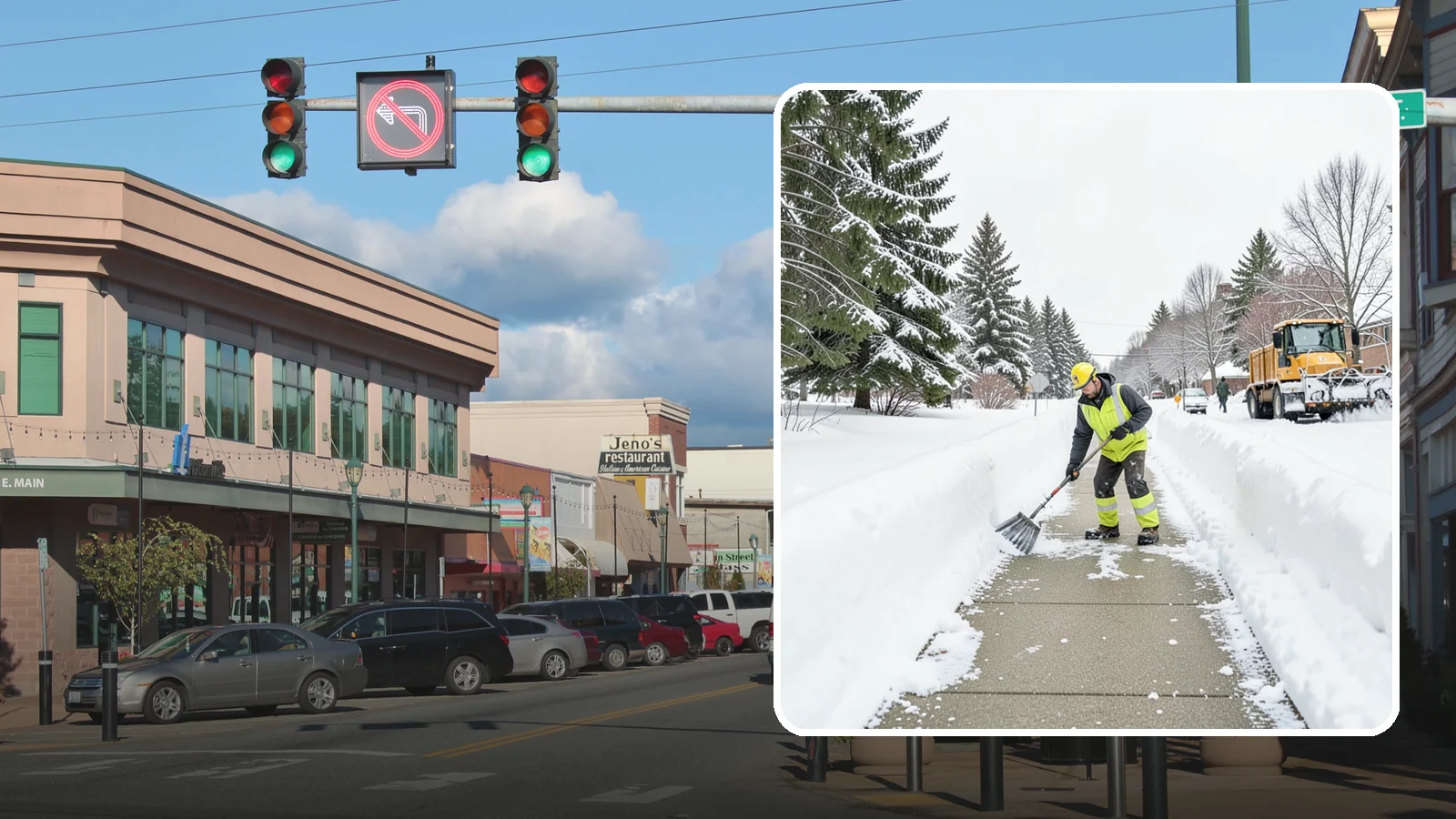
Clearing of paved and soft-surface trails on campuses, parks, and HOAs so pedestrians keep a safe route in the snow.
Washington Snow Removal clears snow and ice from trails in Monroe, Snohomish County. That includes walking paths, greenway connectors and paved routes that cross or border private property. We are based in Bothell, 25 minutes from Monroe, and we are licensed, bonded and insured.
Monroe averages 8.5 in of snow per season, with about 2.5 days a year at 1 in or more. Most winters are mild. A few storms are not. In February 2019, 25.7 in fell over five days. Trails need a plan for both kinds of winter.
Monroe walkway conditions in winter
Average snowfall by month in Monroe
Biggest storms in Monroe since 2005
- Feb 8–12, 2019: 25.7 in total, 10.8 in on the biggest day
- Dec 17–22, 2008: 20.9 in total, 5.9 in on the biggest day
- Jan 12–15, 2020: 13.8 in total, 5.0 in on the biggest day
- Jan 14–20, 2012: 12.7 in total, 3.3 in on the biggest day
Sources: NOAA and National Weather Service records for Monroe, 2005–2026.
How We Clear Trails in Monroe, WA
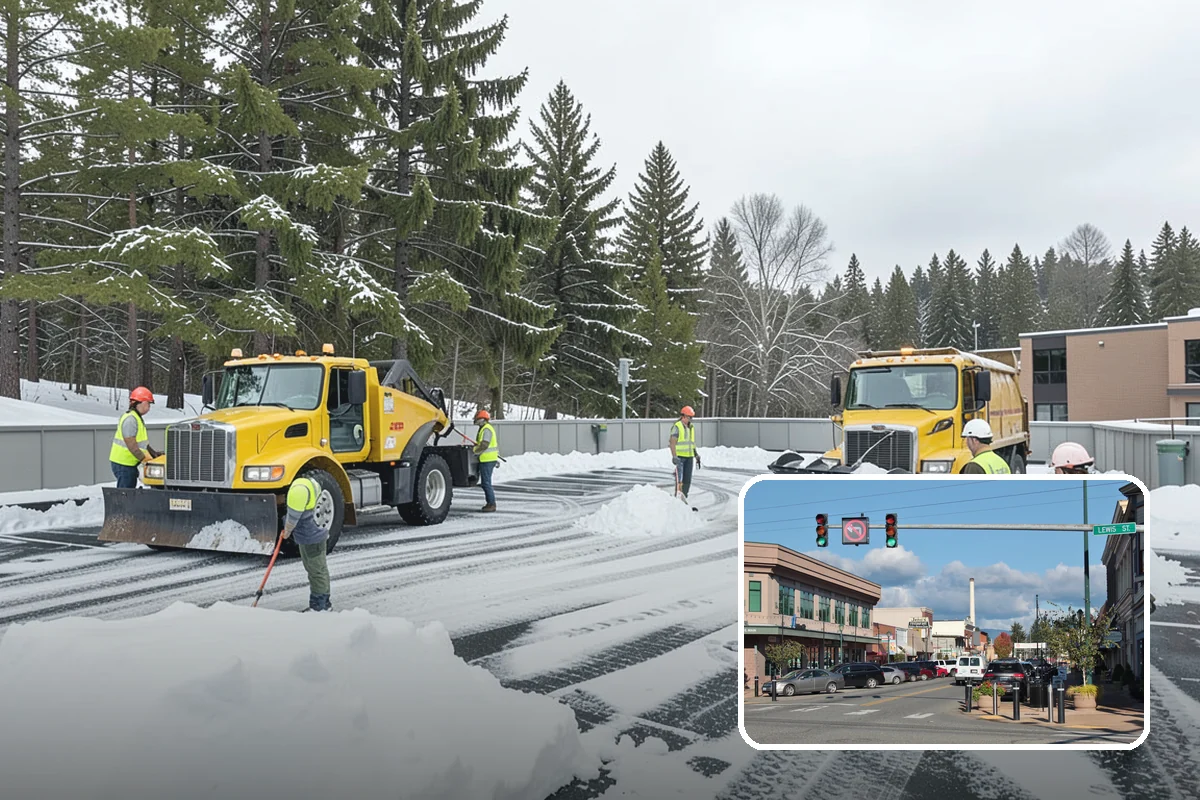
Trail work is mostly hand work and small equipment. Paths are narrow, and surfaces can be asphalt, concrete or compacted gravel. We match the tool to the surface so we do not tear up edges or shove snow into drainage areas.
Monroe has 38 freezing nights between October and April. Most light-snow events are small, but about 2.95 days a year are light-snow days that need deicing. On those days a thin layer of ice is the real hazard, not depth. Bagged ice melt is the usual fix on a paved trail.
Big storms are a different job. Feb 8–12, 2019 brought 10.8 in on the biggest day alone. Dec 17–22, 2008 totaled 20.9 in. For those events we can send a compact track loader with an operator alongside shovel crews.
If your trail runs along a public sidewalk, Monroe code (MMC 12.14.020) puts the duty on the owner or person in charge to clear the sidewalk to its full width. The deadline is 12 hours after snow stops.
Our rates:
- Crew member: $110 per person-hour
- Compact track loader with operator (Kubota SCL1000): $175 per hour
- Ice melt, bagged: $45 per 50 lb bag
- Trip charge for Monroe (zone A): $200 per dispatch
There is a 2-hour minimum per dispatch. Call 206-809-9669 to set up service.
Prices in Monroe
Billed by the hour for the crew and equipment on site, plus materials.
| Crew member (shoveling, sidewalks, hand work) | $110 / person-hour |
| Compact track loader with operator (Kubota SCL1000) | $175 / hour |
| Ice melt, bagged | $45 / 50 lb bag |
| Trip charge for Monroe (zone A) | $200 / dispatch |
- 2-hour minimum per dispatch.
- Monroe is 25 minutes from our Bothell yard.
Prices approved Oct 2026.
Service Area
Monroe
Benefits
Restores safe pedestrian routes through shaded greenbelts; Uses equipment sized for narrow trails and footbridges; Clears soft-surface trails without damaging the base; Chooses traction materials safe for nearby plants and water