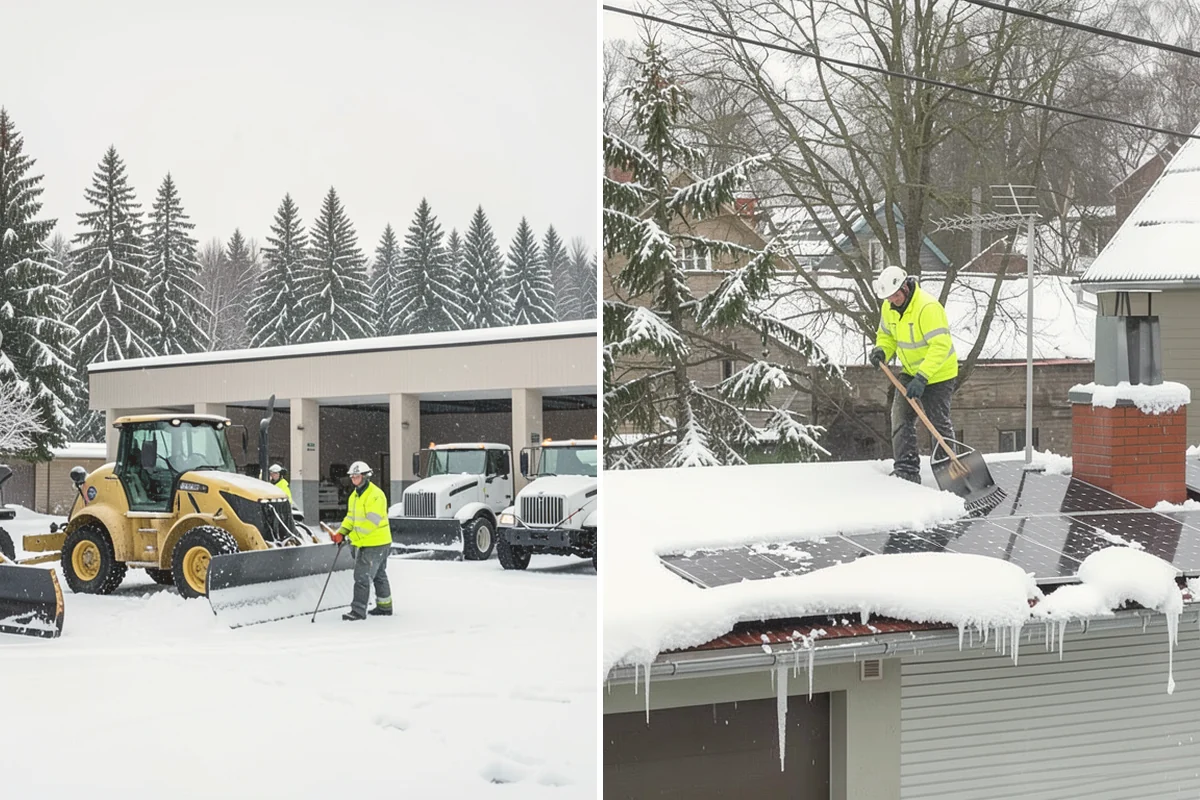
Keeping You Moving. Beyond Expectations.

Mount Vernon Bus Stop Clearing
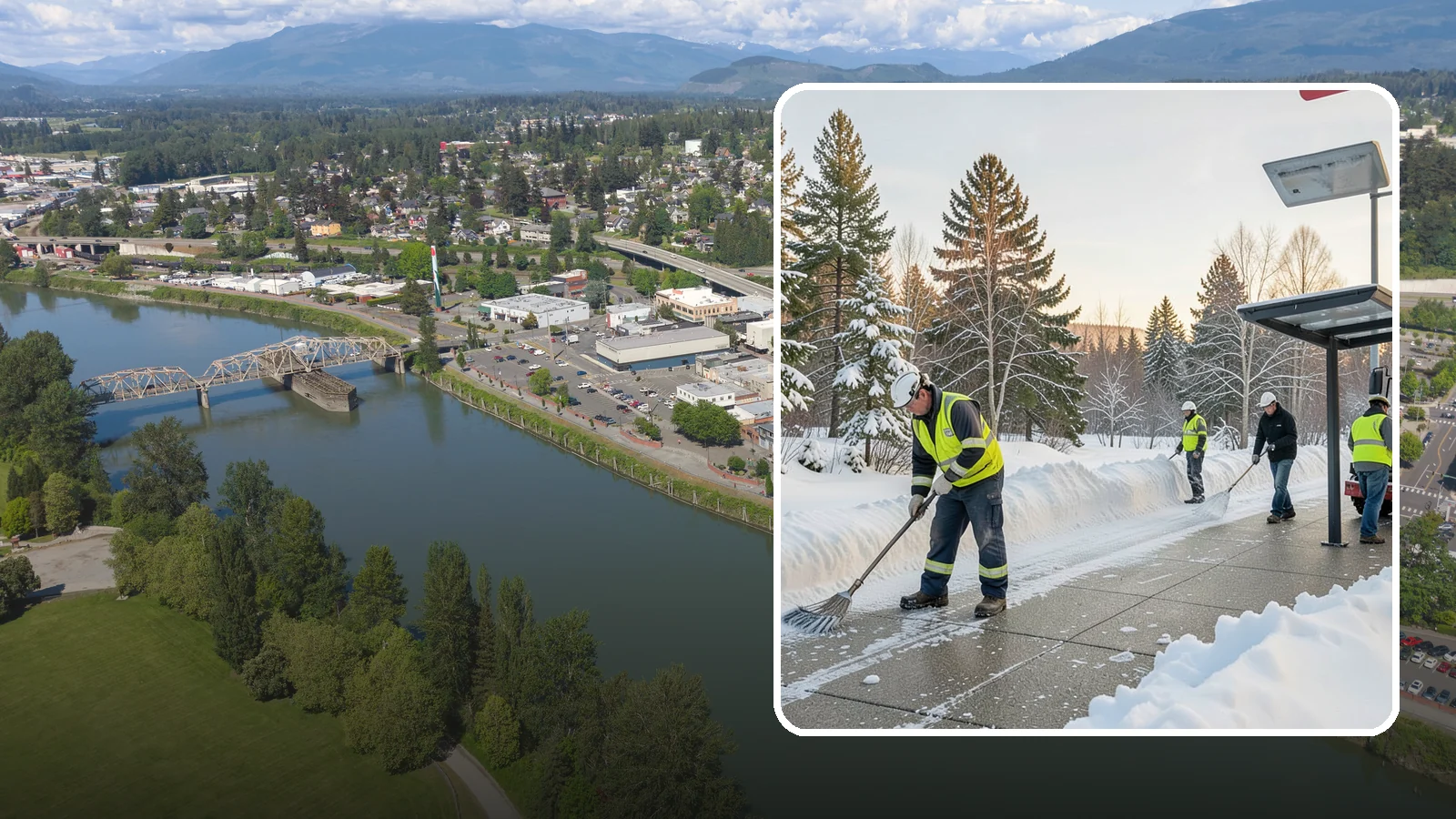
We clear bus stops, shelters, and boarding pads so transit riders board safely during Western Washington snow and ice.
Washington Snow Removal clears snow and ice from bus stops in Mount Vernon, Skagit County. OpenStreetMap lists 167 bus stops inside city limits, including 11th St at E Division, 13th Street and Broad Street, 15th Street and Broad Street, and 15th Street and Broadway.
We work from our Bothell yard, which is 62 minutes away. We are licensed, bonded and insured. Call 206-809-9669 to talk through your stops and how you want them handled when snow arrives.
Snow and ice on Mount Vernon sidewalks
Biggest storms in Mount Vernon since 2005
- Dec 17–19, 2008: 16.4 in total, 9.9 in on the biggest day
- Feb 23–24, 2011: 14.8 in total, 10.6 in on the biggest day
- Dec 21–22, 2008: 11.1 in total, 7.7 in on the biggest day
- Jan 15–19, 2012: 10.6 in total, 4.5 in on the biggest day
Sources: NOAA and National Weather Service records for Mount Vernon, 2005–2026.
How Bus Stop Clearing Works in Mount Vernon
A bus stop needs a clear path to the curb, open space at the boarding spot, and a landing area where riders can wait. Crew members shovel the pad and the sidewalk approach by hand. Where there is room for it, a Kubota SCL1000 compact track loader with an operator can move larger piles. We spread bagged ice melt on the walking surface once it is cleared.
Mount Vernon does not see snow often. The average is 8.7 inches per season, and snow is on the ground about 5 days a year. Only 2.6 days a year bring 1 inch or more. Still, 71% of winters have at least one 1-inch day, so a stop can go from bare to icy with little warning.
Ice is the steadier problem. The city has 37 freezing nights between October and April, and those nights can turn damp pavement at a shelter or curb into a slick surface.
Big storms do happen. Dec 17-19, 2008 brought 16.4 inches in total, with 9.9 inches on the biggest day. Feb 23-24, 2011 brought 14.8 inches.
Our rates:
- Crew member: $110 per person-hour
- Compact track loader with operator: $175 per hour
- Bagged ice melt: $45 per 50 lb bag
- Trip charge for Mount Vernon (zone C): $350 per dispatch
Each dispatch has a 2-hour minimum.
Prices in Mount Vernon
Billed by the hour for the crew and equipment on site, plus materials.
| Crew member (shoveling, sidewalks, hand work) | $110 / person-hour |
| Compact track loader with operator (Kubota SCL1000) | $175 / hour |
| Ice melt, bagged | $45 / 50 lb bag |
| Trip charge for Mount Vernon (zone C) | $350 / dispatch |
- 2-hour minimum per dispatch.
- Mount Vernon is 62 minutes from our Bothell yard.
Prices approved Oct 2026.
Bus stops in Mount Vernon
OpenStreetMap lists 167 bus stops inside Mount Vernon city limits.
- 11th st at E Division
- 13th Street and Broad Street
- 15th Street and Broad Street
- 15th Street and Broadway
Source: OpenStreetMap contributors, Oct 2026. Named sites are examples of local facilities, not customers.

Service Area
Mount Vernon
Benefits
Gives transit riders a safe path to board; Clears plow berms blocking the boarding pad; Treats shaded shelter slabs against black ice; Keeps seating and schedule signage accessible; Supports riders using mobility devices