Keeping You Moving. Beyond Expectations.

Mount Vernon Condominium Deicing
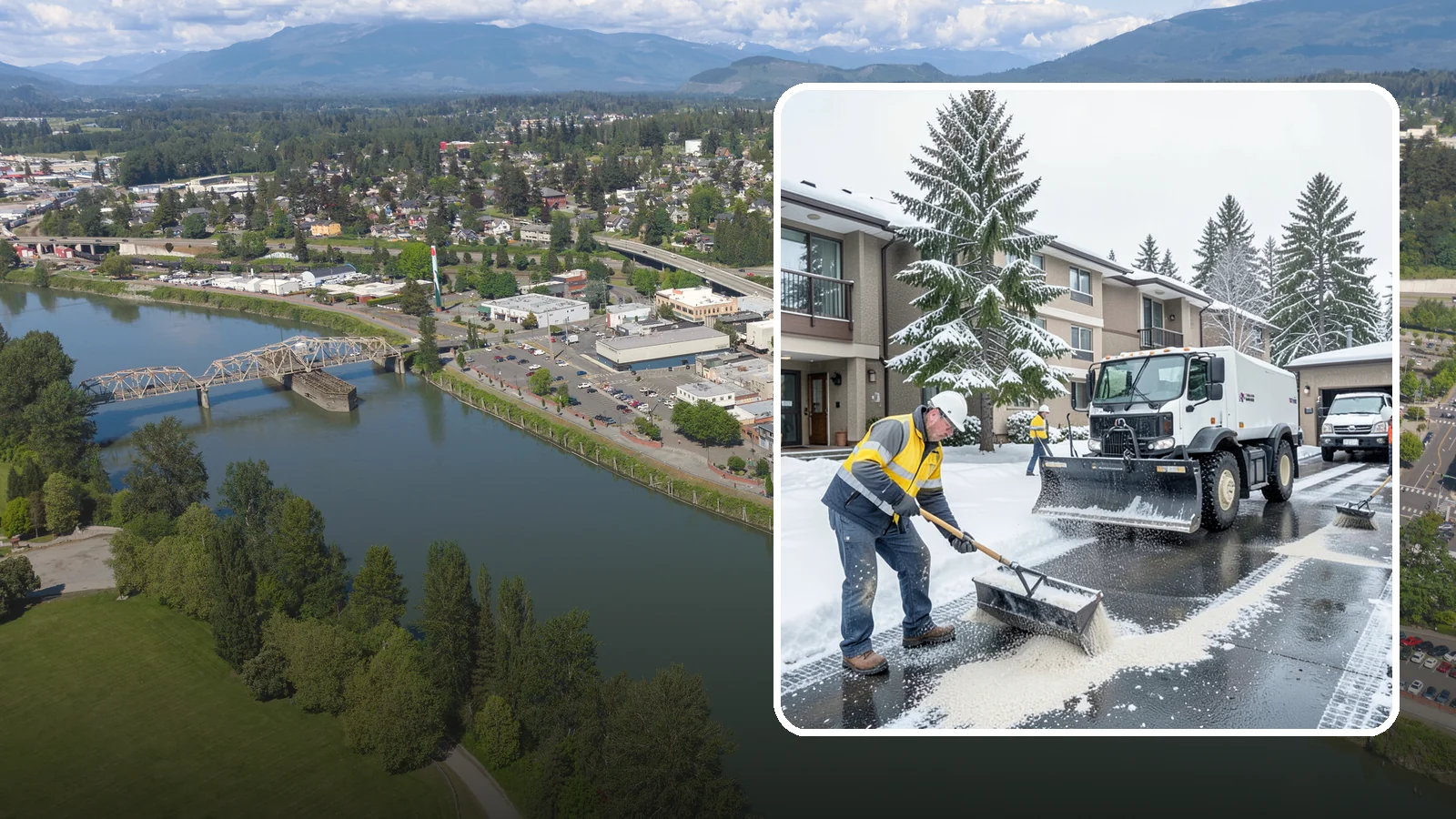
Deicing built for condominium properties, focused on entry lobbies, garage ramps, and shared walks where owner and visitor traffic never stops.
Condominium Deicing in Mount Vernon means treating the walks, stairs, entries and parking areas that residents use every day. Washington Snow Removal is licensed, bonded and insured, and we dispatch from our Bothell yard, 62 minutes away.
Mount Vernon sees about 8.7 in of snow a season and 37 freezing nights from October to April. Those cold nights matter as much as the snowfall. Call 206-809-9669 to talk through your association's property and how we would treat it.
How often Mount Vernon pavement freezes
Average snowfall by month in Mount Vernon
Recent winter events logged for the Mount Vernon area
- Nov 29–Dec 1, 2022: Winter Weather; Heavy Snow
- Feb 12, 2021: Winter Storm
- Dec 24, 2008: Heavy Snow
Sources: NOAA and National Weather Service records for Mount Vernon, 2005–2026.
How Condominium Deicing Works in Mount Vernon, WA
Condominium deicing is hand work and truck work together. Crew members treat sidewalks, building entries, stairs and mailbox areas. A spreader truck covers drives and shared parking. We apply ice melt or salt where residents walk and park.
The local pattern shapes the job. Mount Vernon has snow on the ground about 5 days a year, and only 2.6 days with 1 in or more. No ice storm reports have been logged since 2005. Still, 37 freezing nights mean thin frost and refrozen meltwater can make walkways slick without any big storm. Recent events include Heavy Snow on Nov 29, 2022, a Winter Storm on Feb 12, 2021, and Heavy Snow on Dec 24, 2008.
Our rates are listed plainly:
- Plow and spreader truck with driver (Ram 5500): $325 / hour
- Crew member for shoveling, sidewalks and hand work: $110 / person-hour
- Ice melt, bagged: $45 / 50 lb bag
- Bulk salt, applied: $300 / ton
- Trip charge for Mount Vernon (zone C): $350 / dispatch
Each dispatch has a 2-hour minimum. With 219 apartment buildings mapped in the city, many associations share similar layouts, but we plan each property on its own.
Prices in Mount Vernon
Billed by the hour for the crew and equipment on site, plus materials.
| Plow and spreader truck with driver (Ram 5500) | $325 / hour |
| Ice melt, bagged | $45 / 50 lb bag |
| Bulk salt, applied | $300 / ton |
| Crew member (shoveling, sidewalks, hand work) | $110 / person-hour |
| Trip charge for Mount Vernon (zone C) | $350 / dispatch |
- 2-hour minimum per dispatch.
- Mount Vernon is 62 minutes from our Bothell yard.
Prices approved Oct 2026.
Apartment buildings in Mount Vernon
There are 219 apartment buildings mapped within Mount Vernon.
- Alpine Ridge
- Blue Grotto Apartments
- Brigadoon Apartments Building A
- Brigadoon Apartments Building B
Source: OpenStreetMap contributors, Oct 2026. Named sites are examples of local facilities, not customers.
Service Area
Mount Vernon
Benefits
Keeps high-volume building entrances safe for owners and guests; Treats garage-ramp thresholds where ice forms first; Limits tracked-in slush that damages interior flooring; Spreads shared owner liability across a documented service; Protects structural concrete from corrosive deicing salts