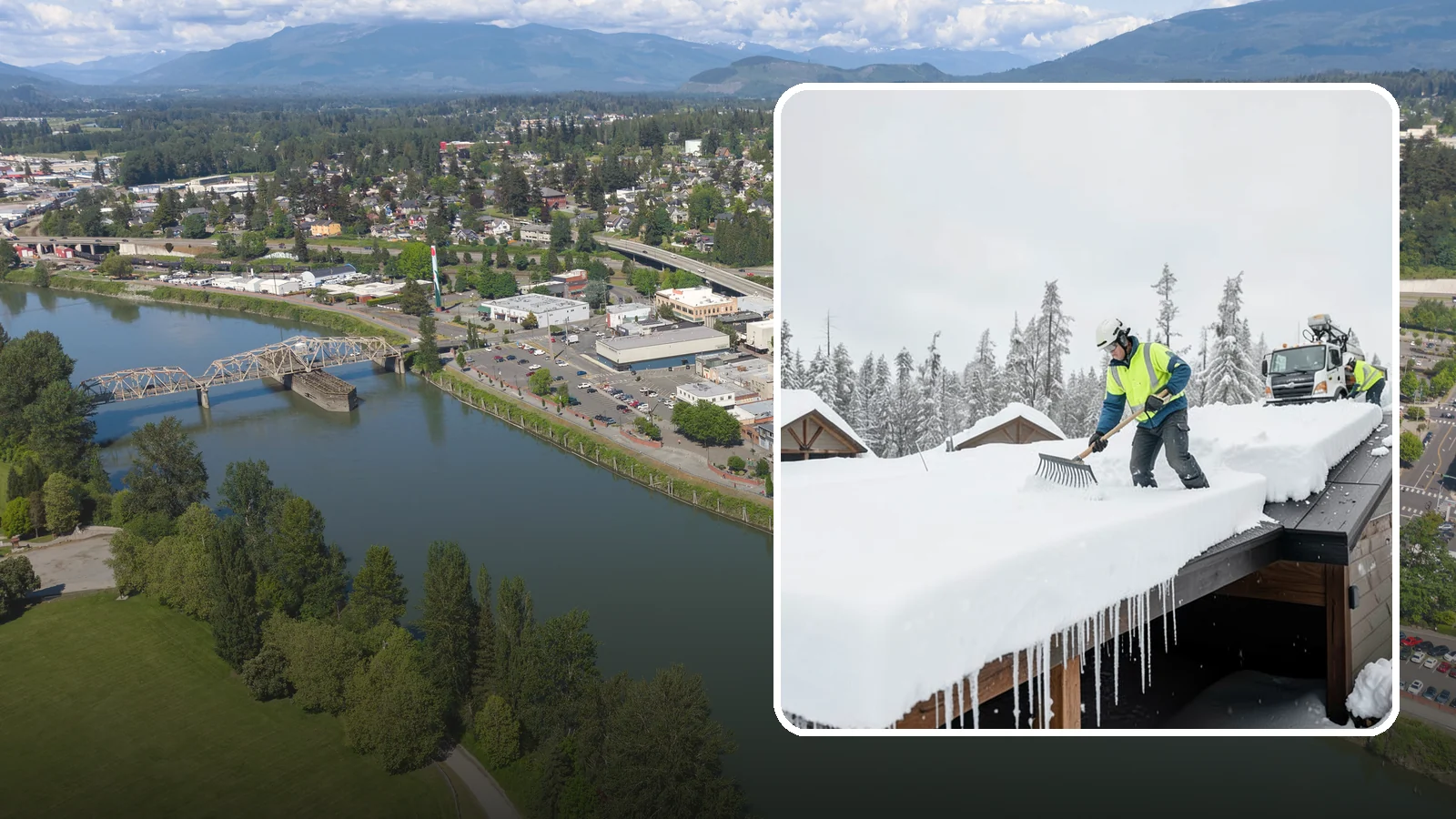
Flat Roof Snow Removal in Mount Vernon: What the Job Involves
Flat roof work in Mount Vernon is mostly hand work. Crews go up with shovels, clear snow in sections and move it to the edges or off the building to a safe area. We keep drains, scuppers and roof edges clear so melt water has somewhere to go.
The local pattern shapes the job. An average year brings only 2.6 days with 1 in or more of snow, so most winters need little or no roof clearing. But Mount Vernon has had large events. The Dec 17–19, 2008 storm dropped 16.4 in in total, with 9.9 in on the biggest day. Feb 23–24, 2011 brought 14.8 in, and Dec 25–28, 2021 brought 12.1 in. Snow of that size can pile up on a flat roof quickly.
The area also has 37 freezing nights from October to April. Snow that melts by day can refreeze at night, so clogged drains and ice at roof edges matter as much as depth.
- Crew member (shoveling, sidewalks, hand work): $110 per person-hour
- Trip charge for Mount Vernon (zone C): $350 per dispatch
Mount Vernon is 62 minutes from our Bothell yard. Call 206-809-9669 to discuss your roof.