Keeping You Moving. Beyond Expectations.

Mount Vernon Industrial Facility Deicing
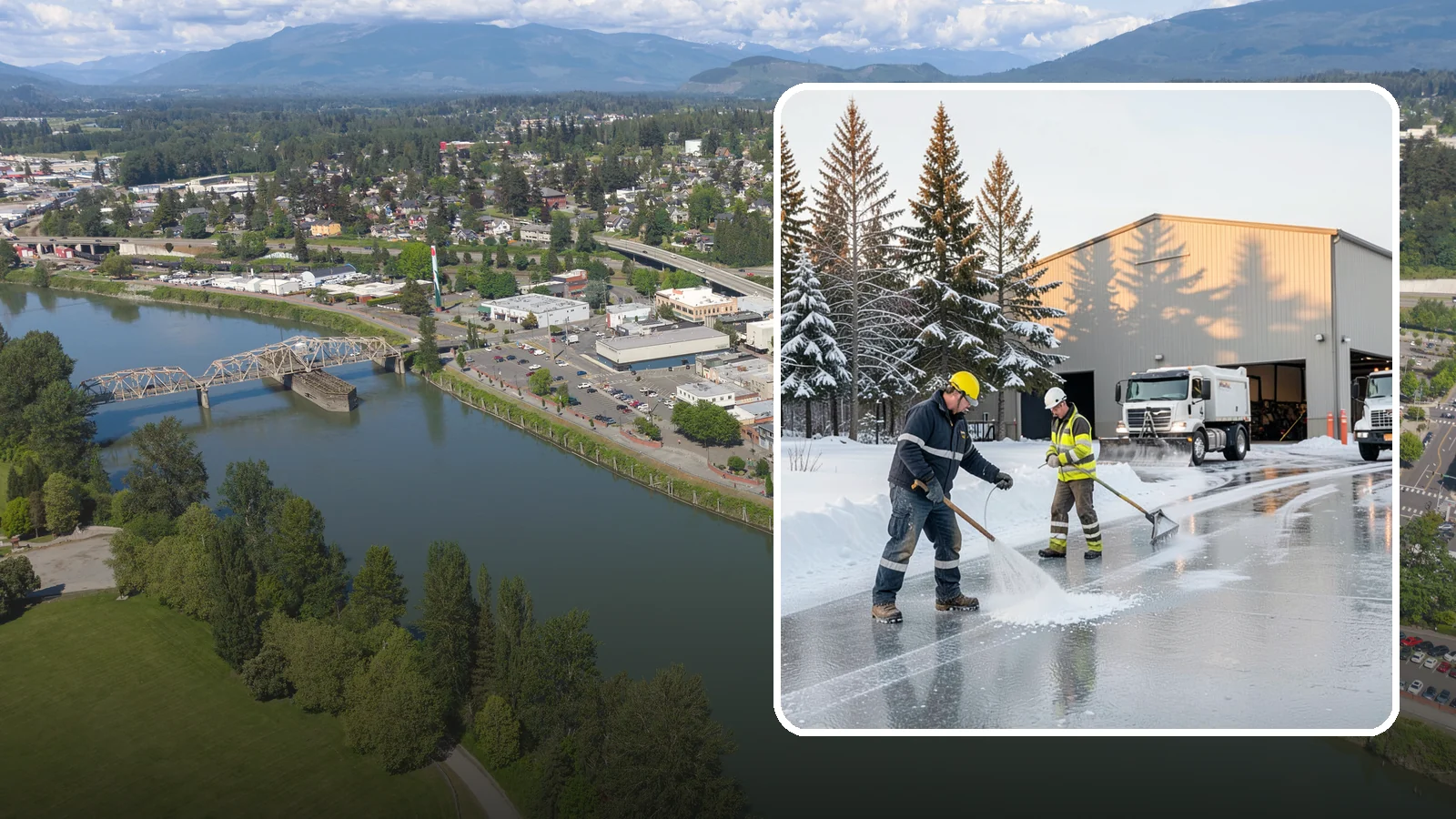
Heavy-duty deicing for industrial sites, keeping truck routes, yard walkways, and equipment approaches safe for round-the-clock operations.
Industrial Facility Deicing in Mount Vernon covers the surfaces where trucks, forklifts and workers move every day: loading docks, yard lanes, gate approaches and walkways. Washington Snow Removal is licensed, bonded and insured, and we dispatch from our Bothell yard.
Mount Vernon averages 8.7 in of snow a season and 37 freezing nights from October to April. Snow is rare, but frost on a dock apron still matters. There are 19 industrial sites mapped in the city, including Draper Valley Farms and Papé Machinery. Call 206-809-9669 to talk through your site.
How often Mount Vernon pavement freezes
Average snowfall by month in Mount Vernon
Recent winter events logged for the Mount Vernon area
- Feb 3, 2025: Winter Weather
- Dec 25, 2021: Heavy Snow
- Feb 12, 2021: Winter Storm
Sources: NOAA and National Weather Service records for Mount Vernon, 2005–2026.
How Deicing Works at Mount Vernon Industrial Sites
Industrial deicing is mostly about traction on working surfaces. Trucks and forklifts turn, brake and idle in the same spots, so we focus on those areas first.
Mount Vernon sees about 2.6 days a year with 1 in or more of snow, and snow sits on the ground about 5 days a year. No ice storm reports have been logged here since 2005. The more common issue is the 37 freezing nights from October to April, when wet pavement can glaze over before a shift starts. The area logged Winter Weather on Feb 3, 2025, Heavy Snow on Dec 25, 2021, and a Winter Storm on Feb 12, 2021. The city averages 3.81 Winter Weather Advisories a year.
- Plow and spreader truck with driver (Ram 5500): $325 / hour
- Bulk salt, applied: $300 / ton
- Ice melt, bagged: $45 / 50 lb bag
- Crew member for sidewalks and hand work: $110 / person-hour
- Trip charge for Mount Vernon (zone C): $350 / dispatch
Each dispatch has a 2-hour minimum. Mount Vernon is 62 minutes from our Bothell yard, so we plan visits around the forecast.
Prices in Mount Vernon
Billed by the hour for the crew and equipment on site, plus materials.
| Plow and spreader truck with driver (Ram 5500) | $325 / hour |
| Ice melt, bagged | $45 / 50 lb bag |
| Bulk salt, applied | $300 / ton |
| Crew member (shoveling, sidewalks, hand work) | $110 / person-hour |
| Trip charge for Mount Vernon (zone C) | $350 / dispatch |
- 2-hour minimum per dispatch.
- Mount Vernon is 62 minutes from our Bothell yard.
Prices approved Oct 2026.
Industrial sites in Mount Vernon
There are 19 industrial sites mapped within Mount Vernon.
- Draper Valley Farms
- Papé Machinery
Source: OpenStreetMap contributors, Oct 2026. Named sites are examples of local facilities, not customers.
Service Area
Mount Vernon
Benefits
Keeps 24-hour operations safe across every shift; Protects pedestrian crossings within busy vehicle yards; Times treatment to shift changes and delivery windows; Handles large paved areas with industrial-grade product; Guards yard drainage from corrosive runoff