Black Ice Treatment in Puyallup: What It Involves
Puyallup does not get much snow. The average is 7.8 in a season, and only 5 days a year have snow on the ground. Just 1.0 day a year stays below freezing all day. That pattern matters. Most ice here comes from cold nights, not from deep snow, and it can form with no visible warning.
The area averages 3.38 Winter Weather Advisories a year. It has also logged 2 ice storm reports since 2005, including one on Dec 23, 2022. Heavy snow was logged on Feb 8, 2014 and Feb 5, 2017.
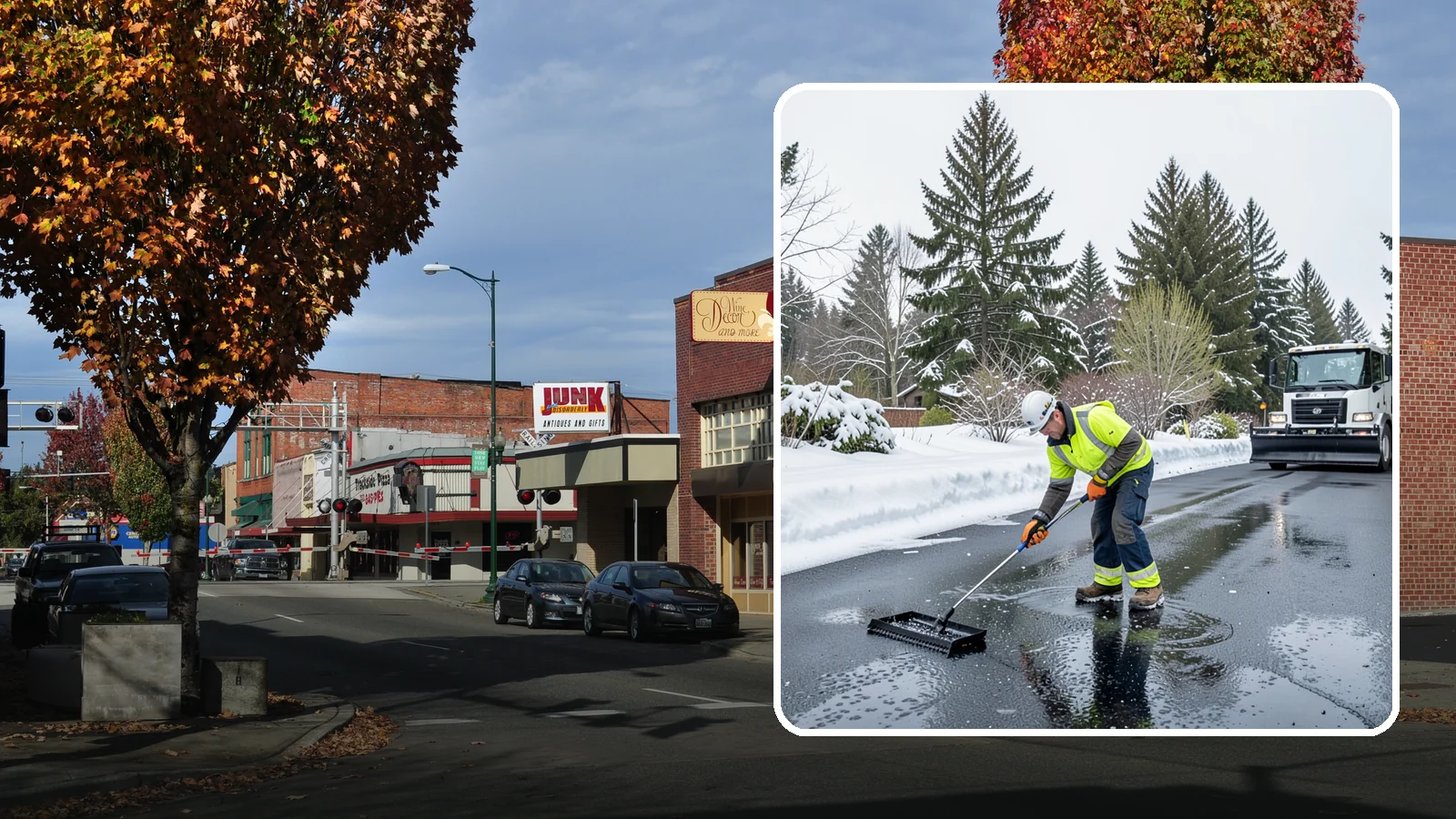
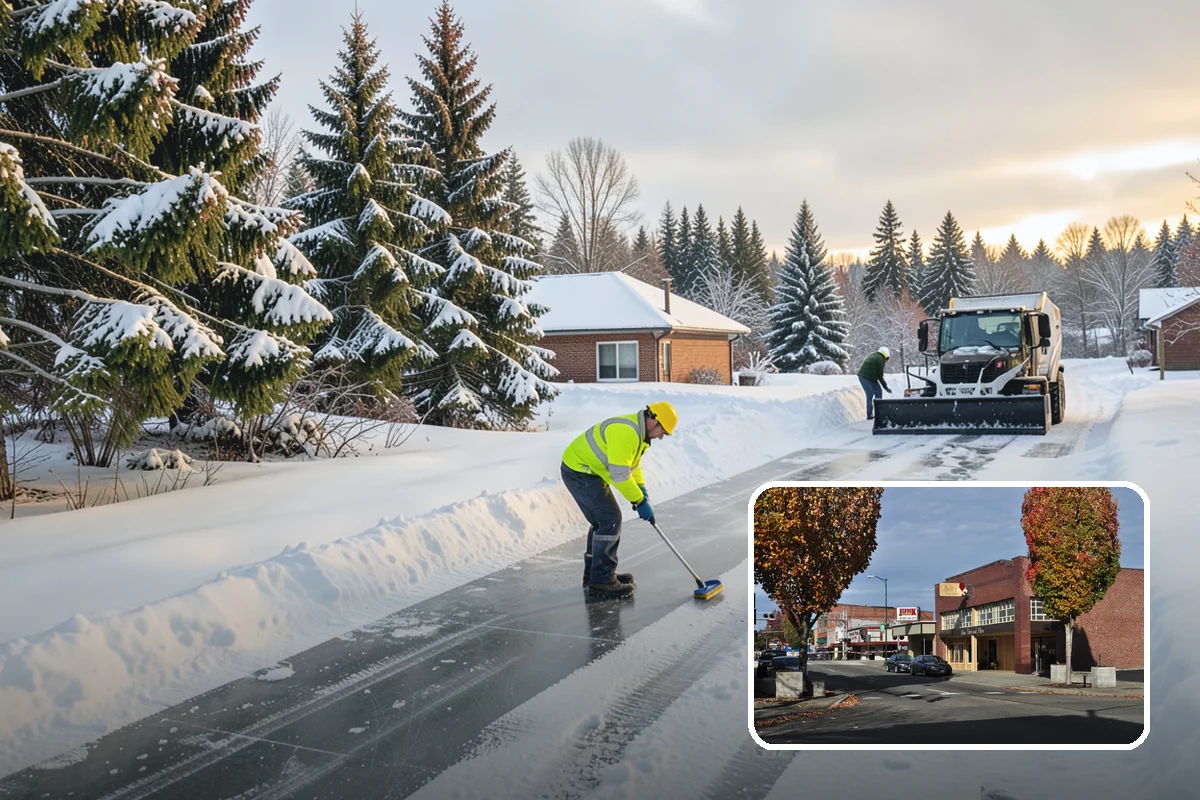
A typical treatment at a Puyallup property covers the spots where people walk and drive:
- Entrances and walkways, treated by hand
- Parking lot lanes and drive approaches, spread by truck
- Shaded areas, ramps and low spots where ice lingers
Pricing is posted so you can plan. Bagged ice melt is $45 per 50 lb bag. Bulk salt, applied, is $300 per ton. A spreader truck with driver (Ram 5500) is $325 per hour. A crew member for hand work is $110 per person-hour. The trip charge for Puyallup (zone C) is $350 per dispatch, with a 2-hour minimum.
Our yard in Bothell is 69 minutes from Puyallup. Treating before a freeze is usually easier than clearing ice after it forms.