Commercial Stair Clearing in Redmond: What the Work Involves
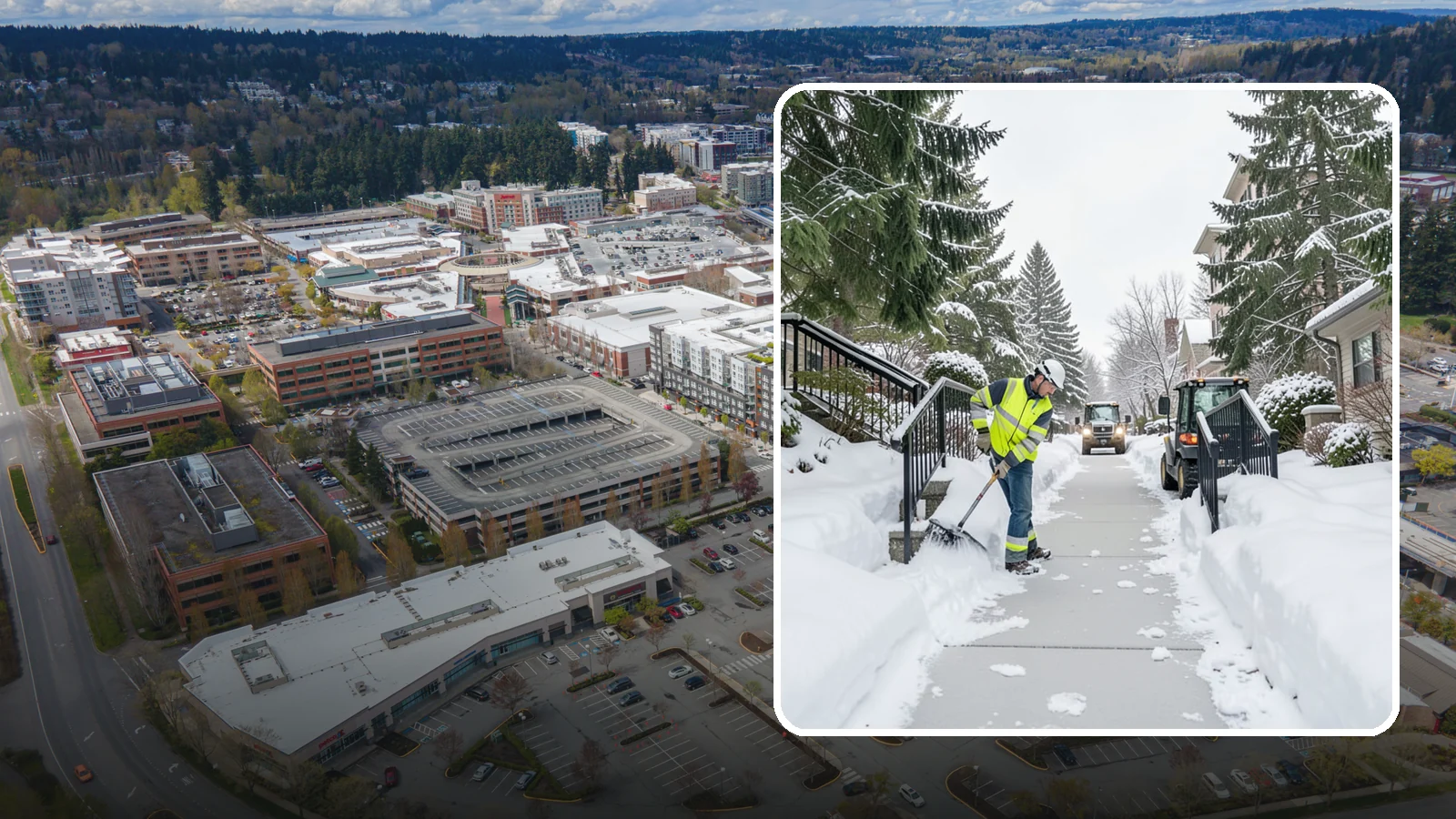
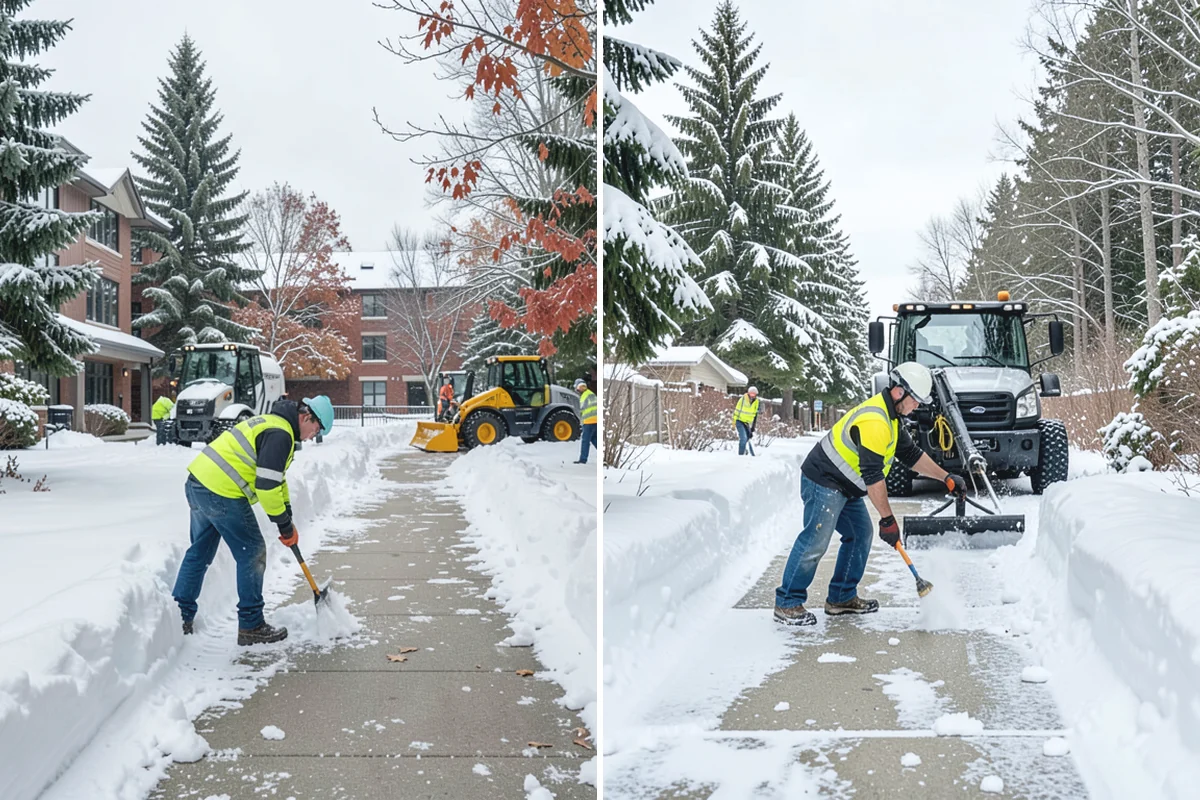
Stairs are hand work. A loader cannot reach them, so a crew member shovels each tread, landing and ramp edge, then applies ice melt. Redmond offices, apartment buildings and retail centers often have exterior steps that stay shaded and wet long after the lots dry out.
The local pattern shapes the job. Redmond averages 7.8 inches of snow per season, but only 2.3 days a year bring 1 inch or more. About 67% of winters have at least one 1-inch day. Snow is not on the ground for long, with 6 days a year on average. Freezing nights are the steadier problem: 31 between October and April. Thin melt can refreeze on concrete steps overnight, so ice treatment matters as much as shoveling.
Recent events show the range. Heavy snow hit on Feb 8, 2014 and Feb 4, 2019. An ice storm followed on Dec 23, 2022.
Pricing for Redmond:
- Crew member for shoveling and hand work: $110 per person-hour
- Ice melt, bagged: $45 per 50 lb bag
- Trip charge for Redmond (zone A): $200 per dispatch
- 2-hour minimum per dispatch
If a loader is needed for the adjoining lot, a compact track loader with operator (Kubota SCL1000) is $175 per hour.