Eco-Friendly Deicing for Redmond Properties
Eco-friendly deicing means using ice melt with care. The goal is to treat walkways, steps, driveways and parking areas where ice forms, without spreading more product than the surface needs. That matters in Redmond, where light frost and thin ice are more common than deep snow.
The local pattern shapes the work. Snow is on the ground about 6 days a year, and only about 1.1 days a year stay below freezing. Most ice risk comes from freezing nights, not long cold spells. Two ice storm reports have been logged since 2005. Recent events include the Dec 23, 2022 ice storm and freezing rain reported near Sahalee on Jan 17, 2024.
What the service can involve:
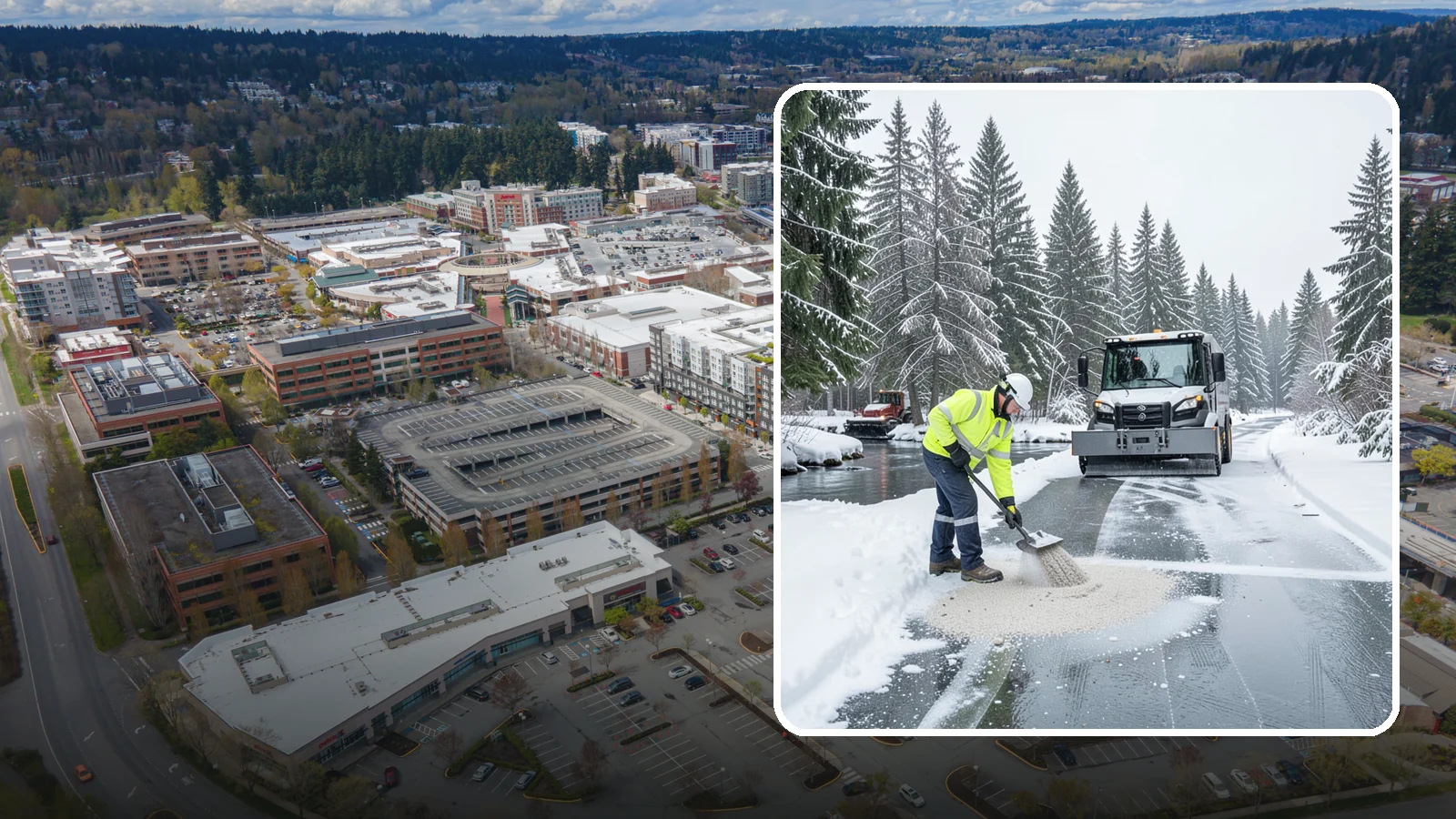
- Hand spreading of bagged ice melt on sidewalks and entries
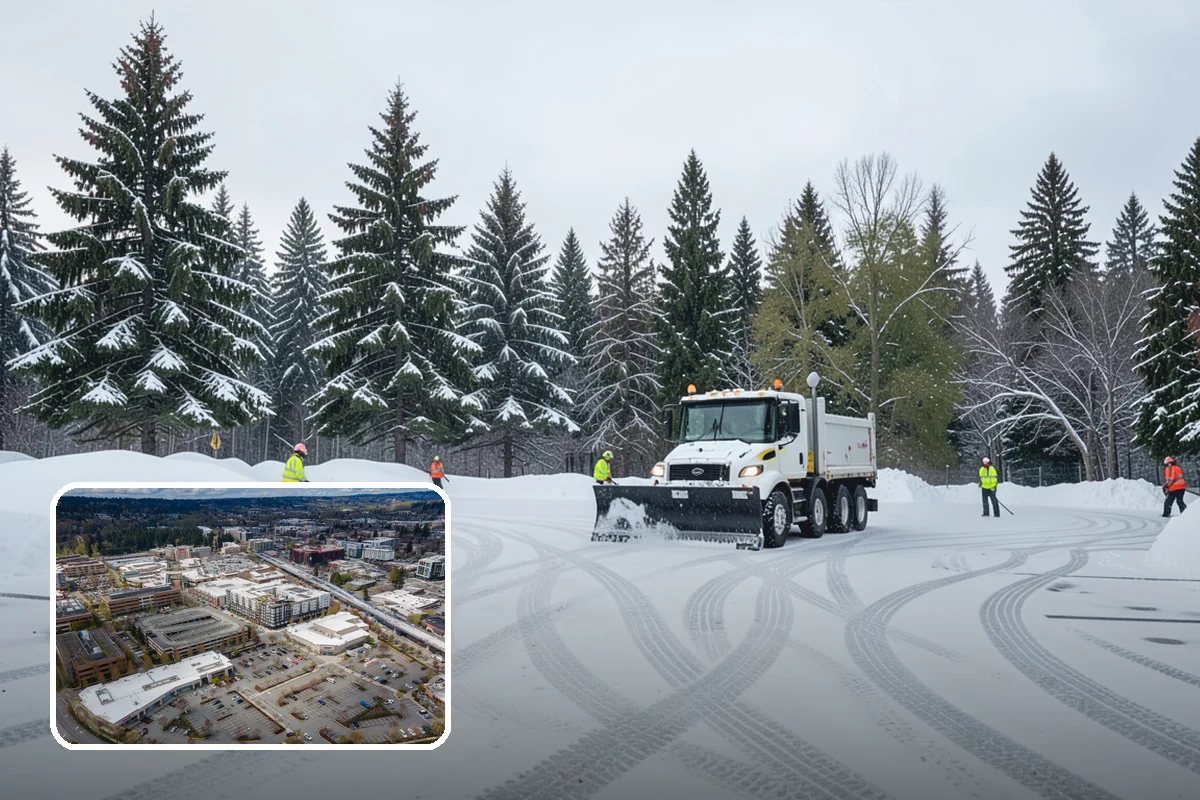
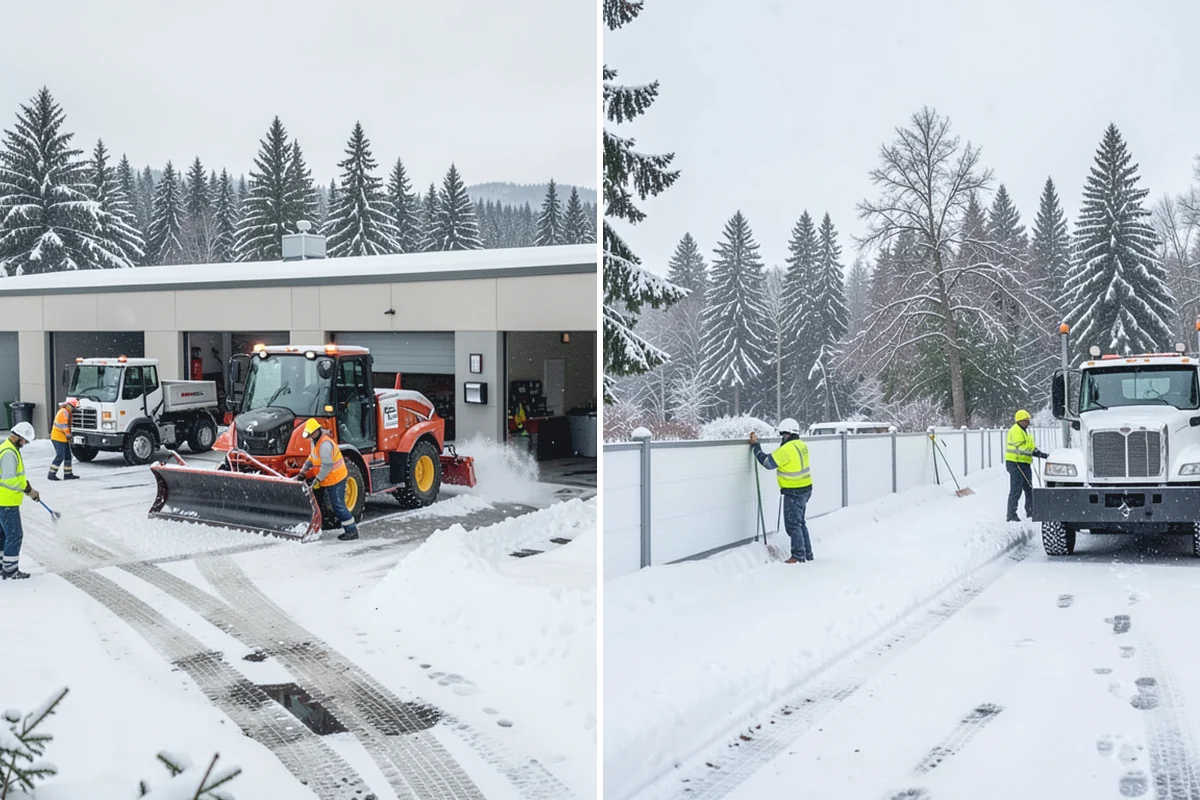
- Truck spreading of bulk salt on larger lots
- Crew members for shoveling and hand work on steps and walkways
Pricing is as follows. Ice melt is $45 per 50 lb bag. Bulk salt, applied, is $300 per ton. A crew member is $110 per person-hour. The plow and spreader truck with driver is $325 per hour. The Redmond trip charge (zone A) is $200 per dispatch, and each dispatch has a 2-hour minimum.