How we clear stairs in Redmond, WA
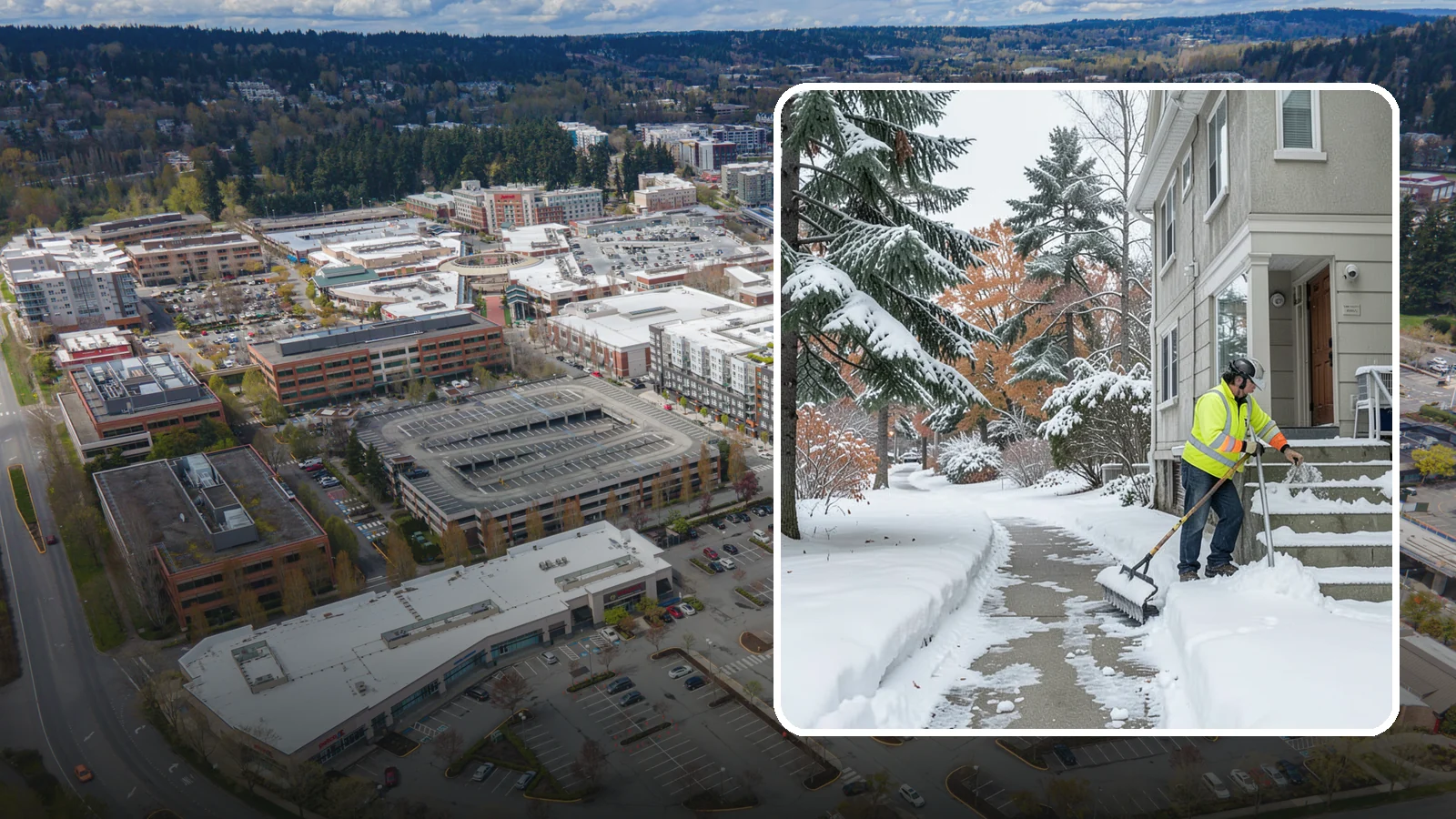
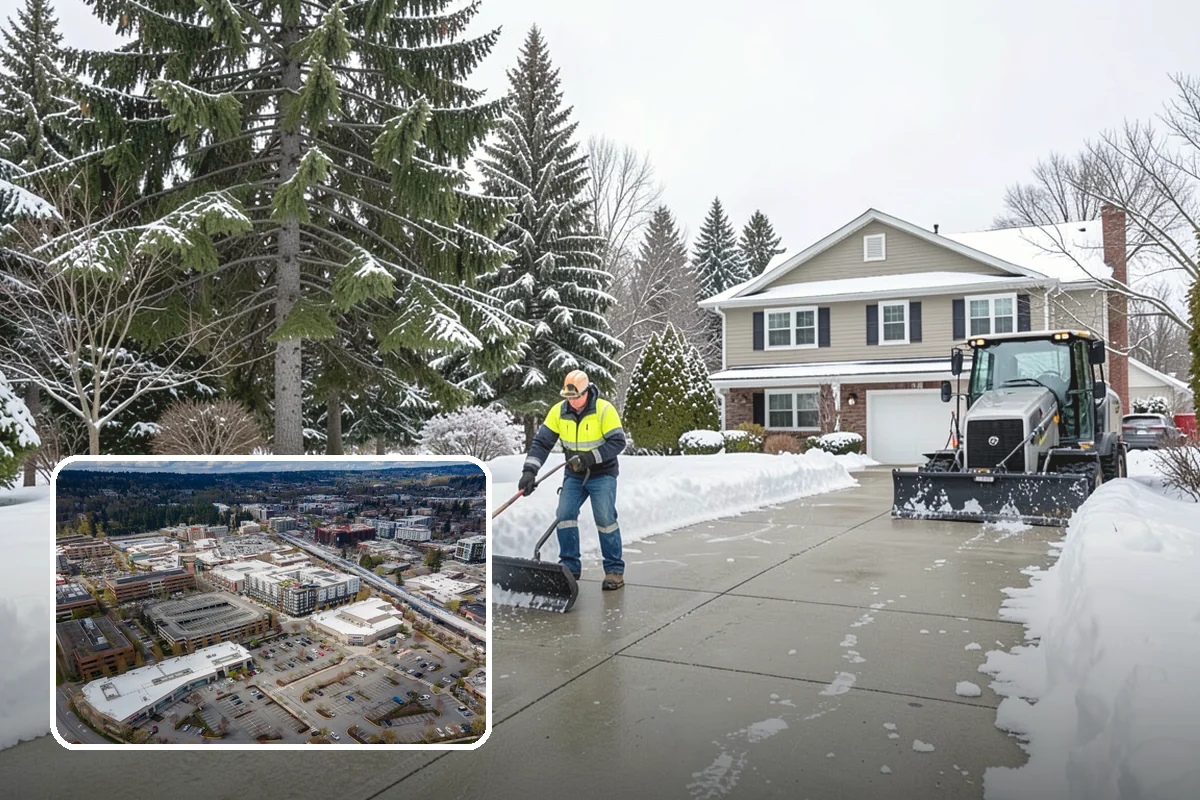
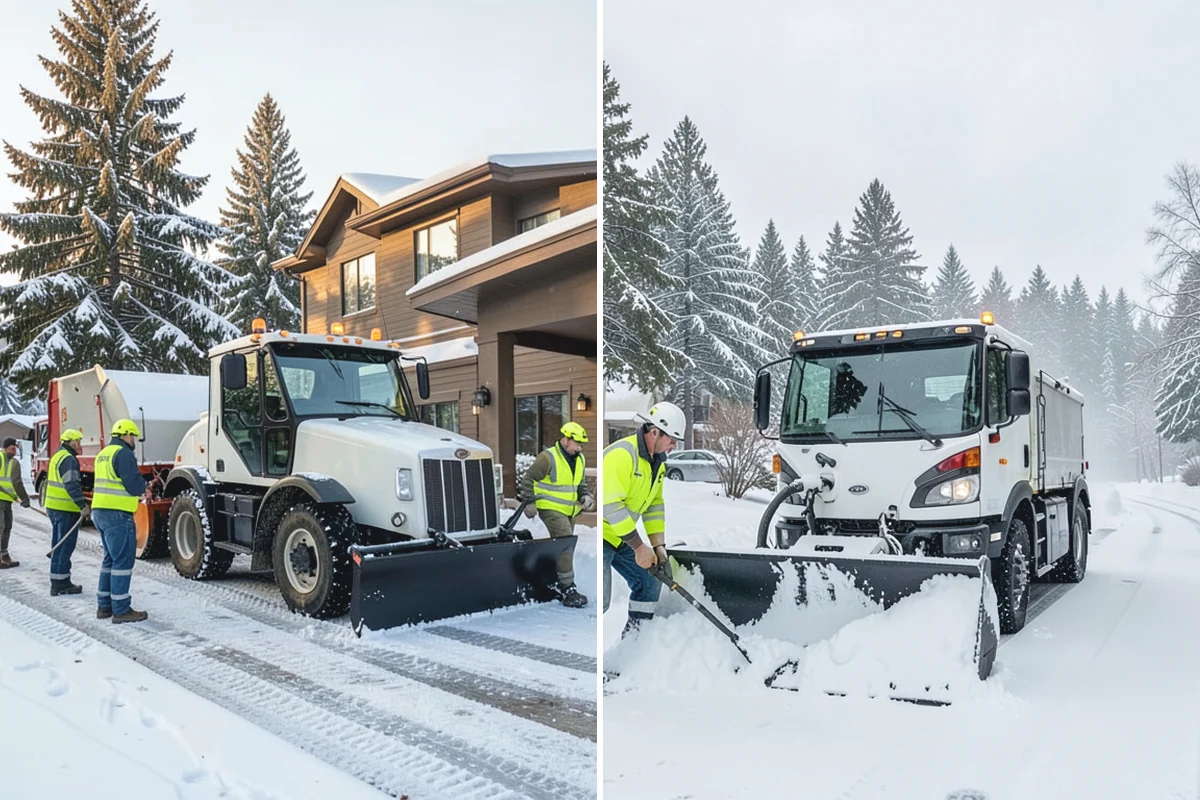
Stairs are hand work. A loader cannot reach them, so a crew member shovels each tread, landing and handrail base, then treats the surface with ice melt. We work from the top down so we do not walk over steps we have already cleared.
Redmond's pattern shapes the job. Only 67% of winters see at least one day with 1 inch of snow, so many stair calls are about ice, not depth. With 31 freezing nights from October to April, meltwater and dew can refreeze on shaded steps. Freezing rain and sleet have also been reported nearby, including freezing rain near Sahalee on Jan 17, 2024, and sleet near Redmond on Nov 29, 2014. Those events leave a glaze that shoveling alone will not fix.
What a stairs visit usually includes:
- Shoveling steps, landings and walkways to the door
- Scraping packed snow and loose ice
- Bagged ice melt applied to each tread
- A check of handrails and entry areas
Pricing is set out plainly. Crew members are $110 per person-hour. Ice melt is $45 per 50 lb bag. The Redmond trip charge (zone A) is $200 per dispatch, and each dispatch has a 2-hour minimum.