Construction Site Snow Removal in Roy, WA
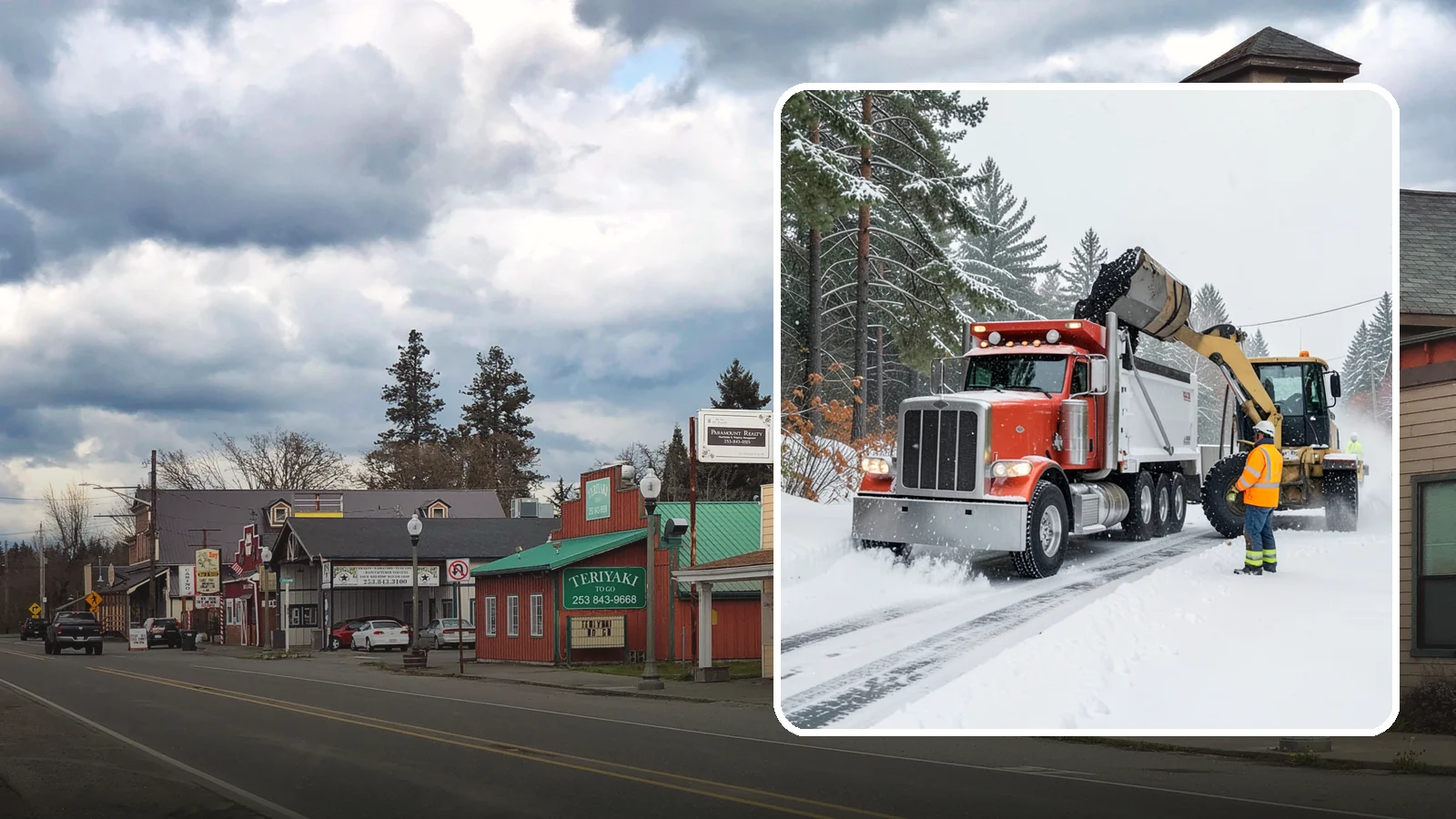
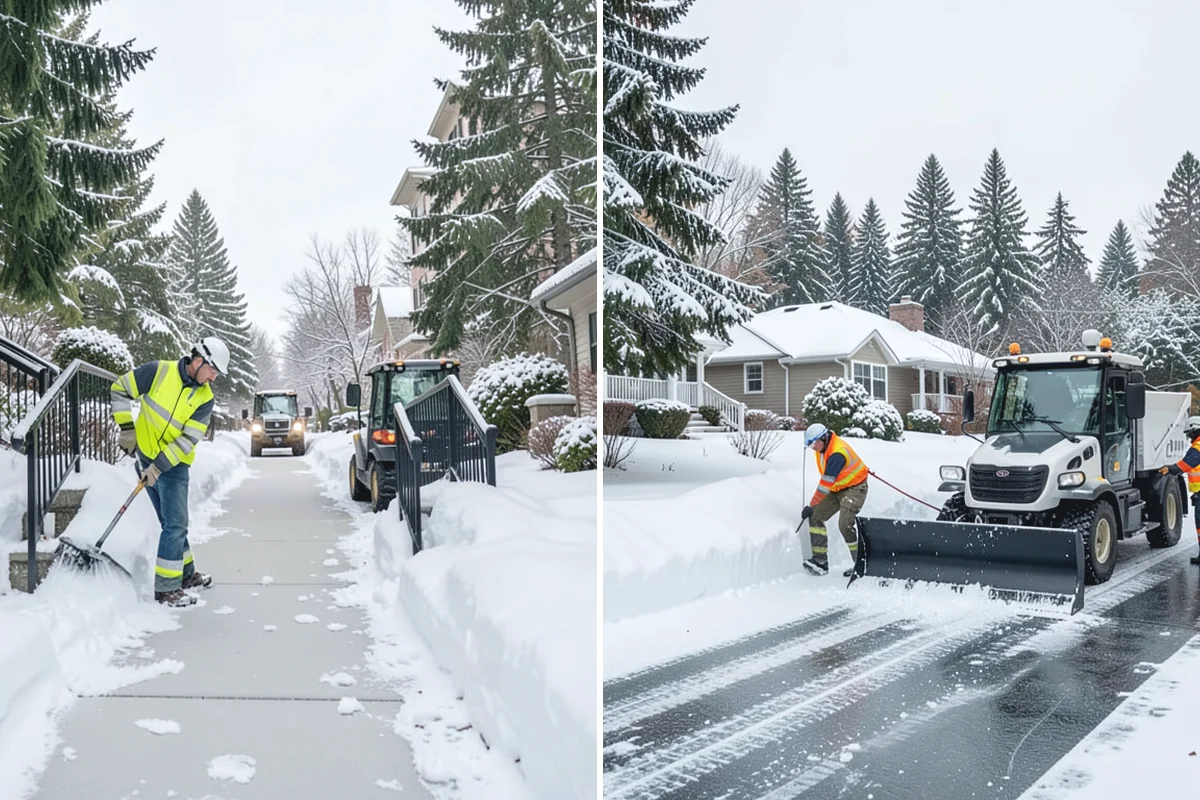
On a construction site, snow removal means more than clearing a driveway. We plow access roads, staging areas and parking, and we shovel walkways, stairs and entrances by hand. We can also spread salt or ice melt where crews and vehicles travel.
Roy's pattern is mostly cold with occasional snow. There are 42 freezing nights between October and April, so frost and ice on packed gravel and slab surfaces are a bigger routine issue than deep snow. About 3.45 light-snow days a year need deicing. Winter Storm Warnings are uncommon at 0.57 a year. Still, the biggest single day since 2005 was 8.3 in, and spotters near Yelm reported 7 in on Feb 13, 2021.
Roy is 104 minutes from our Bothell yard, so a dispatch includes a trip charge. Every dispatch has a 2-hour minimum. Our rates:
- Plow truck with driver (Ram 3500): $250 / hour
- Plow and spreader truck with driver (Ram 5500): $325 / hour
- Compact track loader with operator (Kubota SCL1000): $175 / hour
- Crew member for shoveling and hand work: $110 / person-hour
- Ice melt, bagged: $45 / 50 lb bag
- Bulk salt, applied: $300 / ton
- Trip charge for Roy (zone D): $525 / dispatch