Keeping You Moving. Beyond Expectations.

Seattle Condominium Deicing
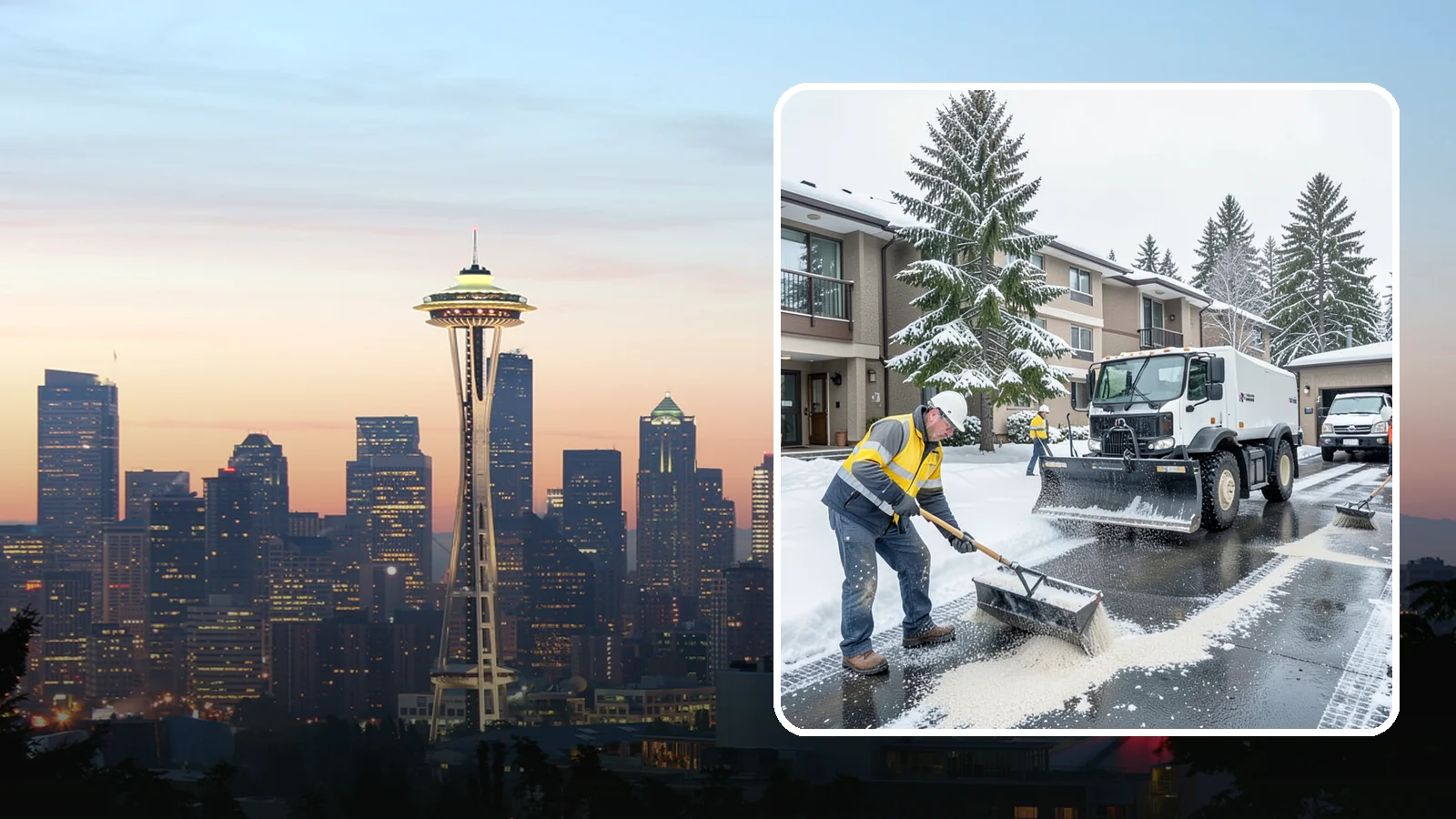
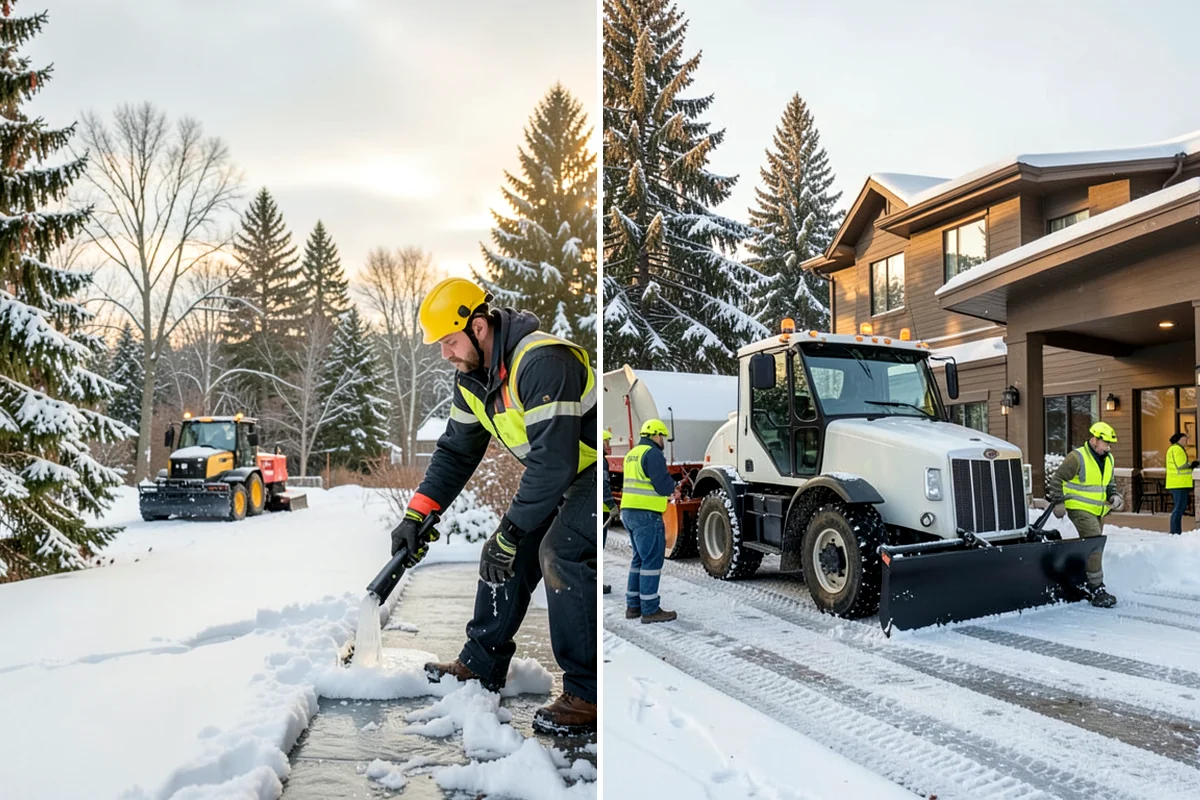
Deicing built for condominium properties, focused on entry lobbies, garage ramps, and shared walks where owner and visitor traffic never stops.
Condominium Deicing in Seattle is mostly about thin ice, not deep snow. Seattle averages 5.3 in of snow per season, but it logs 27 freezing nights between October and April. Walkways, entries, stairs and garage ramps can glaze over before anyone is up.
Washington Snow Removal is licensed, bonded and insured. We work from our Bothell yard, 37 minutes from Seattle. Call 206-809-9669 to talk through your building's entries, sidewalks and parking areas.
Ice and freezing nights in Seattle
Recent winter events logged for the Seattle area
- Jan 17, 2024: Ice Storm
- Jan 12, 2024: Cold/Wind Chill
- Dec 19, 2022: Winter Weather
- Dec 26–28, 2021: Cold/Wind Chill; Heavy Snow
Sources: NOAA and National Weather Service records for Seattle, 2005–2026.
How Condominium Deicing Works in Seattle
Seattle gets about 3.29 Winter Weather Advisories a year and 1.95 light-snow days that need deicing. Only 1.6 days a year bring 1 in or more of snow. Recent events show the pattern: an Ice Storm on Jan 17, 2024, Cold/Wind Chill on Jan 12, 2024, Winter Weather on Dec 19, 2022, and Cold/Wind Chill on Dec 27, 2021. Ice is the usual problem for condo owners.
Under SMC 15.48.010, the owner or occupant of private property must remove snow and ice on abutting sidewalks in a timely manner. For an HOA, that duty usually falls to the association.
A typical condo deicing visit can include:
- Bulk salt applied to drive aisles and ramps
- Bagged ice melt at entries, stairs and mailboxes
- Hand shoveling and spreading on sidewalks
- Plow and spreader truck work in larger lots
Pricing is $300 per ton for bulk salt applied, $45 per 50 lb bag of ice melt, $110 per person-hour for crew work, and $325 per hour for a plow and spreader truck with driver. The Seattle (zone B) trip charge is $275 per dispatch. Each dispatch has a 2-hour minimum.
Prices in Seattle
Billed by the hour for the crew and equipment on site, plus materials.
| Plow and spreader truck with driver (Ram 5500) | $325 / hour |
| Ice melt, bagged | $45 / 50 lb bag |
| Bulk salt, applied | $300 / ton |
| Crew member (shoveling, sidewalks, hand work) | $110 / person-hour |
| Trip charge for Seattle (zone B) | $275 / dispatch |
- 2-hour minimum per dispatch.
- Seattle is 37 minutes from our Bothell yard.
Prices approved Oct 2026.
Apartment buildings in Seattle
OpenStreetMap lists 3386 apartment buildings inside Seattle city limits.
- 1000 East Aloha
- 100 on 6th Apartments
- 101 Broadway
- 10 Clay Apartments
Source: OpenStreetMap contributors, Oct 2026. Named sites are examples of local facilities, not customers.
Service Area
Seattle
Benefits
Keeps high-volume building entrances safe for owners and guests; Treats garage-ramp thresholds where ice forms first; Limits tracked-in slush that damages interior flooring; Spreads shared owner liability across a documented service; Protects structural concrete from corrosive deicing salts