Keeping You Moving. Beyond Expectations.
We keep marked fire lanes clear during snow events so emergency vehicles always have unobstructed access.
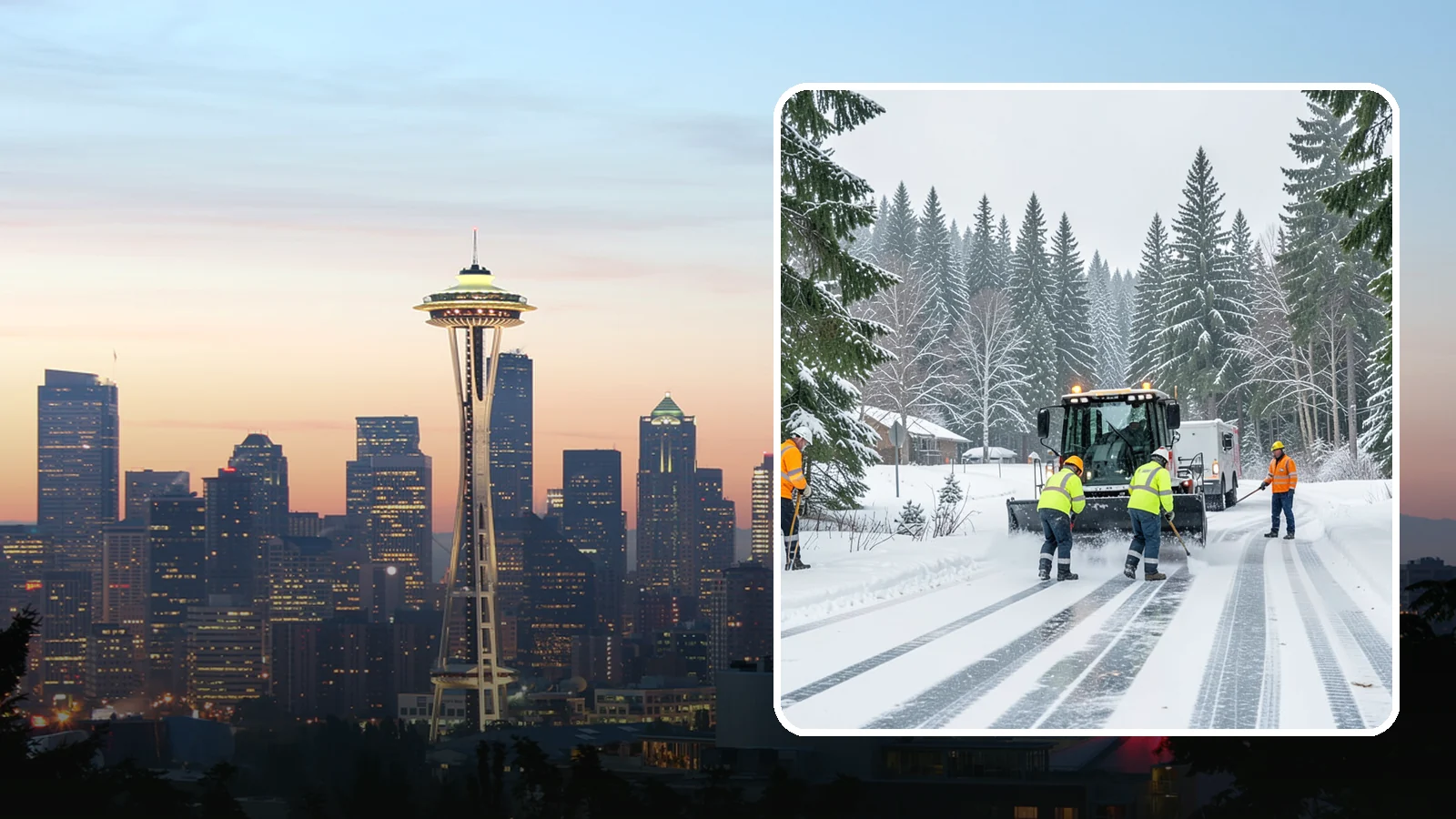
Fire lanes have to stay open, even in a city that sees little snow. Washington Snow Removal clears fire lanes in Seattle for commercial and multi-unit properties. We are based in Bothell, 37 minutes from Seattle, and we are licensed, bonded and insured.
Seattle averages 5.3 in of snow a season, but the biggest single day since 2005 hit 8.7 in. Ice is a bigger issue than depth. The area logged an ice storm on Jan 17, 2024. Call 206-809-9669 to set up fire lane clearing for your property.
Sources: NOAA and National Weather Service records for Seattle, 2005–2026.
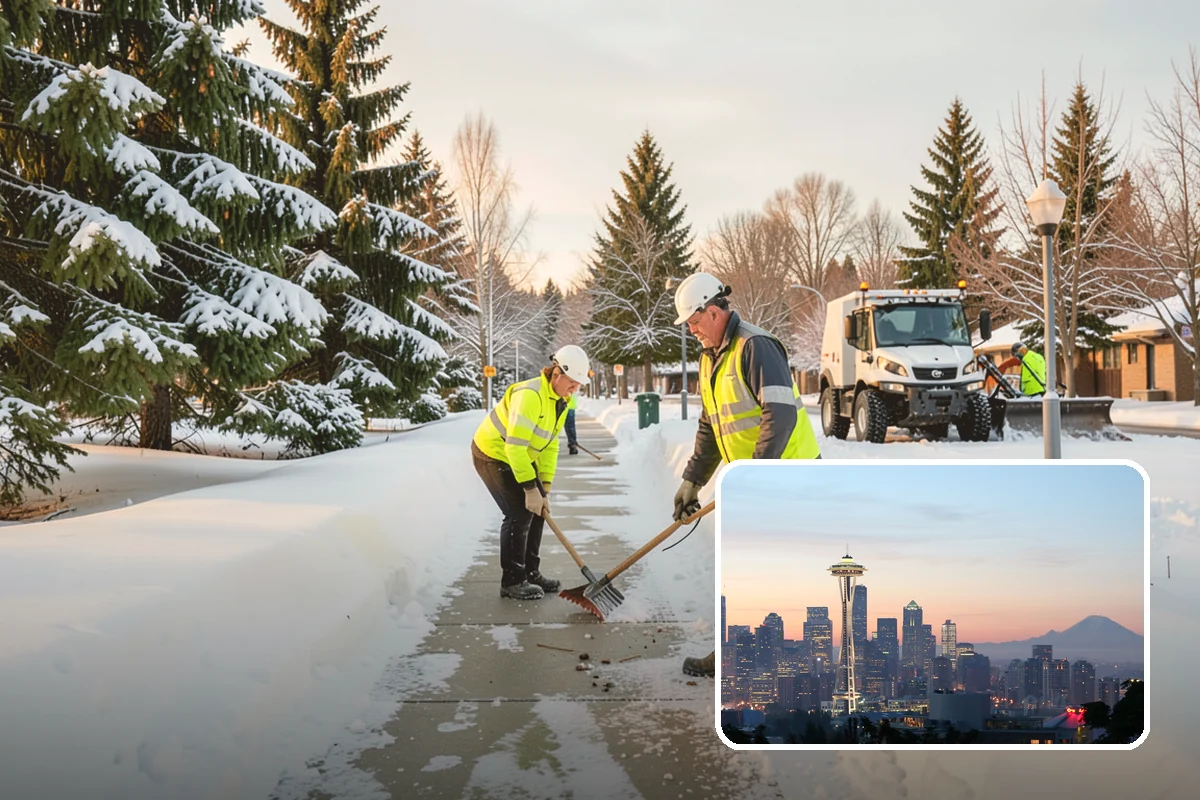
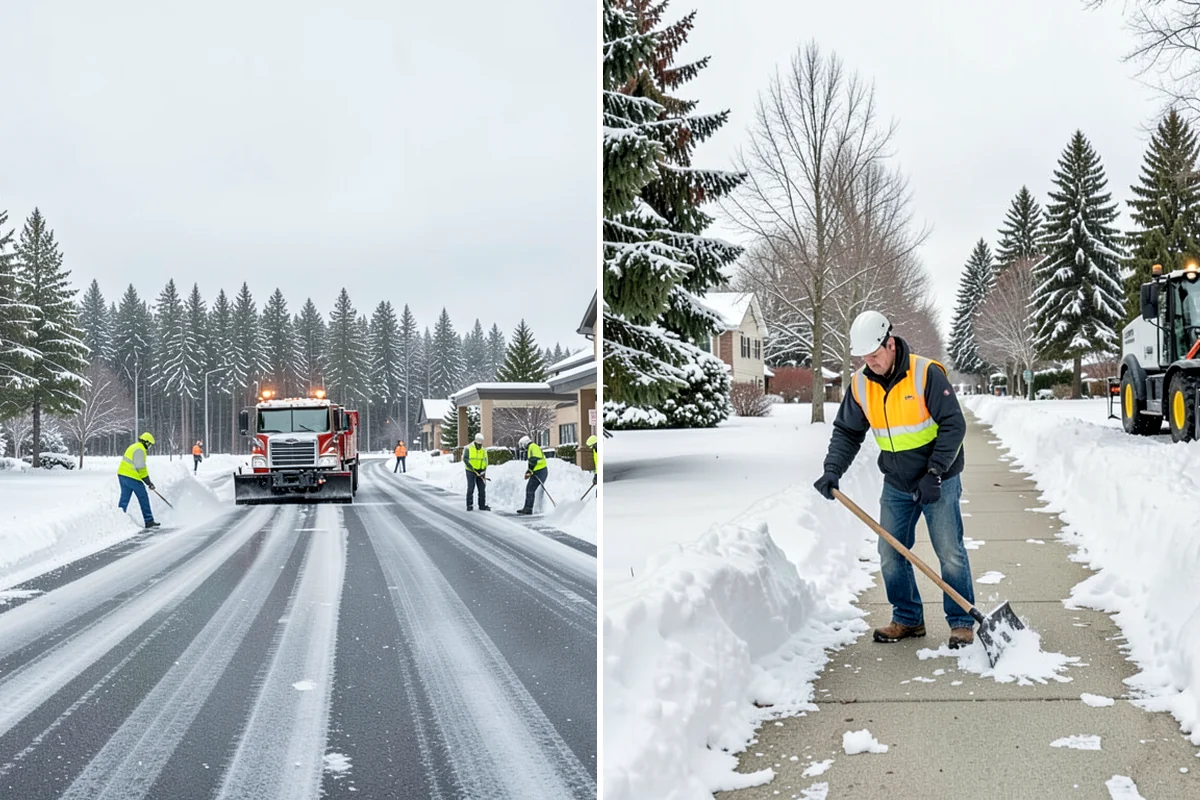
A fire lane is only useful if a fire truck can drive it. That means clearing snow and ice from the full marked width, the curb approaches, and the areas around hydrants and fire department connections. We also clear the turns where a long vehicle needs room to swing.
Seattle snow is rare. The city sees 1.6 days a year with 1 in or more, and 0.76 Winter Storm Warnings a year. But it has 27 freezing nights between Oct and Apr. Melt and refreeze can leave a fire lane icy even after a light event. Recent events include a Heavy Snow on Nov 29, 2022, a Winter Storm on Feb 12, 2021, and the Jan 2024 ice storm and cold stretch.
Depending on the site, a dispatch may use:
Seattle (zone B) has a trip charge of $275 per dispatch. Each dispatch has a 2-hour minimum.

Billed by the hour for the crew and equipment on site, plus materials.
| Plow truck with driver (Ram 3500) | $250 / hour |
| Plow and spreader truck with driver (Ram 5500) | $325 / hour |
| Compact track loader with operator (Kubota SCL1000) | $175 / hour |
| Crew member (shoveling, sidewalks, hand work) | $110 / person-hour |
| Ice melt, bagged | $45 / 50 lb bag |
| Bulk salt, applied | $300 / ton |
| Trip charge for Seattle (zone B) | $275 / dispatch |
Prices approved Oct 2026.
Fire lanes kept clear to full required width; Support for local fire code compliance; Unobstructed access for emergency responders; Careful clearing that avoids blocking adjacent zones; Reduced liability during winter events