Keeping You Moving. Beyond Expectations.

Seattle Heavy Snowfall Removal
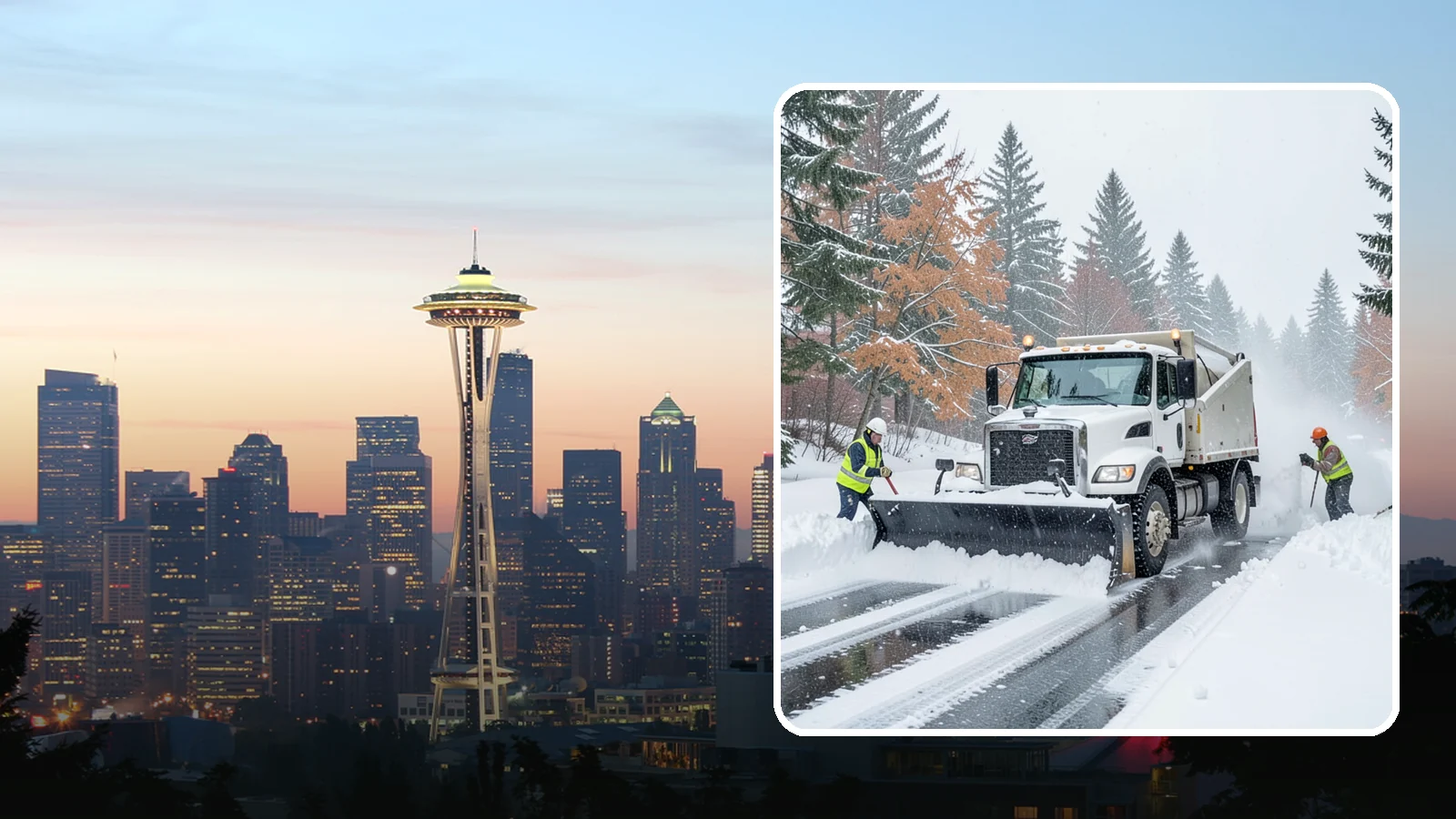
When a heavy, wet Cascade snowfall piles up fast, our equipment handles the load your shovel cannot.
Heavy snow does not happen often in Seattle. The city sees about 5.3 in of snow per season and only 0.24 heavy-snow days a year, meaning days with 4 in or more. When it does arrive, as it did Feb 12–15, 2021 with 13.0 in in total, streets, driveways and lots fill up fast.
Washington Snow Removal is licensed, bonded and insured. We dispatch plow trucks, a compact track loader and hand crews from our Bothell yard, 37 minutes from Seattle. Call 206-809-9669 to talk through your property and the equipment it needs.
How hard Seattle storms hit
Biggest storms in Seattle since 2005
- Feb 12–15, 2021: 13.0 in total, 8.7 in on the biggest day
- Feb 9–11, 2019: 7.9 in total, 7.9 in on the biggest day; 6.8 in total, 3.8 in on the biggest day
- Dec 21–22, 2008: 7.5 in total, 4.8 in on the biggest day
Sources: NOAA and National Weather Service records for Seattle, 2005–2026.
How heavy snowfall removal works in Seattle
Heavy snowfall removal is for the days when a few inches turn into a deep, packed load. In Seattle, that is rare. Since 2005 there have been 15 winter storm and heavy snow reports, and about 0.76 Winter Storm Warnings a year. Feb 9, 2019 brought 7.9 in in a single day. Feb 11–12, 2019 added another 6.8 in.
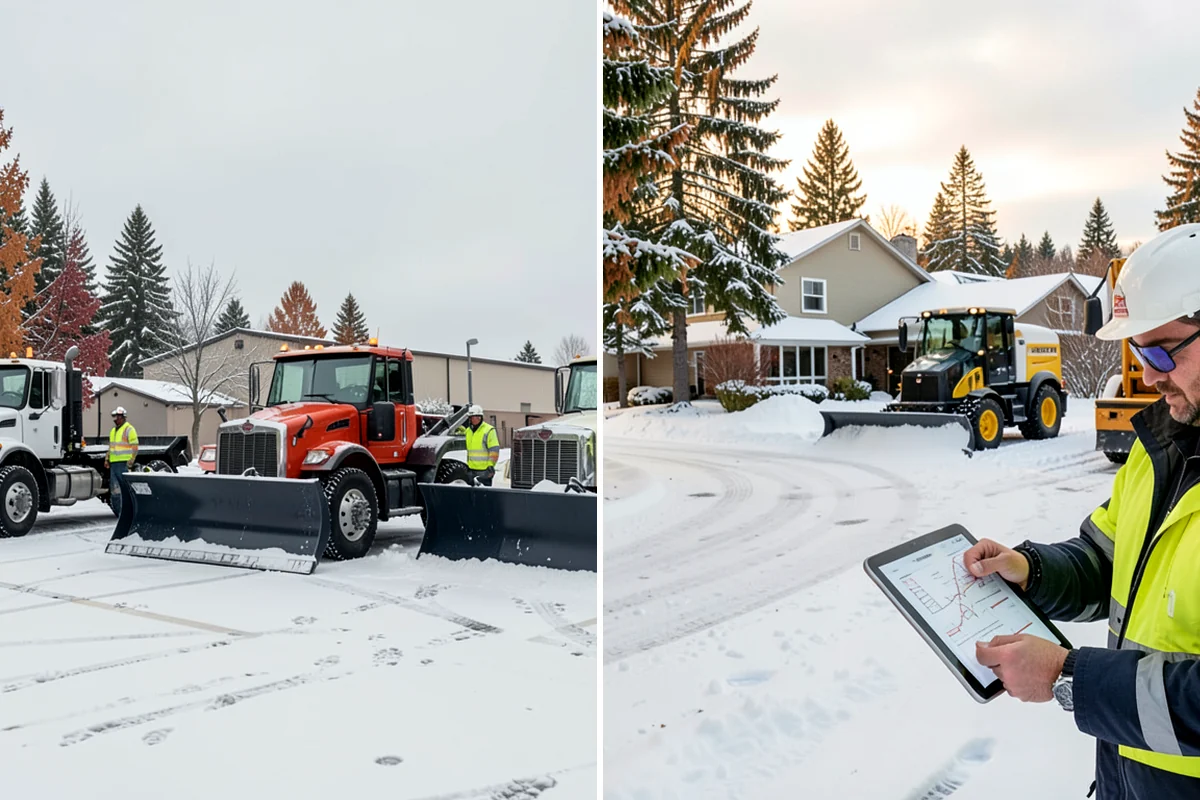
Because big storms are uncommon, many properties have no plan in place. We match the equipment to the site:
- Plow truck with driver (Ram 3500), $250 / hour, for lots and driveways
- Plow and spreader truck with driver (Ram 5500), $325 / hour, for plowing and treating in one pass
- Compact track loader with operator (Kubota SCL1000), $175 / hour, for tight spaces and piling snow
- Crew member for shoveling, sidewalks and hand work, $110 / person-hour
Seattle has 27 freezing nights from Oct to Apr, so cleared pavement can refreeze. We can apply bagged ice melt at $45 per 50 lb bag, or bulk salt at $300 per ton applied.
Each dispatch has a 2-hour minimum and a $275 trip charge for Seattle (zone B). With about 3.29 Winter Weather Advisories a year, it helps to call before the snow stacks up.
Prices in Seattle
Billed by the hour for the crew and equipment on site, plus materials.
| Plow truck with driver (Ram 3500) | $250 / hour |
| Plow and spreader truck with driver (Ram 5500) | $325 / hour |
| Compact track loader with operator (Kubota SCL1000) | $175 / hour |
| Crew member (shoveling, sidewalks, hand work) | $110 / person-hour |
| Ice melt, bagged | $45 / 50 lb bag |
| Bulk salt, applied | $300 / ton |
| Trip charge for Seattle (zone B) | $275 / dispatch |
- 2-hour minimum per dispatch.
- Seattle is 37 minutes from our Bothell yard.
Prices approved Oct 2026.
Service Area
Seattle
Benefits
Equipment matched to dense, wet regional snow; Fast removal of large accumulation volumes; Prevention of hard-packed, compacted layers; Reduced strain and risk versus manual shoveling; Capacity to handle a foot or more at once