How Large Equipment Snow Removal Works in Seattle
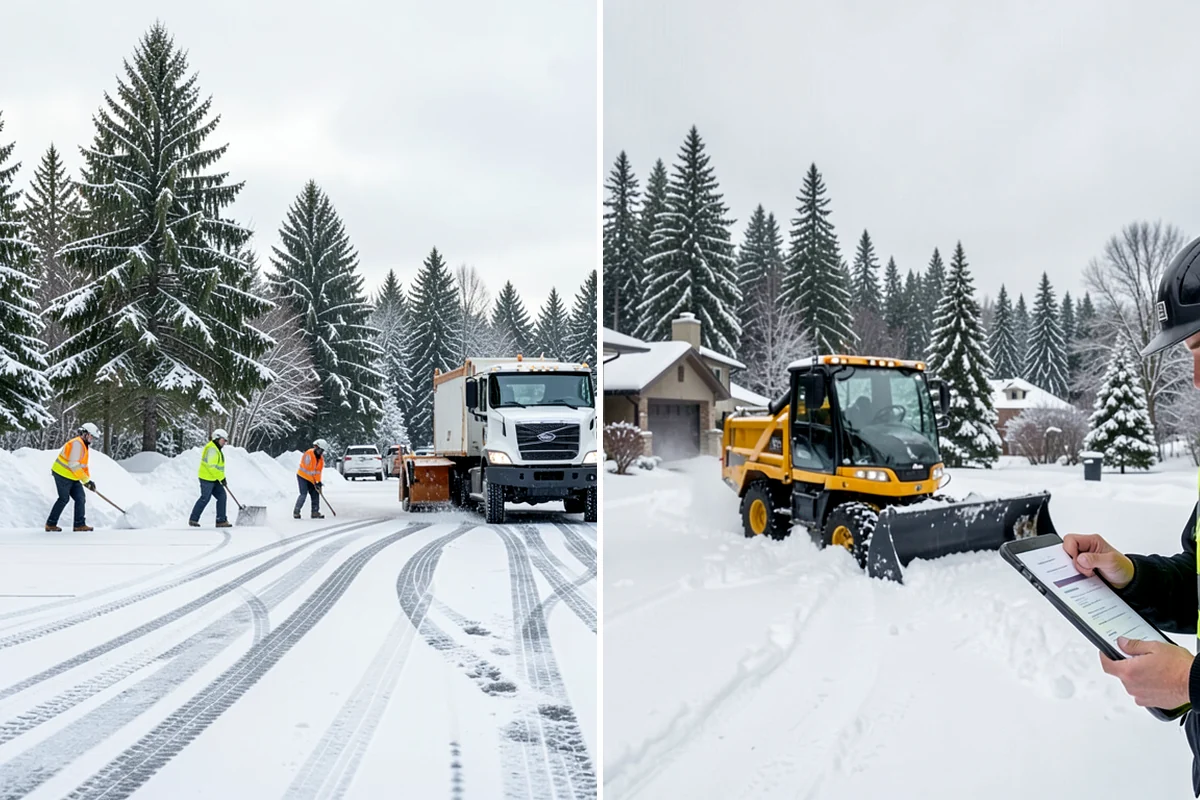
Large equipment is for lots, drives and access roads that a shovel crew cannot clear in reasonable time. Think commercial lots, loading areas and wide private roads. We send the machine that fits the job, always with a driver or operator.
- Compact track loader with operator (Kubota SCL1000): $175 / hour
- Plow truck with driver (Ram 3500): $250 / hour
- Plow and spreader truck with driver (Ram 5500): $325 / hour
- Trip charge for Seattle (zone B): $275 / dispatch
Each dispatch has a 2-hour minimum.
Seattle snow is infrequent. The city sees about 1.6 days a year with 1 in or more of snow, and Winter Storm Warnings average 0.76 a year. Since 2005 there have been 15 winter storm and heavy snow reports. That means demand arrives in short bursts, so it helps to line up service before a storm instead of during one.
Ice is the more common problem. Seattle has 27 freezing nights from October to April and about 1.95 light-snow days a year that need deicing. Recent logged events include Cold/Wind Chill on Oct 28, 2023, Winter Weather on Dec 19, 2022, and Cold/Wind Chill on Dec 27 and 28, 2021. The spreader truck handles those thin, slick mornings, while plows and the loader handle deeper accumulation.