Keeping You Moving. Beyond Expectations.

Seattle Loading Dock Deicing
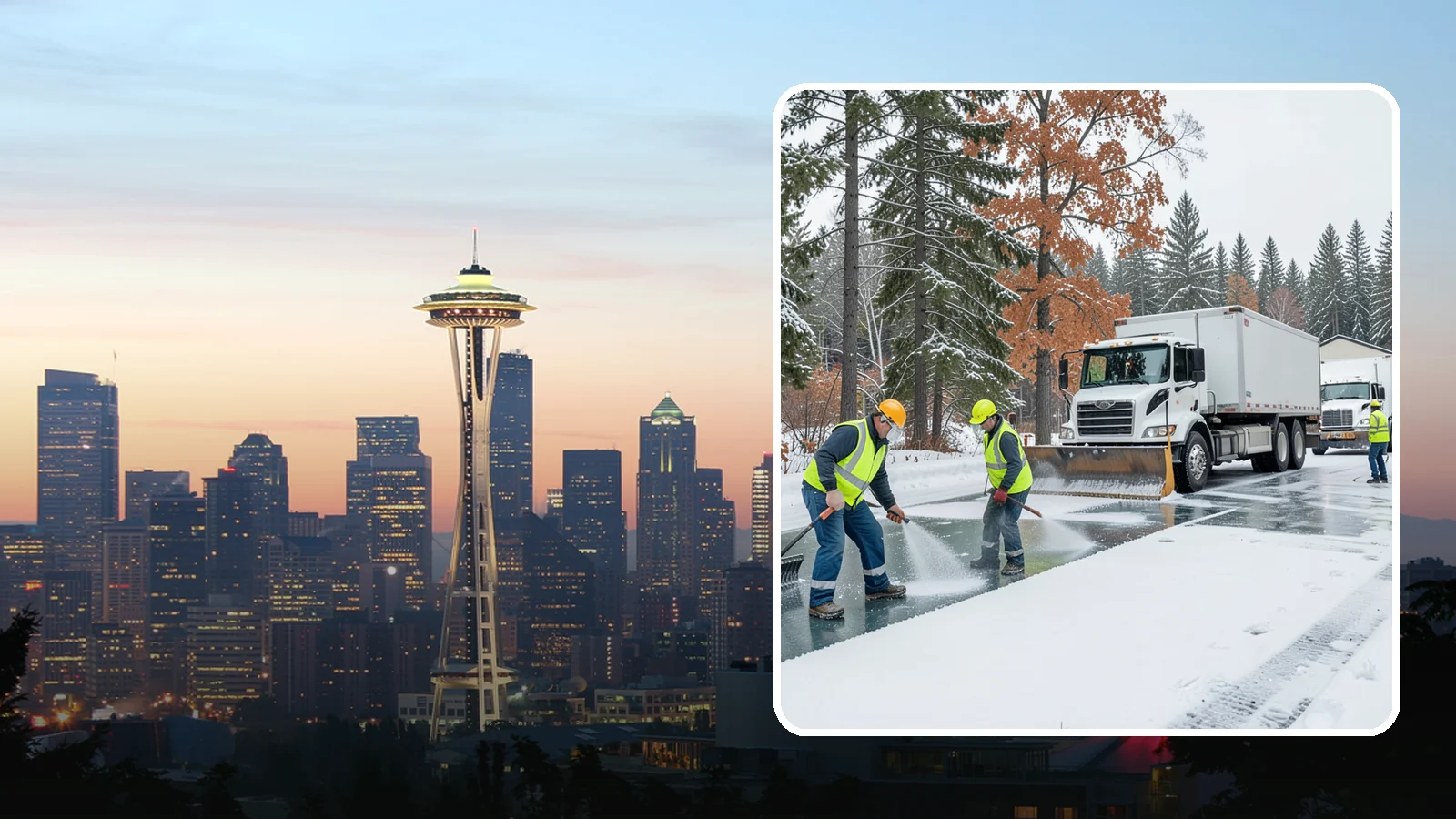
Deicing of loading docks and approaches so freight moves safely when ice forms on the busiest working surface.
Loading docks in Seattle do not see much snow. They do see frost, black ice and refreezing meltwater, and a slick apron or ramp stops trucks and slows pallet jacks. Washington Snow Removal treats docks, ramps and approaches with ice melt so freight keeps moving.
We are licensed, bonded and insured, and we dispatch from our Bothell yard, 37 minutes from Seattle. Seattle has 45 warehouses and distribution centers on the map, each with lots, walks or entrances to keep clear. Call 206-809-9669 to set up deicing for your dock.
Seattle ice season, by the numbers
Average snowfall by month in Seattle
Ice storms and freezing rain near Seattle
- Jan 17, 2024: Ice Storm
- Dec 23, 2022: Ice Storm; Freezing Rain reported at 3 NW Seattle; Freezing Rain reported at West Seattle
Sources: NOAA and National Weather Service records for Seattle, 2005–2026.
Loading Dock Deicing in Seattle: What the Work Involves
Seattle averages 5.3 in of snow per season, and only 1.6 days a year bring 1 in or more. Snow on the ground shows up about 3 days a year. The bigger issue is cold. Seattle has 27 freezing nights between Oct and Apr, and about 1.95 light-snow days a year need deicing. Those thin events leave ice on concrete aprons, dock levelers and truck approaches.
Ice storms matter more than snowfall here. Ice storms hit on Jan 17, 2024 and Dec 23, 2022, and freezing rain was reported in West Seattle that December day. A dock can go from wet to glazed in a few hours.
At a dock, the work usually covers:
- Spreading ice melt on the apron and truck approach
- Treating ramps, stairs and walking paths to dock doors
- Hand work with crew members at tight door areas
- Clearing the sidewalk that abuts the property
That last item matters. Under SMC 15.48.010, the owner or occupant must remove snow and ice from abutting sidewalks in a timely manner.
Pricing is simple. Bulk salt applied is $300 / ton, bagged ice melt is $45 / 50 lb bag, and crew members are $110 / person-hour. The Seattle (zone B) trip charge is $275 / dispatch, with a 2-hour minimum per dispatch.
Prices in Seattle
Billed by the hour for the crew and equipment on site, plus materials.
| Plow and spreader truck with driver (Ram 5500) | $325 / hour |
| Ice melt, bagged | $45 / 50 lb bag |
| Bulk salt, applied | $300 / ton |
| Crew member (shoveling, sidewalks, hand work) | $110 / person-hour |
| Trip charge for Seattle (zone B) | $275 / dispatch |
- 2-hour minimum per dispatch.
- Seattle is 37 minutes from our Bothell yard.
Prices approved Oct 2026.
Warehouses and distribution centers in Seattle
Seattle has 45 warehouses and distribution centers on the map, each with lots, walks or entrances to keep clear.
- Albert Lee Distribution Center
- Amazon DSE2
- Amazon UWA2
- Anthony's Seafood
Source: OpenStreetMap contributors, Oct 2026. Named sites are examples of local facilities, not customers.
Service Area
Seattle
Benefits
Keeps freight moving safely on a high-traffic surface; Treats the approach grade where trucks lose traction; Protects steel dock plates and hardware from corrosion; Times application around delivery schedules