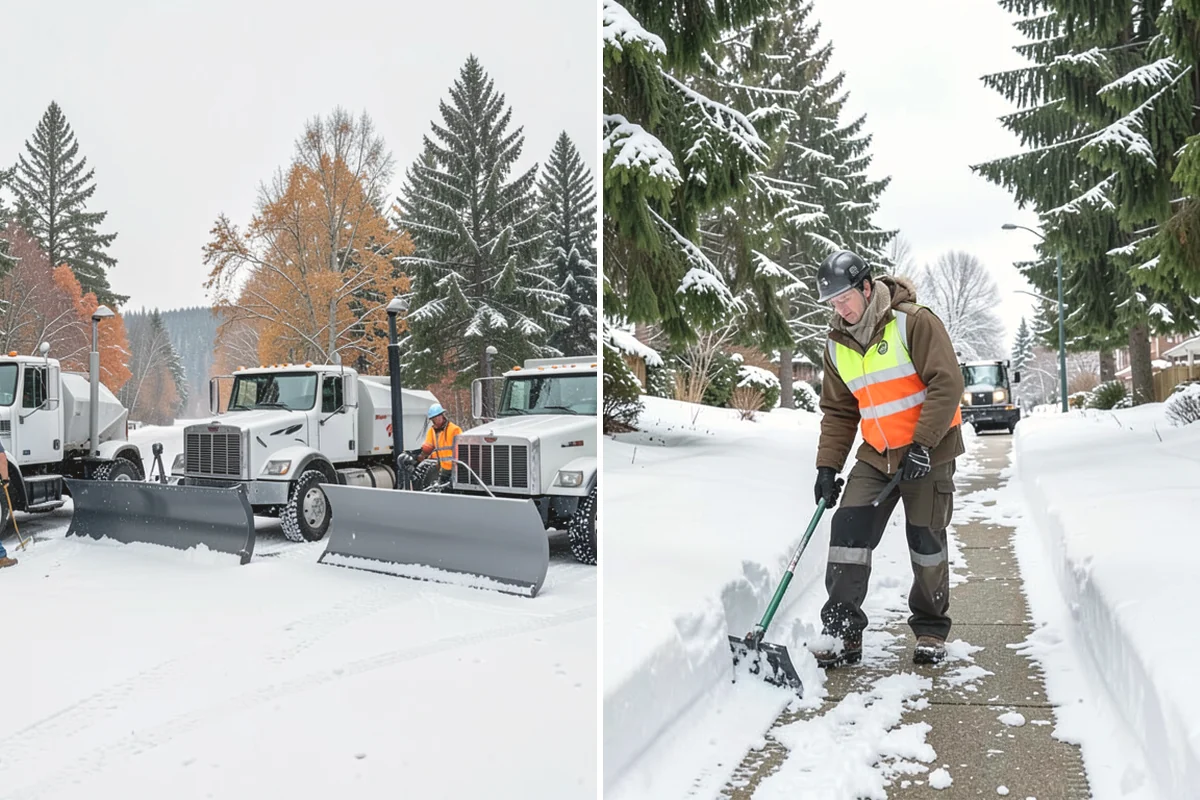
Keeping You Moving. Beyond Expectations.

Tacoma Bus Stop Clearing
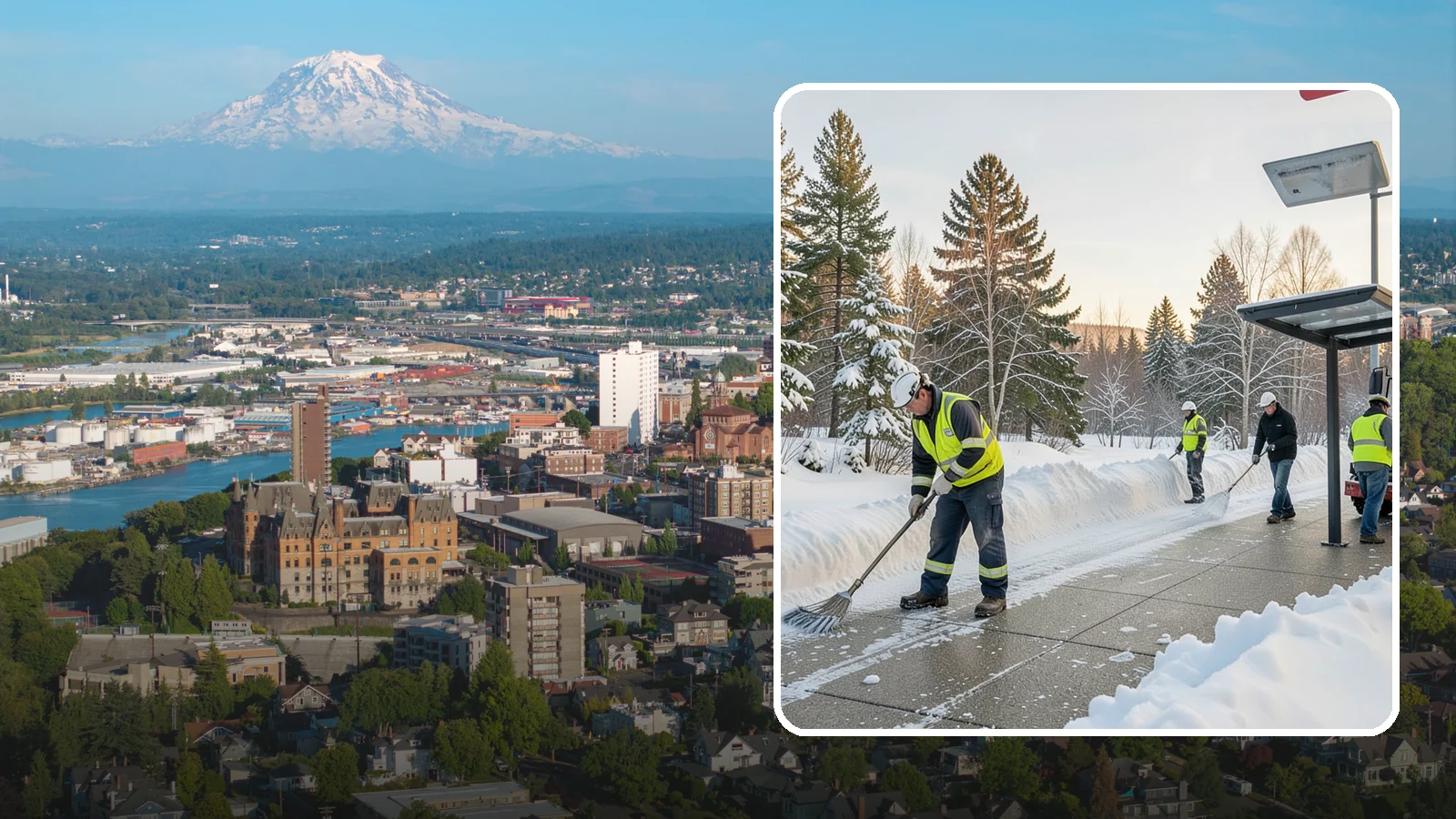
We clear bus stops, shelters, and boarding pads so transit riders board safely during Western Washington snow and ice.
Tacoma has 1029 bus stops on the map. Each one has a pad, a walk or an entrance that riders need to reach. Washington Snow Removal clears bus stops in Tacoma, including transit center zones such as 10th & Commerce Transit Center Zone A, Zone D and Zone G, and street stops like 11th Street North & Adams Street.
We are based in Bothell, 73 minutes from Tacoma. We are licensed, bonded and insured. Call 206-809-9669 to talk through your stop or stops and how we would dispatch to them.
Why Tacoma walkways freeze
Average snowfall by month in Tacoma
Freezing rain and sleet reports near Tacoma
- Dec 23, 2022: Freezing Rain reported at 1 N University Place
- Jan 19, 2012: Freezing Rain reported at 4 W Federal Way
Sources: NOAA and National Weather Service records for Tacoma, 2005–2026.
Bus Stop Clearing in Tacoma: What the Work Involves
Bus stop work is mostly hand work. A crew member shovels the landing pad, the path to the curb and the walk beside the shelter. Where ice has formed, we apply bagged ice melt. If a larger lot or transit area needs it, we can send a compact track loader with an operator.
Tacoma snow is infrequent. The city averages 5.6 in per season and only 1.6 days a year with 1 in or more. Still, 62% of winters have at least one 1-inch day, and there are 31 freezing nights from October to April. Only 1.3 days a year stay below freezing, so snow often melts and refreezes. Freezing rain has also been reported nearby, including at University Place on Dec 23, 2022.
Tacoma code (TMC 9.16.050) puts the duty to clear public walks on the person in charge of the premises, with a deadline of 24 hours.
- Crew member: $110 per person-hour
- Compact track loader with operator (Kubota SCL1000): $175 per hour
- Ice melt, bagged: $45 per 50 lb bag
- Trip charge for Tacoma (zone C): $350 per dispatch
Each dispatch has a 2-hour minimum.
Prices in Tacoma
Billed by the hour for the crew and equipment on site, plus materials.
| Crew member (shoveling, sidewalks, hand work) | $110 / person-hour |
| Compact track loader with operator (Kubota SCL1000) | $175 / hour |
| Ice melt, bagged | $45 / 50 lb bag |
| Trip charge for Tacoma (zone C) | $350 / dispatch |
- 2-hour minimum per dispatch.
- Tacoma is 73 minutes from our Bothell yard.
Prices approved Oct 2026.
Bus stops in Tacoma
Tacoma has 1029 bus stops on the map, each with lots, walks or entrances to keep clear.
- 10th & Commerce Transit Center Zone A
- 10th & Commerce Transit Center Zone D
- 10th & Commerce Transit Center Zone G
- 11th Street North & Adams Street
Source: OpenStreetMap contributors, Oct 2026. Named sites are examples of local facilities, not customers.
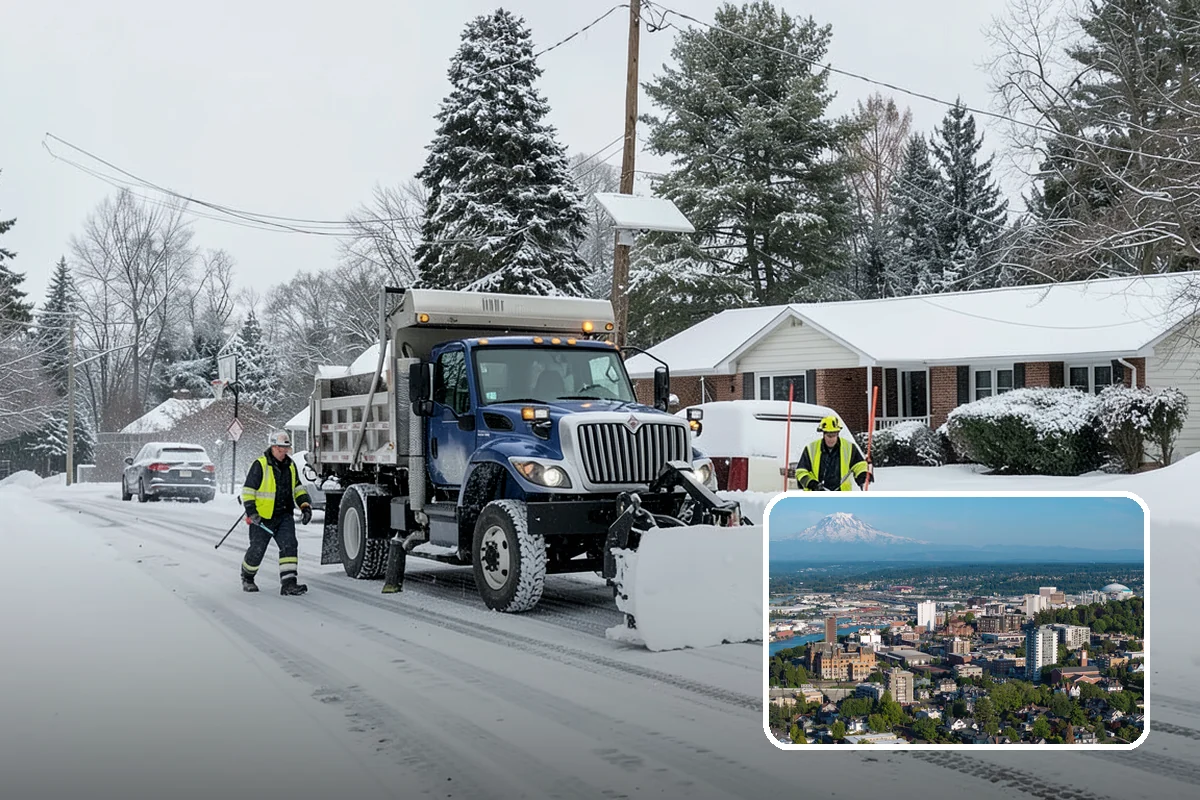
Service Area
Tacoma
Benefits
Gives transit riders a safe path to board; Clears plow berms blocking the boarding pad; Treats shaded shelter slabs against black ice; Keeps seating and schedule signage accessible; Supports riders using mobility devices