Keeping You Moving. Beyond Expectations.

Tacoma Freezing Rain Response
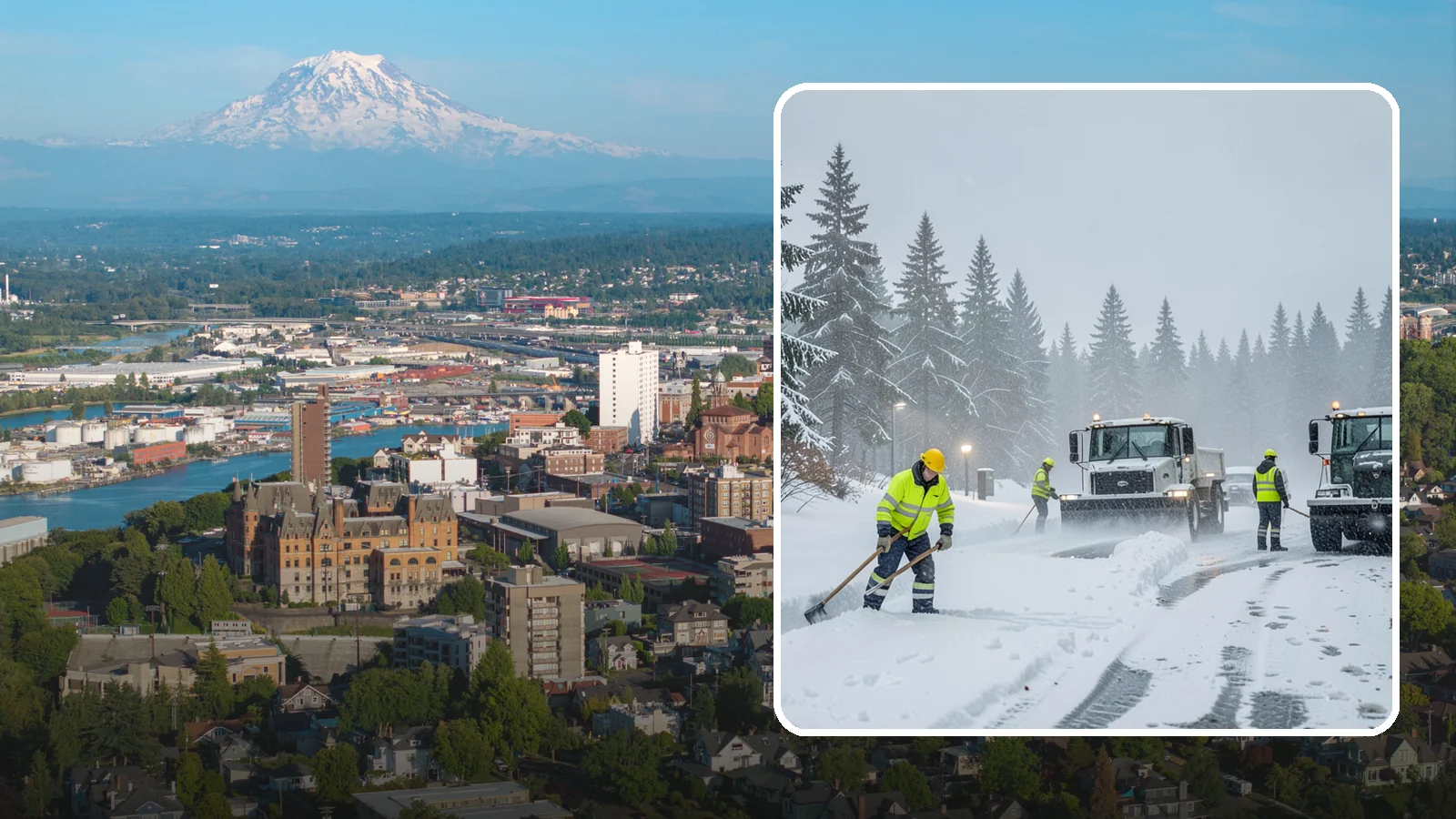
When freezing rain turns every surface to invisible glass, we treat your property before the first fall happens.
Freezing rain is a different problem from snow in Tacoma. Rain falls on cold pavement and turns to a glaze on lots, walkways and steps. Washington Snow Removal handles freezing rain response for Tacoma properties, with crews dispatched from our Bothell yard.
Tacoma averages 5.6 in of snow per season and sees 31 freezing nights between October and April. That is enough cold for black ice to form on many nights. We are licensed, bonded and insured. Call 206-809-9669 to set up a dispatch.
How hard Tacoma storms hit
Biggest storms in Tacoma since 2005
- Jan 15–20, 2012: 10.7 in total, 4.5 in on the biggest day
- Feb 8–12, 2019: 9.7 in total, 5.0 in on the biggest day
- Feb 5–7, 2017: 9.3 in total, 7.2 in on the biggest day
- Dec 26–28, 2021: 7.3 in total, 6.3 in on the biggest day
Sources: NOAA and National Weather Service records for Tacoma, 2005–2026.
How Freezing Rain Response Works in Tacoma
Freezing rain response is mostly about treating ice, not moving snow. Crews apply salt or ice melt to lots, drives, sidewalks and entries, and use hand work on steps and walkways where a truck cannot reach. Where ice has bonded to the surface, we can scrape and break it up.
Tacoma does not see much deep snow. It gets 1.6 days a year with 1 in or more, and 3.38 Winter Weather Advisories a year. Winter Storm Warnings are rare at 0.57 a year. The biggest storm since 2005 brought 11.0 in, and the biggest single day was 7.2 in. Even so, the 31 freezing nights mean a wet night can turn dangerous with little notice.
Tacoma is 73 minutes from our Bothell yard, so timing matters. Calling before a freezing event lets us plan the dispatch.
Pricing is listed up front:
- Crew member for hand work and sidewalks: $110 per person-hour
- Ice melt, bagged: $45 per 50 lb bag
- Bulk salt, applied: $300 per ton
- Plow and spreader truck with driver (Ram 5500): $325 per hour
- Trip charge for Tacoma (zone C): $350 per dispatch
Each dispatch has a 2-hour minimum.
Prices in Tacoma
Billed by the hour for the crew and equipment on site, plus materials.
| Plow truck with driver (Ram 3500) | $250 / hour |
| Plow and spreader truck with driver (Ram 5500) | $325 / hour |
| Compact track loader with operator (Kubota SCL1000) | $175 / hour |
| Crew member (shoveling, sidewalks, hand work) | $110 / person-hour |
| Ice melt, bagged | $45 / 50 lb bag |
| Bulk salt, applied | $300 / ton |
| Trip charge for Tacoma (zone C) | $350 / dispatch |
- 2-hour minimum per dispatch.
- Tacoma is 73 minutes from our Bothell yard.
Prices approved Oct 2026.
Service Area
Tacoma
Benefits
Pre-treatment that stops the glaze from bonding before drizzle even falls; Targeted attention to the clear, hard-to-see layer that causes surprise falls; Extra coverage on shaded and north-facing surfaces that stay frozen longest; Reduced liability from slip-and-fall claims during marginal-temperature events